[WATCH] Malaria: A risk too big to ignore
"Equip yourself with the necessary knowledge. It takes an experience like this to truly make you thankful for a second chance."
“A lot of people might think like I do, yet look what happened to me.”
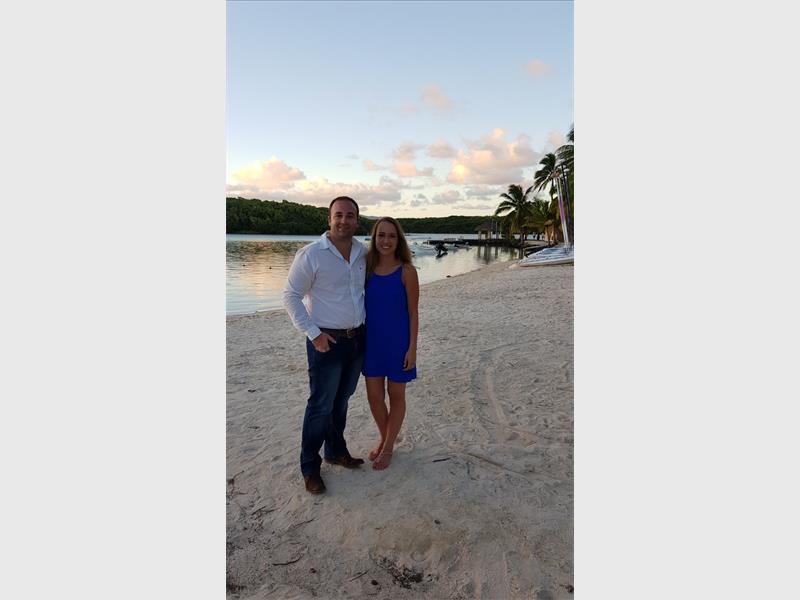
These are the words of 27-year-old Bert-Louw Versfeld, a businessman from Cape Town, as he recalls the traumatic ordeal of three years ago when malaria almost cost him his life.
Bert-Louw didn’t take any prophylaxis (preventative medicine) for malaria before he travelled to Ghana in 2015. As with most travellers, he had the preconceived idea that nothing would happen if you go for a short period.
“I thought it was a quick trip and I didn’t want to start drinking pills so far in advance. I didn’t think that I needed to drink the pills if I was only going for a weekend. I have travelled widely in Africa and especially malaria-risk areas numerous times before. So it wasn’t even my first time there,” said Bert-Louw.
Bert-Louw recalls the exact dates from 2015.
“I was in Ghana from 5 to 8 January. I simply cannot forget the date. I arrived back in Cape Town on 9 January, but I only started feeling ill on 17 January,” said Bert-Louw.
These delayed symptoms are typically what happens when someone has been infected with malaria. The symptoms only present themselves once the parasites infect the red blood cells. This commonly occurs 10 to 14 days after an infective mosquito bite.
“I experienced flu-like symptoms and on 19 January, while at work, I started feeling really ill. I went to a local GP and informed him about my travels to Ghana. He immediately tested me for malaria as well as for Ebola and tick-bite fever. That afternoon I packed my bag and checked into Mediclinic Durbanville for what the GP believed was malaria.
“During the night, while in hospital, I remember the doctor coming into my room and confirming that it was malaria. However, later that evening my condition worsened and the doctors decided to put me into a medically-induced coma,” said Bert-Louw.
Lisa Versfeld, Bert-Louw’s wife, never moved from his hospital bed and still recalls how unreal this whole experience felt.
“We were under the impression that he had flu. All of a sudden, within a few days, he was in the hospital and shortly afterwards in a coma. I felt so helpless and also uninformed of what exactly was happening to him. I kept asking ‘How does this happen; he is so young?’ The whole experience felt so unreal but that being said, we never stopped believing in his recovery,” said Lisa.
Four days later, Bert-Louw woke up.
“I was very confused when I opened my eyes. The first thing I could think of was how thankful I was to have woken up and how short life is. It was a very difficult time for my whole family. It takes an ordeal like this to truly make you understand how fragile life is,” said Bert-Louw.
On 31 January 2015, he was moved out of the ICU into a private room, and this, according to Bert-Louw, is where the hard work started.
“I had to start with physiotherapy as I was so weak I couldn’t do anything for myself. It felt like I had to learn to walk again,” said Bert-Louw.
While in the hospital he decided that he would try to read everything he could find on malaria; whether online or in books.
“I knew about malaria, but I didn’t think it was that bad. I knew it could make you sick, but I didn’t believe there could be fatal consequences. I have since read a number of books dealing with malaria as I wanted to expand my knowledge and find out just how close to death I truly was,” said Bert-Louw.
According to the World Health Organisation (WHO), in 2016 malaria accounted for more than 440 000 deaths worldwide.
Bert-Louw, who has since been back to at-risk countries, hasn’t stopped living his life to the fullest, but he has learned to be more careful before travelling.
“Read up about the country you will be visiting. Are there any risks? Take your preventative pills and wear long-sleeved clothing when you are outside. Equip yourself with the necessary knowledge. It takes an experience like this to truly make you thankful for a second chance,” said Bert-Louw.
The National Department of Health and ER24 offered some recommendations for protecting yourself against mosquito bites and malaria when travelling to high-risk areas:
• Wear long-sleeved clothing when outside at night
• Apply an insect repellent containing DEET (Diethyltoluamide)
• Sleep under a mosquito net treated with insecticide
• Spray insecticide inside the house after closing windows and doors
• Take only the medicines recommended by a health professional
• Start taking the recommended medicines before entering the malaria risk area and use as prescribed
Symptoms:
• Fever
• Headache
• Chills
• Muscular pain
Seek medical attention if you have any of the above symptoms and inform the doctor of your travel history. For more information, visit https://www.rollbackmalaria.org.
Do you perhaps have more information pertaining to this story? Email us at krugersdorpnews@caxton.co.za or phone us on 011 955 1130.I
For free daily local news on the West Rand, also visit our sister websites:
Remember to visit our Facebook, Twitter and Instagram pages to let your voice be heard!