
Know how to escape a vehicle fire and remain safe
Fire can cause fatal burns. Knowing how to escape these dangers will save both your life and those of others.
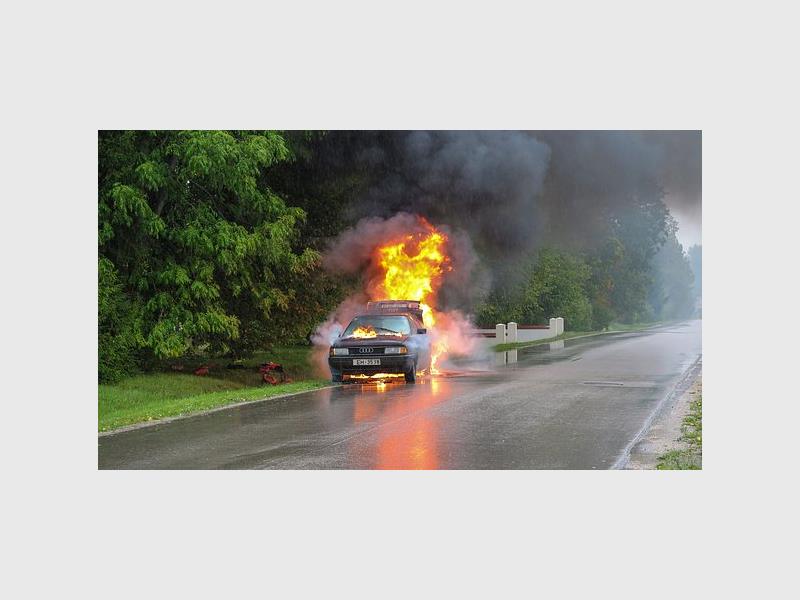
According to research conducted by Arrive Alive, 10 000 lives have been lost globally in the past few decades due to people being trapped in their vehicles after accidents. Most of the deaths are related to fire.
Most vehicle fires start in the engine compartment. While explosions resulting from burning vehicles are uncommon, the genuine danger is the poisonous fumes produced. Motor vehicles are made of numerous man-made materials that discharge destructive and lethal gases when they burn. The most common of these is carbon monoxide, which is scentless, colourless and tasteless.
Regular vehicle maintenance and assessment is critical to preventing vehicle fires.
Arrive Alive has provided some tips that might help you to prevent vehicle fires:
• Have your vehicles inspected at least annually by a trained, professional technician
• Check for any malfunctioning parts and hanging electrical wires. Do not leave them hanging
• Include a check of the fuel system in your regular maintenance schedule. Electrical and fuel system problems are among the major causes of car fires
• Watch for fluid leaks under vehicles, cracked or blistered hoses, or wiring that is loose, has exposed metal or cracked insulation
• Have vehicles inspected and repaired as soon as possible if exhaust or emission control problems are suspected
• An early indication of a problem is a fuse that blows more than once. The source of the problem could be either a faulty component or a wiring issue.
• Check for oil leaks and always use a funnel when adding oil. Oil spilled on a hot exhaust manifold can cause a fire
• If a filling station attendant adds oil, double check that the cap is on securely. This sounds obvious, but better to check than end up with oil all over your engine compartment at best, or an engine fire at worst
• Clean the vehicle regularly – do not allow your trash to settle in the vehicle
• Avoid throwing cigarette butts anywhere
• When driving, be alert to changes in the way your vehicle sounds when running, or to a visible plume of exhaust coming from the exhaust. A louder than usual exhaust tone, smoke coming from the tailpipe or a backfiring exhaust could mean problems or damage to the high-temperature exhaust and emission control system on the vehicle.
• Keep an eye on the vehicle’s temperature gauge – if the temperature rises unusually, you could be in trouble
Safety suggestions to follow when your vehicle is smoking/ on fire:
• Stay as calm as you can. The worst possible thing you can do is panic. Panic will cause you to waste precious seconds and make mistakes that could result in a tragedy
• If the vehicle is moving, signal and move to the side of the road. Fire feeds off oxygen and even slow forward motion will force air into the engine compartment, stoking the fire. Pulling off the road makes it possible for everyone to get out of the vehicle safely
• Turn off the ignition to shut off the electric current and stop the flow of fuel
• Put the vehicle in park or set the emergency brake; you don’t want the vehicle to move after you leave it
• Make sure everyone gets out of the vehicle, but do not waste time and increase your risk by removing personal belongings
• Move at least 30 metres away. Keep traffic in mind and keep everyone together. There is not only danger from the fire, but also from other vehicles moving in the area
• Keep onlookers and others away
• Do not go back into a burning vehicle
• Warn oncoming traffic
• Notify emergency services from a safe distance
• Do not open the bonnet or boot if you suspect a fire under it. Air could rush in, enlarging the fire and lead to injury
• Be cautious of attempting to put out the fire yourself – there is a risk of explosion and toxic fumes emanating from vehicle fires. Inhalation of toxic fumes is the most common form of fire-related death
• One thing is certain – an emergency is not the time to start reading the instructions on your fire extinguisher. Everyone should have a fire extinguisher easily accessible in the passenger compartment
If you’re involved in an accident and unable to get out of the vehicle immediately:
• Unlock the doors and windows. Do whatever you can to accomplish this critical step. Even if you cannot open the door yourself, unlocking the doors will give bystanders or rescuers a better chance of getting you out of the burning vehicle quickly.
• Release your seat belt. This must be done quickly so the heat of the fire does not fuse the metal of the buckle to its anchor. If the metal is too hot to touch, use a piece of cloth to cover your hand so that you can release the buckle. If the buckle won’t release, push the shoulder strap over your head and try lifting your legs out from underneath the waist/ lap strap
• Kick out a window. If you cannot get the door open, the next best thing is to kick out a window. Opening a window will allow smoke to exit the car and will also give you an escape route. Use both feet against a side window, if possible, to shatter and then pop the window out of the frame