To explain it as simply as possible: each stage allows for a certain amount of electricity to be shed from the general supply. The higher the stage, the higher the quantity of electricity that needs to be shed, which means that load-shedding will be implemented more often at each level.
To check your load-shedding status, follow these simple steps:
1. Consult the News, Eskom’s Twitter account or an applicable application (Load Shedding Notifier or EskomSePush) for today’s proposed load-shedding stage.
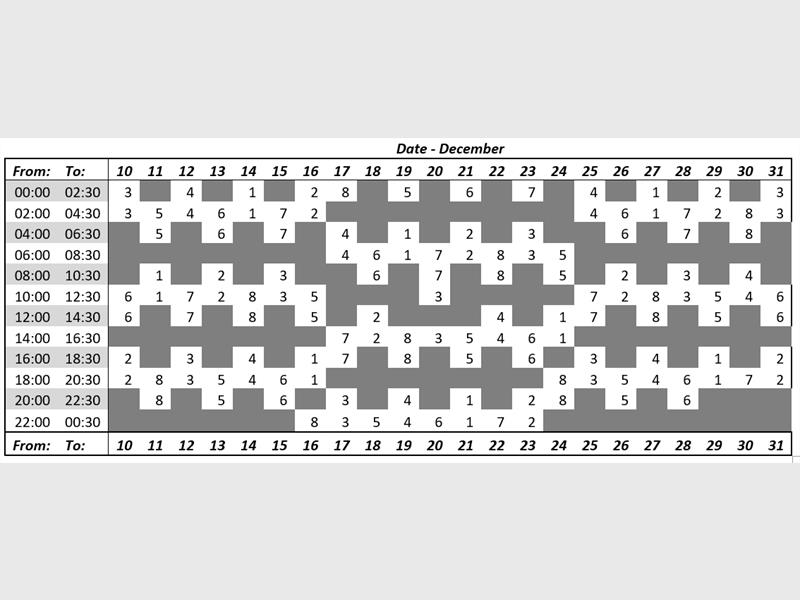
2. Open a load-shedding application (we recommend Load Shedding Notifier or EskomSePush) or check the table above.
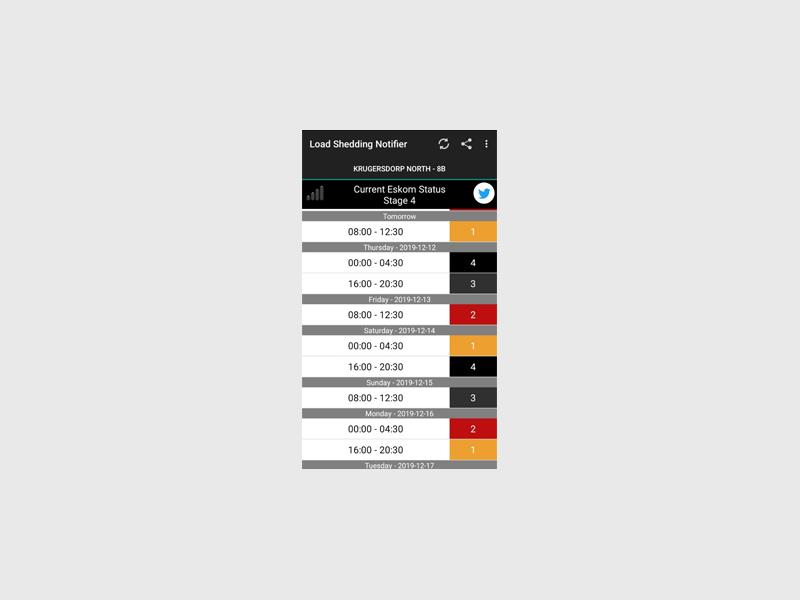
3. In an application, search for ‘Krugersdorp’ or 8B (our designated area code).
4. On the table, find the date at the top, and check if one of the stage numbers below correlate with the current load-shedding stage. If one does, check the time slot on the left-hand side. That’s the time load-shedding will occur in Krugersdorp on the given date.
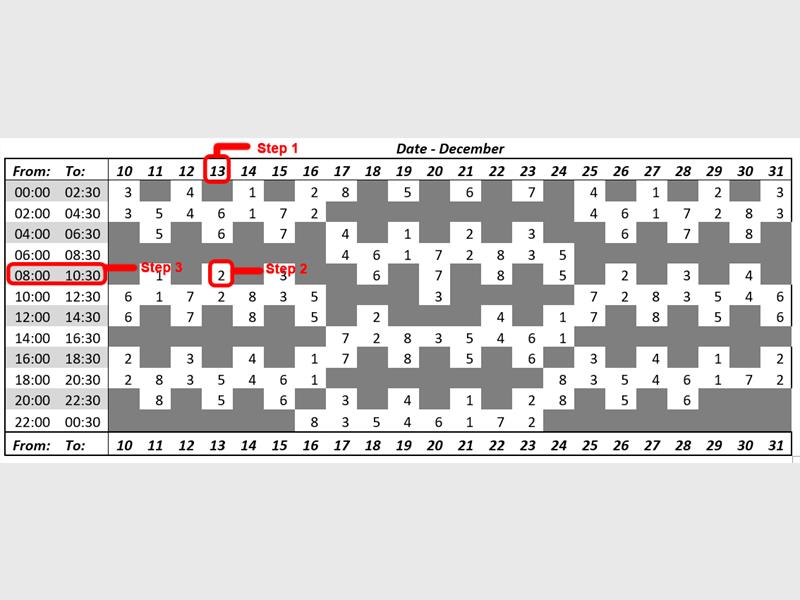
5. If there is a blank space in a time slot, Krugersdorp will not have any load-shedding in that time. If the proposed country-wide load-shedding stage does not correspond with a stage option on the schedule, then Krugersdorp will not be affected on the day.
An example:
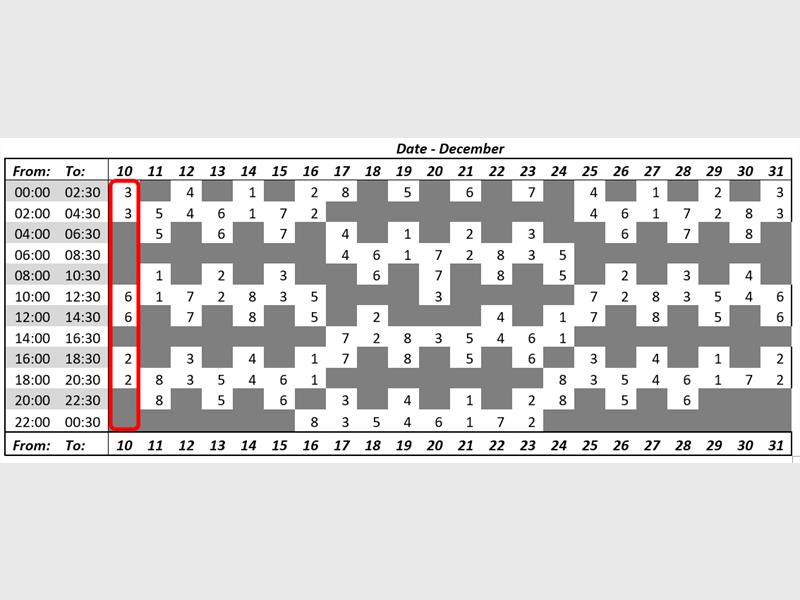
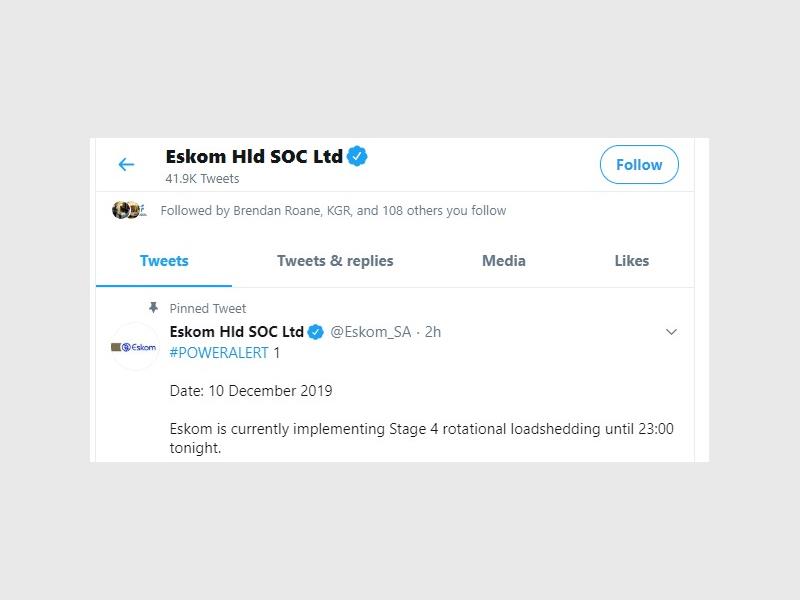
The News reports on a Tweet from Eskom, saying that “Eskom is currently implementing Stage 4 rotational load-shedding,” on 10 December. According to the table provided, Krugersdorp should not be experiencing load-shedding on the day. The possible stages for Krugersdorp on 10 December are 3, 6 and 2, which don’t fall within the proposed Stage 4 time. If, for example, on 30 December Eskom calls for a Stage 4 schedule, Krugersdorp would be affected from 8am to 10.30am, or from 10am to 12.30pm.
Eskom explains load-shedding as follows:
The frequency of load-shedding increases as higher stages are used. Stage 1 requires the least amount of load-shedding, three times over a four-day period for two hours at a time, or three times over an eight-day period for four hours at a time. Stage 2 will double the frequency of Stage 1, which means you will be scheduled for load-shedding six times over a four-day period for two hours at a time, or six times over an eight-day period for four hours at a time. Stage 3 will increase the frequency of Stage 2 by 50 per cent, which means you will be scheduled for load-shedding nine times over a four-day period for two hours at a time, or nine times over an eight-day period for four hours at a time. Stage 4 will double the frequency of Stage 2, which means you will be scheduled for load-shedding 12 times over a four-day period for two hours at a time, or 12 times over an eight-day period for four hours at a time.