
Eloise blows coastal birds all the way to the West Rand!
Cyclone Eloise brought devastation and even coastal birds were blown inland as far as the West Rand. Here is what you can do if you find one that is still alive.
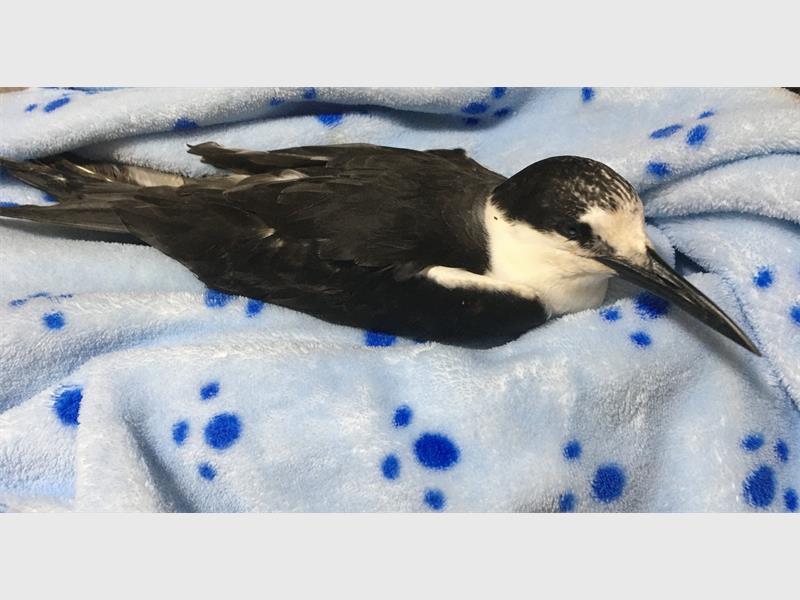
For the past few weeks, we’ve all been feeling the after-effects of Cyclone Eloise.
Apart from the devastation that Eloise brought with her, including cold weather and heavy rain, this cyclone also had an immense impact on wildlife, specifically coastal birds.
Michelle Watson, who works in wildlife rescue and rehabilitation said, “It’s not uncommon for seabirds to be blown far inland during heavy weather. During cyclone Eloise there were reports of Sooty Terns, and even a Frigate bird being seen far from the coast.”
She said these birds were too exhausted to make the return trip, and a number of them were picked up as far inland as the West Rand.
Michelle who runs the Facebook page, Wildlife Rescue, Johannesburg does wildlife rescues and rehabilitation, and is permitted under the South African Wildlife Rehabilitation Centre. She is also certified by the International Wildlife Rehabilitation Council and does rescue training and coalition for rehab centres.
The Sooty Terns are coastal birds that occur in tropical zones around the world. They spend their entire lives out at sea, only going ashore on remote islands to breed.
Sooty Terns are among the larger Terns and are about 33 to 35cm long, and have an impressive wingspan of between 82 and 94cm. They have a black forked tail with their chest and under parts having white markings. The juveniles are grey all over and have short black legs.
Michelle said it is highly unlikely that the ones that have ended up inland are still alive, as the ones they rescued so far seemed extremely emaciated. She, however, advised that if you come across one of these birds you should not attempt to feed it.
“They will be extremely weak and not able to digest food. The best course of action is to keep it warm and covered while you transport it to the closest wildlife rescue. If you do not know where one is, then please call a wildlife rehabilitation centre for advice on where to take it,” she said.
She also said that the Sooty Terns were not the only birds misplaced by Cyclone Eloise, and there have been sightings of a Frigate bird near Nelspruit, but unfortunately, it has not been found yet.
There have been reports of Sooty Terns being found everywhere from Mpumalanga to Gauteng. Unfortunately not all have survived and some in Polokwane, White River and Johannesburg are still being treated by vets.
“Once those birds are strong enough to make the trip, they will be transferred to a central location where they can be assessed before being returned to the coast. The number of birds in rehab is changing daily and most of them are still in a critical condition.”
Michelle said there are a number of permitted Wildlife Rehabilitation Centres across South Africa that are working collaboratively and staying in touch daily to ensure the best outcome for the birds.
You can get a list of these centres on Michelle’s Facebook page as well as details about where vets can send these birds once they have been stabilised.
Alternatively you can phone one of these numbers to be directed to a wildlife vet in your area: South African Wildlife Rehabilitation Centre 073 112 1131; Friends of Free Wildlife 082 5613681; Johannesburg Wildlife Hospital 084 514 3562; Wild and Free Wildlife Rehab 079 988 5748; or call the Wildlife Rescue Johannesburg for further details on 073 314 0674.