
It’s Featherbrooke vs Mogale – High Court decides
'Estate and its community at extreme risk of pollution and electrocution' – Judge.
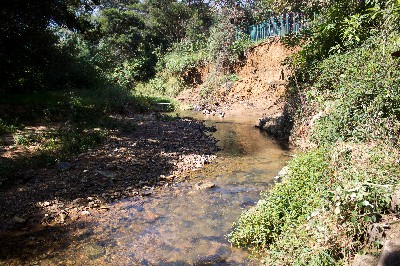
When the rains come the water level rises, the bounding river walls deteriorate and the fencing becomes unstable.
This is an over-simplified summation of Part A of a case heard earlier this year by the High Court of South Africa. It’s the Gauteng Local division of Featherbrooke Homeowners Association versus the Mogale City Local Municipality (MCLM) with multiple state departments stepping in as additional respondents, including the City of Johannesburg Local Municipality (CoJ); Minister of the National Department of Water Affairs and Sanitation (NDWAS); the Gauteng Department of Agriculture and Rural Development (GDARD); the Johannesburg Roads Agency (JRA), and the West Rand District Municipality (WRDM).
The first section of this article covers the applicant’s [Featherbrooke] claims and the second section covers the defendant’s [municipal and state department’s] response.
Featherbrooke legal representatives claim that when the Muldersdrift-Se-Loop stream is in flood, it causes the degradation and collapse of river beds and embankments near the estate, leading to flooding inside the estate.
In addition, presiding Judge Maletsatsi Mahalelo noted that, “The exposed state infrastructure is said to have placed the estate and its community at extreme risk of pollution and electrocution”.
The application was opposed by the MCLM, CoJ, NDWAS and JRA but the MEC of GDARD and the WRDM chose to abide by the decision of the court.
The river forms the boundary between the MCLM and CoJ, and passes the boundary fence of Featherbrooke.
Judge Mahalelo noted that, “It is common cause that the river is owned by the third respondent [NDWAS] and that the estate affected is in the jurisdiction of the first respondent, MCLM”.
Featherbrooke claimed that they had experienced a rapid increase in flooding from about 2010.
Judge Mahalelo’s report stated that, “This has placed pressure on the river’s embankments and beds to the extent that the embankments and beds are corroded, unstable and highly dangerous resulting in the applicant [Featherbrooke] experiencing flooding. Throughout the years and recently in February, March and April 2020, the estate experienced severe floods which have left its security fencing adjacent to the river bed hanging on literally by a thread and state infrastructure exposed, inter alia, a sewer pipe running approximately one metre away from the security fence. The applicant submits that the situation as it stands is untenable for it and the residents.”
Featherbrooke claimed that the municipal and governmental agencies involved were persistently derelict in their duty of maintaining and repairing the storm water system which ranges on the estate’s borders.
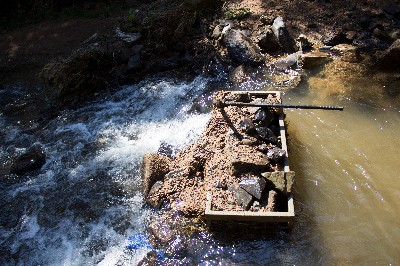
Judge Mahalelo noted that, “[Featherbrooke] alleges that a further contributory factor to the increase in volume of storm water into the river is due to an increase in urban development and hard surfaces, climate change and changing weather patterns and that storm water management in MCLM and CoJ municipalities have not been kept up to date with these changing patterns.”
Since 2010, Featherbrooke has written to the MCLM, CoJ and other state departments on this subject, later meeting with them on several occasions.
On 27 September 2010, Featherbrooke wrote to the MCLM saying, “This matter has now become so urgent that a potential environmental disaster was imminent during the first rain if no remedial work was done to protect the municipal sewer outfall main from collapse,” which reportedly resulted in a site visit with proposals being put to the fore.
In September 2010, Cyclone Projects and Consulting reported that, “A large crack which is approximately 15 metres long and parallel with the collapsed river embankment, developed. [This] increases the risk of serious environmental pollution due to the sewer line which serves approximately 100 household’s sewerage into the river”.
In November 2012 GDARD claimed that the promise made by the MCLM never came to fruition.
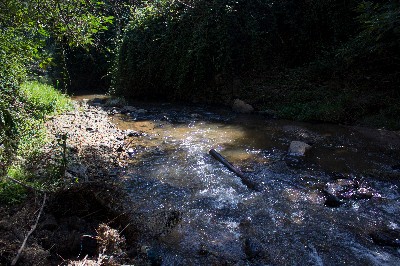
In the minutes of a meeting on 18 April 2013 between several government departments and Featherbrooke, it was stated that, “… there were five major floods during the last three years,” and later that the MCLM had some funds available for the project, which was reportedly their main excuse.
Just after an 18 May 2013 meeting, Featherbrooke requested help to remove two concrete rock structures which contributed to the flooding and erosion, but didn’t receive permission from DWS or GDARD. To date they have not been removed.
Featherbrooke later moved the security gate back at their own costs.
After the further floods in January 2016 which further threatened the estate, it was then that the applicant was advised to do a section 24(g) rectification in terms of the NEMA Act. It was at this stage that the state departments attempted to shift the responsibility of mitigation and remediation of the river onto the applicant,” noted Mahalelo.
On 7 July 2016 Featherbrooke commissioned a flood-line report by African Environmental Development in which it stated that the estate is prone to “flash flooding”.
On 3 August 2016 officials from DWS (Department of Water and Sanitation), IWULA (Integrated Water Use Licence Application) and MCLM attended a meeting whereby a way forward was decided; DWS would issue a section 19 of the Water Act to MCLM and CoJ and IWULA would apply for water use licences. Featherbrooke said that, to date, nothing has come of this.
In May 2017, a report by Anderson Vogt engineers noted that, “the 1:100 flood line encroaches on several properties and estate roads,” and that “the 1:100-year flood could be even higher than predicted”.
In March 2020, Featherbrooke appointed Delacon Legal who said about the many streams in the Muldersdrift area, “During rainy seasons the surface water causes a substantial volume of grit on the gravel roads […],” and that, “Only the built-up areas on the southern side have surfaced roads and storm water management facilities”.
The court document further pointed to far too many pieces of correspondences between the groups to mention here.
[Featherbrooke] says that from the correspondences the municipalities at all respective stages have acknowledged that it should not fall on [Featherbrooke] and the residents to undertake substantial costs of mitigation, remediation and prevention of damage caused by storm water,” noted Mahalelo.
One of the largest current concerns is the bounding fence which at parts hangs on by a thread while the ground below continues to erode and break away. Featherbrooke stated, “Due to the fact that the security fencing, although moved 9 to 12 metres, is again abutting and adjacent to the riverbed and embankment, its security and tenure are intricately linked to the management of the river”.
The court noted that Featherbrooke has reportedly, to date, spent about R5 million to address damages to the estate.
Featherbrooke finally asked during the court case that the responsible departments repair and maintain the stream beds, sewer system, power related infrastructure and more, draft a Stormwater Management Plan of the area, moderating the flow of water to the stream or, if the departments fail to do so, Featherbrooke be allowed to take their own actions to ensure the safety of the estate and its residents and be paid for by the MCLM, CoJ and NDWAS.
This is the defendant’s (municipal department’s) response.
According to the court document, the MCLM argued that the flow of a river doesn’t fall within its competence, that the storm water management system in built-up areas and not the actual storm water management in general is a municipal function, that the “provisions of an adequate storm water system is a condition which was imposed on the developer of the estate,” that it fell on Featherbrooke to provide adequate storm water infrastructure to ensure that the estate doesn’t get flooded, that “flooding in the estate is due to the fact that certain parts of the estate are constructed within a flood line,” Featherbrooke is obliged under the Water Act to take steps to prevent water pollution which it complained of and that the municipality “cannot simply be ordered to repair infrastructure which it has not budgeted for”.
The CoJ and JRA said that they don’t have jurisdictional responsibility over MCLM.
They added that they have no legal duty to fulfil constitutional obligations in the MCLM, claiming that Featherbrook was “for many years after the construction of the estate well aware of the new regulations and requirements relating to building within 100-year flood line and a reasonable person [Featherbrooke] would have taken steps to avoid the risk once he had knowledge of it”.
NDWAS stated that, “The relief sought by the applicant [Featherbrooke] cannot be justified by a constitutional right as the applicant has failed to refer to any statutory provision enacted to promote or protect the constitutional right.”
Mahalelo found that, “The relief sought by the applicant is founded on the fundamental right expressed in section 24 of the Constitution. It provides that: Everyone has the right to an environment that is not harmful to their well-being and to have the environment protected, for the benefit of present and future generations, through legislative and other measures that (1) prevent pollution and ecological degradation, (2) promote conservation and (3) secure ecologically sustainable development and use natural resources while promoting justifiable economic and social development.”
Mahalelo also pointed to section 40, 41, 152, 153, 154 and 156 of the Constitution as well as the National Environmental Management Act 107 and the Local Government: Municipal Systems Act 32.
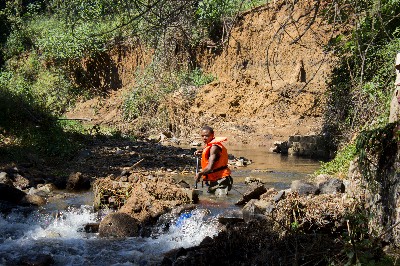
Mahalelo pointed out that according to section 40, “(1) government is constituted as national, provincial and local spheres of government which are distinctive, interdependent and interrelated; (2) All spheres of government must observe and adhere to the principles in this chapter (Chapter 3) and must conduct their activities within parameters that this chapter provides,” and that Section 41 details the principles of cooperative government and intergovernmental relations which is applicable to this case. Furthermore, “Section 152 (1) (b) of the Constitution provides that one of the objectives of local government is to ensure and oversee provisions of services to communities in a sustainable manner. (1) (c) is to promote social and economic development. (1) (d) aims at promoting a safe and healthy environment. (1) (e) fosters public participation”.
In summary, Mahalelo noted, “Having evaluated the evidence, I find that there is very little contradictory evidence to the applicant’s (Featherbrooke) version placed before court. What the applicant alleges to be the current state of the river, the steps the applicant took to try and resolve the matter, the reports presented and failure to take any positive or immediate steps of whatever nature by any of the respondents were all left intact, apart from bald denials”.
According to Mahalelo, the evidence in respect of which no bona fide dispute of fact has been raised indicates the following:
1) Featherbrooke has been experiencing flooding ever since 2010
2) The flooding has exposed infrastructure which every day presents ongoing risk of pollution, contamination, and even electric shock
3) The security fence is now hanging on literally by a thread and will expose residents to significant harm if it should come down
4) This is caused by the increase in the flow of storm water which is deposited into the river by both MCLM and CoJ
5) The storm water system in respect of the provision of storm water flowing down the river has been compromised
6) The estate development was approved prior to the National Water Act provisions coming into effect
7) In excess of 10 years the applicant has been seeking assistance from the state department to remediate, mitigate and rehabilitate the river and protect state infrastructure alongside the river which causes threat to life and limb
8) No steps have been taken by any of the relevant departments to even remove the impediments, being two concrete rock structures that had become a major negative factor contributing to the flooding and erosion
9) There is no explanation as to why despite various engineering reports indicating measures to be undertaken no immediate action has been taken except for the state departments to shift the blame from one department to the other
10) Neither the MCLM, CoJ or the Minister [NDWAS] have indicated if they have acted in the discharge of their constitutional obligations or statutory obligations imposed on them
11) Delacon’s report revealed that there is no storm water management plan for the overall jurisdictional areas
12) Despite the departments using the words ‘disaster’ and ‘urgent’ due to the ongoing floods and storm water mismanagement for years there seems to have been no cooperative management in so far as MCLM and CoJ are concerned
13) There is a legislated and constitutional duty on all spheres of government to mitigate and prevent future disaster type situations
14) In terms of section 56 (2) (b) of the Disaster Management Act the costs of repairing or replacing public sector infrastructure should be borne by the organ of state responsible for the maintenance of such infrastructure
Mahalelo concluded that, “I’m therefore satisfied that the applicant’s [Featherbrooke] section 24 constitutional rights are being infringed upon,” and, “The applicants have not only satisfied me that they have a prima facie right, but that their constitutional rights are being infringed upon”.
The court then ordered the MCLM to “immediately and in future do all things necessary to repair, underpin, remediate and manage the stream beds adjacent to the applicant’s security fencing,” and the same applies to state-owned infrastructure in and near Featherbrooke in this regard. The MCLM is also expected to report back on the implementation of the structured interdict within 20 days and do so every three months.
The parties involved were granted leave to supplement the papers in ‘Part B’ of the court case and costs are to be determined during ‘Part B’.