
Solana and Polygon: the Etherium killers
According to crypto expert and Quadency founder Rosh Sign, Ethereum will need to quickly do something to keep competing with other altcoins that have faster and more cutting-edge consensus mechanisms getting lots of funding.
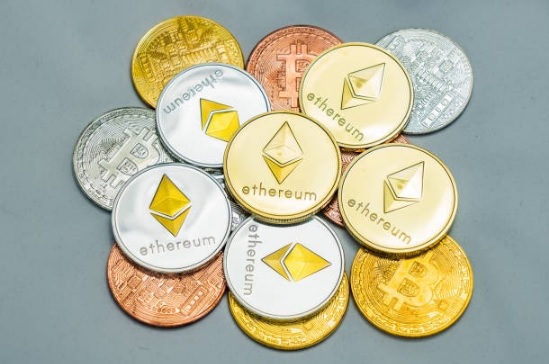
After growing by over 12,000% in the last year, Polygon and Solana are seen as the biggest ethereum killers as they’re cheaper and surging faster than the second-largest cryptocurrency in the world. The two altcoins have grown significantly this year, and the party is only getting started for these fast-growing networks alongside a slew of other competing altcoins poised to witness bigger gains. That’s all thanks to various innovations that are continuing to attract a growing base of investors on the best crypto trading platform in South Africa and around the world.
According to crypto expert and Quadency founder Rosh Sign, Ethereum will need to quickly do something to keep competing with other altcoins that have faster and more cutting-edge consensus mechanisms getting lots of funding. However, Rosh noted that Ethereum 2.0’s upgrade should boost its competitiveness if it’s executed by early 2022.
The rise of Solana seems to have significantly impacted Ethereum’s position on the market, as it seems to offer solutions to lots of issues faced by ethereum users. That has made many crypto investors wonder whether Solana is the next ethereum and the reasons why it’s becoming the biggest threat to the world’s second-largest digital coin.
What Is Solana (SOL), And What Does It Offer?
Solana (SOL) is a public blockchain network that features a cryptocurrency ecosystem. Its developers designed it at Solana Labs in San Francisco, creating it to streamline fast transactions with robust security algorithms and process transactions at relatively less fee.
Most features of Solana are quite similar to bitcoin and ethereum, with the ability to handle around fifty thousand transactions per second. Its transaction speed can also increase to around 70,000 transactions per second, making it the world’s fastest blockchain. That also makes it a solid competitor in the cryptocurrency market.
Other important features about Solana include:
Byzantine Fault Tolerance (BFT)
The BFT system offers solid protection for its environment, guaranteeing that a specific node blunder won’t influence a correction on the whole system. This algorithm also encourages the Solana nodes to continue working even after multiple failures.
CloudBreak
Solana uses a horizontal scaling technique, which amplifies its scalability. Cloudbreak also organizes its database and helps to solidify a connection between software and hardware.
Turbine
Solana divides blocks into small batches, increasing the transaction speed. These batch sizes are around 64KBs in size, and hence it can quickly transfer huge data sizes of up to 128 MB.
Why is SOL Seen as the Ethereum Killer?
The primary justification why investors see Solana as an Ethereum killer is the elements that the new altcoin offers. Solana is also distinguishable from Ethereum as it’s a proof-of-work and proof-of-stake blockchain that’s more eco-friendly.
Solana is also an open-source blockchain project designed for hosting decentralized applications, and its popularity has only progressed since its launch. The ethereum blockchain also seems powerless in offering fast performances at lower transaction fees at the moment. That explains why traders are shifting towards Solana as the investments on DeFi NFT (non-fungible tokens) continue growing. However, experts aren’t sure whether Solana will be more endurable in the future market.
Can Polygon Challenge Ethereum alongside Solana?
Polygon (MATIC-USD) is designed as a layer two ethereum blockchain formally known as MATIC until its name changed earlier in February. Polygon was designed as a scalable and interoperable network, making it great for running decentralized finance applications.
Polygon currently refers to itself as the internet of Ethereum Blockchains, working as a platform for developers to launch blockchain networks or a software development kit. That makes it a multi-chain system and the 21st most extensive crypto network with $10.39 billion on 17th November.
What Does Polygon Do Better than Ethereum?
The most critical aspect when analyzing a blockchain system is reviewing your computer. Polygon’s blockchain system has a decentralized team of global collaborators who keep developing this open-source project. The system can effectively reduce the transaction fees for people who use ethereum-based applications while creating an alternative scaling solution.
Polygon uses a multifaceted approach to blockchain issues affecting ethereum, which is why some investors are calling it the ethereum killer. The system has found a way to fix ethereum’s scalability issues by creating snapshots of different channels and using them on its network. That’s essential for large-scale transactions that require high speeds on the DeFi realm.
Will Ethereum 2.0 Affect Polygon?
Polygon’s situation is quite unique from the different projects that might be affected by the highly anticipated Ethereum 2.0. That’s because Polygon sits on top of the ethereum blockchain to offer a scaling solution, while all the other competitors offer an alternative solution.
Polygon relies on the PoS (Proof-of-Stake) consensus mechanism that ethereum plans to use on Ethereum 2.0. That means the ethereum upgrade will significantly affect Polygon, although the project will still have its place in the new era of cryptos.
According to Polygon’s COO Sandeep Nailwal, the highly anticipated ETH 2.0 will not push out Polygon. During the interview, Nailwal estimated that Ethereum would improve its scalability by 64X after implementing sharding for scaling. That means handling up to 3000 transactions per second, which is nowhere near enough to outmatch layer-2 scaling solutions.