
Tariff war: High Court dismisses AfriForum’s case
AfriForum took the municipality to court regarding its high electricity tariffs and the court ruled against them.

Residents were full of hope after AfriForum dragged Mogale City Local Municipality (MCLM) to court regarding high electricity tariffs. On February 3, however, the Gauteng High Court in Pretoria ruled in favour of the municipality.
AfriForum’s media relations officer Megan Swart said they took on this case against the municipality’s new electricity tariff structure which raised tariffs at certain usage levels to more than 30%.
• Read the initial article here: Mogale City dragged to court over electricity tariffs
“We argued that the municipality had unlawfully implemented Inclining Block Tariffs (IBTs) with an electricity tariff increase. The civil rights organisation approached the court to declare this decision illegal and invalid,” said Swart.
“In 2024 the municipality decided to implement IBTs without allowing the public to challenge this new tariff structure at the annual Integrated Development Plans (IDP) public hearings. The municipality applied a flat-rate tariff structure in the past, but during last year’s public hearings, it simply announced a 12,7% increase without making residents aware of the introduction of the IBT structure. This has resulted in some residents and businesses paying an exorbitant amount per unit of electricity,” she further explained.
As a result, AfriForum thus collaborated with Krugersdorp Citizens United and members of the DA, gathering evidence about the municipality’s failure to hold sufficient public hearings on the new tariff structure, where according to the constitution, municipalities should encourage community participation in local government affairs.
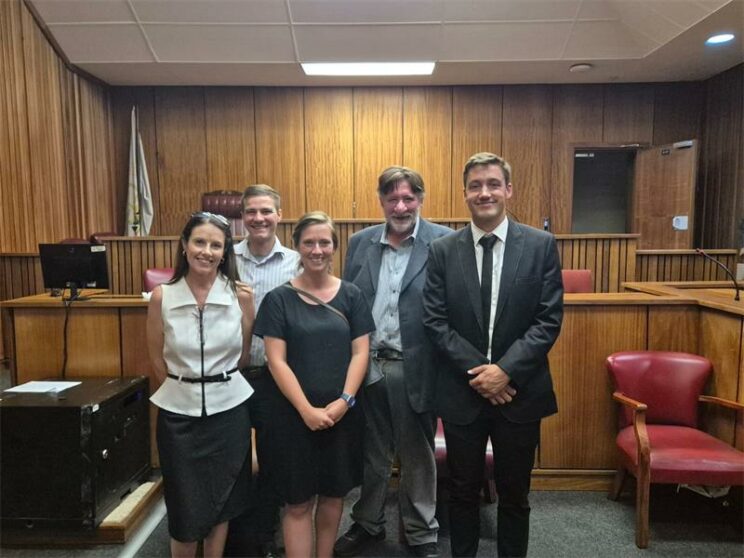
The court dismissed the case due to the National Energy Regulator of South Africa (Nersa) not being part of the proceedings, where they have a direct and substantial interest in the matter.
MCLM communications officer Adrian Amod said the municipality’s legal division now wishes to inform the media and public of the court’s outcome.
“The High Court dismissed AfriForum’s application, ruling that the lawsuit was invalid, largely due to the municipality’s exclusion of Nersa as a party to the case [a non-joinder issue]. The court affirmed that tariffs are determined and approved by Nersa before municipal implementation and are regulated by the energy regulator. As a result, the application was deemed ‘totally flawed’ due to the non-joinder of Nersa. The court’s decision aligns with the municipality’s position, which maintains that the increase in tariffs followed the approval of the cost of supply report by Nersa. Following this, council approval was sought for the proposed tariffs, as endorsed by the energy regulator,” Amod commented.
“Despite disputes from resident associations, opposition political parties, businesses, and residents, it is important to note that the tariffs are designed to be cost-reflective and promote efficient energy usage. High usage is charged at higher rates, while low usage is charged at lower rates, encouraging responsible energy consumption. Additionally, the municipality’s electricity tariffs are structured to protect low-income households by using the IBT. These tariffs increase with higher electricity usage, assuming that poor households use less electricity. IBT is also designed to encourage prepaid electricity use, as no fixed service charges are applied to prepaid users, reducing costs related to debt collection and meter reading,” he concluded.