
Echoes of Krugersdorp: The early mining days of Krugersdorp
The 21st edition of Echoes of Krugersdorp uncovers how bold promotion, geological reality and speculative frenzy shaped the town’s dramatic gold rush between 1887 and 1892.
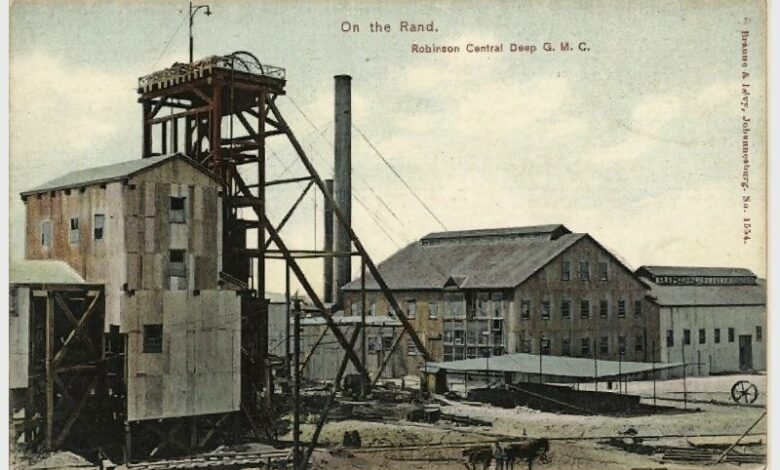
In the 21st edition of Echoes of Krugersdorp, produced in partnership with the Krugersdorp Heritage Association (KHA), we explore how the town began to flourish following the discovery of gold-rich fields that set its development in motion.
According to KHA co-founder Jaco Mattheyse, Krugersdorp’s goldfields were geologically inferior to much of the rest of the Witwatersrand from the outset.
“The reef was narrow, the ore often of low grade, and in many places it fractured badly. These weaknesses were not immediately apparent, however, as early tests produced encouraging yields and fuelled considerable optimism,” he said.
Early promise and bold promotion
One of the first mines to be established was the Luipaard’s Vlei Gold Mining Company Ltd, founded in October 1887. Jaco explained that it was a modest venture of 50 claims, floated on capital of £35 000 (about R840 000). Its alluvial quartz deposits lay close to the surface and could be quarried rather than mined, which kept operating costs low and ensured early profitability. The first crushing yielded an average of one ounce of gold per ton of ore, and investors were promised a ‘thumping dividend’.
In the remaining months of 1887, several similar mines were opened, including Witpoortje and Groot Paardekraal. Cecil Rhodes’s Gold Fields of South Africa acquired several West Rand properties, only to discover that one lay on poor-grade ore and another on a geological fault within the Main Reef series.
“Encouraged by these early successes, dozens of small mines were established across the Krugersdorp goldfields during 1888. Luipaard’s Vlei farm, immediately south of the town, became the centre of a dense cluster of ventures, including the Vera, the Shamrock and the Great Kruger. The latter was regarded as a giant at the time, having been floated on capital of £150 000 (about R3.6m),” Jaco continued.
Unlike the immensely wealthy Randlords of the East and Central Rand, most West Rand mine owners were newcomers to the industry and men of relatively modest means. To attract speculative capital, many exaggerated the prospects of their properties. Promotion on the West Rand appears to have exceeded that elsewhere on the Witwatersrand and, by 1889, no fewer than 50 mines had been established in the area.
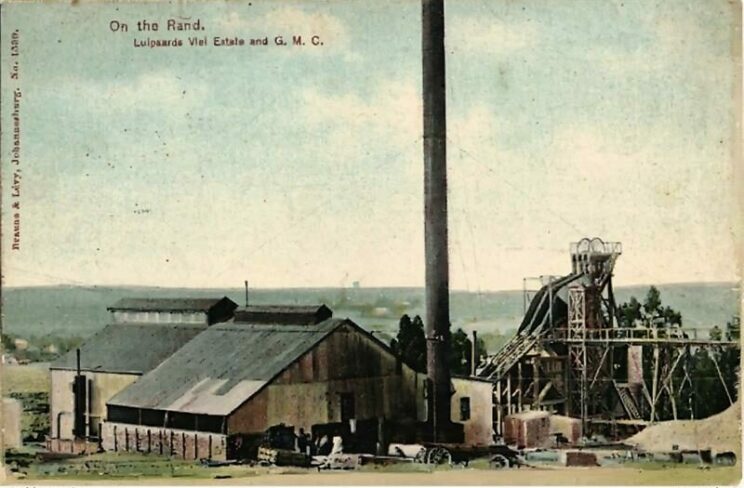
Mine owners issued glowing reports, emphasising every conceivable advantage.
The Shamrock was promoted as a particularly desirable investment because its battery stood directly on the claims, eliminating transport costs, while the Great Kruger’s conglomerate was described as ‘very soft and easily extracted with pick and shovel’.
Such claims attracted the attention of several mining millionaires from the Kimberley diamond era. Jaco noted that JB Robinson acquired claims on Waterfall Farm (Waterval), and Rhodes’s company bought shares in the West Battery in 1890.
Rhodes’s involvement remained limited, however, and the true heavyweights of the mining industry largely avoided Krugersdorp. Their caution proved justified. As early as 1888, troubling reports began to emerge. The sudden closure of the Roodepoort Central mine, where the battery was stopped and workers dismissed with little notice, raised alarm. Newspaper reports speculated that the company’s working capital had been exhausted.
By early 1889, the press warned that share speculation on the West Rand had become rampant. Jaco explained that King Solomon’s mine attracted particular criticism. When the South Standard mine was floated near Krugersdorp on capital of £150 000 (about R3.6m), one of its listed directors publicly repudiated statements in the prospectus and objected to the use of his name, prompting warnings that the venture should be regarded as suspicious.
No individual did more to foster shareholder cynicism than Robinson. In 1889, he launched the Randfontein Gold Mining Company Ltd, investing an extraordinary £2 million (about R48m). The property dazzled investors, comprising seven farms covering 40 000 acres, with 3 000 claims spread across 4.5 square miles. Robinson skilfully drove up enthusiasm, and the market value of the property more than doubled within weeks. He appears to have sold his shares at their peak, after which prices collapsed dramatically. A subsequent press report warned that the property had ‘hardly been touched’ and that meaningful results would take years to materialise.
Collapse, recession and hardship
The boom-and-bust cycle experienced by Krugersdorp between 1887 and 1890 was not unique to the West Rand, but the gap between promotional claims and geological reality appears to have been wider here. This intensified volatility, discouraged serious long-term investment and attracted increasingly speculative interests.
A fundamental challenge across the Witwatersrand was the structure of the gold reef itself, tilted like a giant saucer. Shallow outcrop mines were quickly exhausted, while deeper reefs required costly deep-level mining techniques. Many under-capitalised miners on the West Rand were unable to adapt and were driven into bankruptcy.
Krugersdorp’s difficulties deepened after 1890 as mining shifted underground. Deep-level operations demanded heavy investment in machinery, infrastructure and labour, while returns lay months or even years in the future. Coming on the heels of the speculative collapse, this reality plunged the town into recession in 1889 and 1890.
The situation worsened when it became clear that deeper gold deposits were embedded in pyretic ore, which resisted existing extraction methods. This proved fatal for many mines. The Great Kruger, Edna and King Solomon closed entirely, while others were sold or liquidated at bargain prices. By 1892, numerous mines stood idle across the district.
The slump devastated Krugersdorp’s middle class. As miners left the area, shopkeepers and tradespeople faced a shrinking customer base.
A bleak newspaper description from January 1891 captured the mood: business deteriorated week by week, the mines lay dormant, and tradespeople waited “Micawber-like” for improvement.
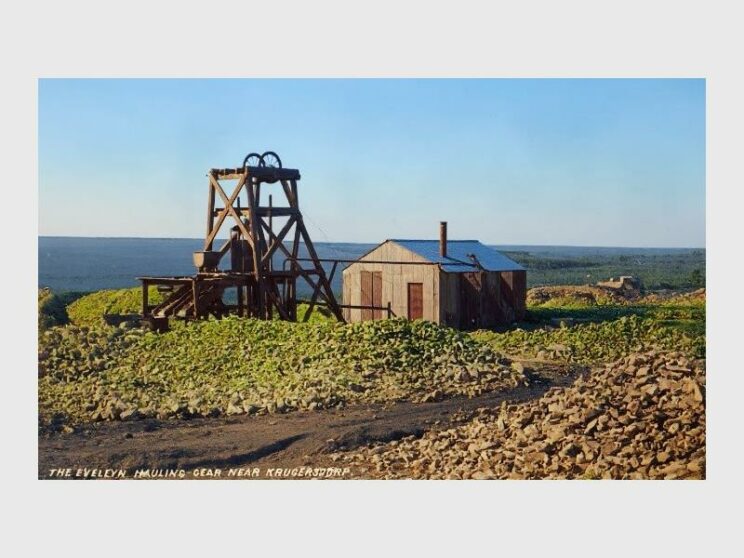
Innovation, consolidation and cautious recovery
The downturn also encouraged consolidation, as many small ventures were absorbed into larger concerns better able to exploit economies of scale.
The French-financed Champ d’Or mine briefly revived local morale and, by late 1891, was one of the few productive operations on the West Rand. This optimism was short-lived. In April 1892, the Paris bank backing the Champ d’Or collapsed, leaving the mine financially stranded. Observers soon described a desolate Luipaard’s Vlei basin, dotted with silent batteries and idle machinery.
A final glimmer of hope appeared later in 1892 with the development of the MacArthur-Forrest process, which enabled gold to be extracted from pyretic ore. Jaco said confidence in deep-level mining revived, new companies were established, and some abandoned mines were resuscitated. Speculation, however, returned just as swiftly, and ventures of doubtful geological merit continued to be promoted.
“Krugersdorp’s first mines reveal a mining community shaped as much by speculation and disappointment as by gold itself. Early optimism, fuelled by shallow deposits and bold promotion, gave way to geological reality, financial collapse and repeated cycles of boom and bust. While technological innovation eventually offered renewed hope, the town’s early years were marked by volatility and resilience in equal measure. These formative experiences left a lasting imprint on Krugersdorp’s landscape and character – an echo of ambition, risk and endurance that continues to resonate in its history,” he concluded.