
Gauteng water crisis: Government assesses critically low Kagiso reservoirs
Government steps up intervention as Kagiso and surrounding areas face prolonged water supply disruptions
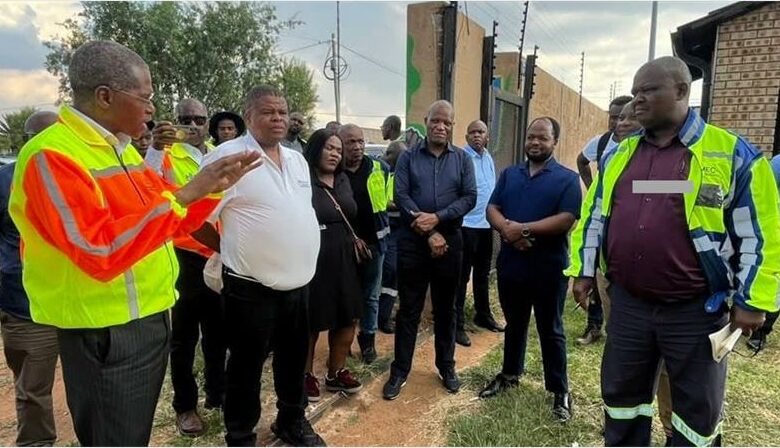
Amid ongoing water supply disruptions across Gauteng, Co-operative Governance and Traditional Affairs Minister Velenkosini Hlabisa led a high-level oversight visit to the Kagiso Reservoir, one of the areas hardest hit by prolonged outages.
He was joined by Deputy Minister Dickson Masemola, Deputy Minister of Water and Sanitation David Mahlobo, and Gauteng MEC for Infrastructure and Co-operative Governance Jacob Mamabolo.
The visit follows weeks of intermittent water supply affecting several parts of Gauteng, including communities in Mogale City. According to Mogale City’s senior communications practitioner, Tendani Shavani, the delegation was hosted by Deputy Mayor Bongani Nkosi.
Also read: Rand Water cuts supply – Mogale residents to brace for shortages
Municipal Water Services officials briefed the delegation on the extent of the problem, noting that Mogale City is facing similar pressures to other municipalities across the province. Kagiso was identified as one of the most severely affected areas, with the Kenmare, Azaadville and Kagiso reservoirs currently at critically low levels.
Officials attributed the situation largely to reduced pumping capacity from Rand Water, which is under strain as provincial demand continues to exceed available supply.
The municipal technical team also highlighted infrastructure design challenges, explaining that areas located closest to reservoirs are often the first to lose water when supply interruptions occur.
Also read: Rand Water issues urgent consumption warning
Addressing the delegation, Hlabisa raised concern over the length of the outages, particularly in Kagiso, and indicated that additional national support would be deployed within the next seven days to assess progress and assist in stabilising supply.
Engineers from the Department of Water and Sanitation will work alongside Mogale City’s technical team to strengthen capacity and help develop longer-term solutions. Support will also be provided by the Municipal Infrastructure Agency, which will deploy skilled technical personnel to assist with planning and infrastructure interventions.
As part of the programme, the delegation conducted on-site assessments to review water levels and infrastructure conditions, aimed at gaining a clearer picture of the operational challenges contributing to the ongoing disruptions.