Surge in malaria cases a cause for concern – NICD
Citizens who have flu-like illnesses are urged to visit their healthcare providers to get tested for the disease.
The National Institute for Communicable Diseases (NICD) has issued an alert after noting a ‘significant increase’ in the number of malaria cases in Gauteng and the endemic areas of north-eastern KZN, parts of Mpumalanga and Limpopo.
In a media release issued today, the NICD states that ‘many cases of severe malaria are due to late presentation or late detection’.
“Undiagnosed and untreated malaria rapidly progresses to severe illness, with a potentially fatal outcome.
“Any individual presenting with fever or flu-like illness, if they reside in a malaria-risk area in Limpopo, KwaZulu-Natal and Mpumalanga or have travelled to a malaria-risk area in the past six weeks, must be tested for malaria by blood smear microscopy or malaria rapid diagnostic test. If they test positive for malaria, the patient must be started on malaria treatment, immediately.”
The national public health institute reminds patients to inform their healthcare providers of their recent travel history, especially to neighbouring countries and malaria-risk areas in South Africa.
“Odyssean or ‘taxi malaria’, transmitted by hitchhiking mosquitoes, should be considered in a patient with unexplained fever who has not travelled to a malaria-endemic area but is getting progressively sicker, with a low platelet count.”
What is malaria?
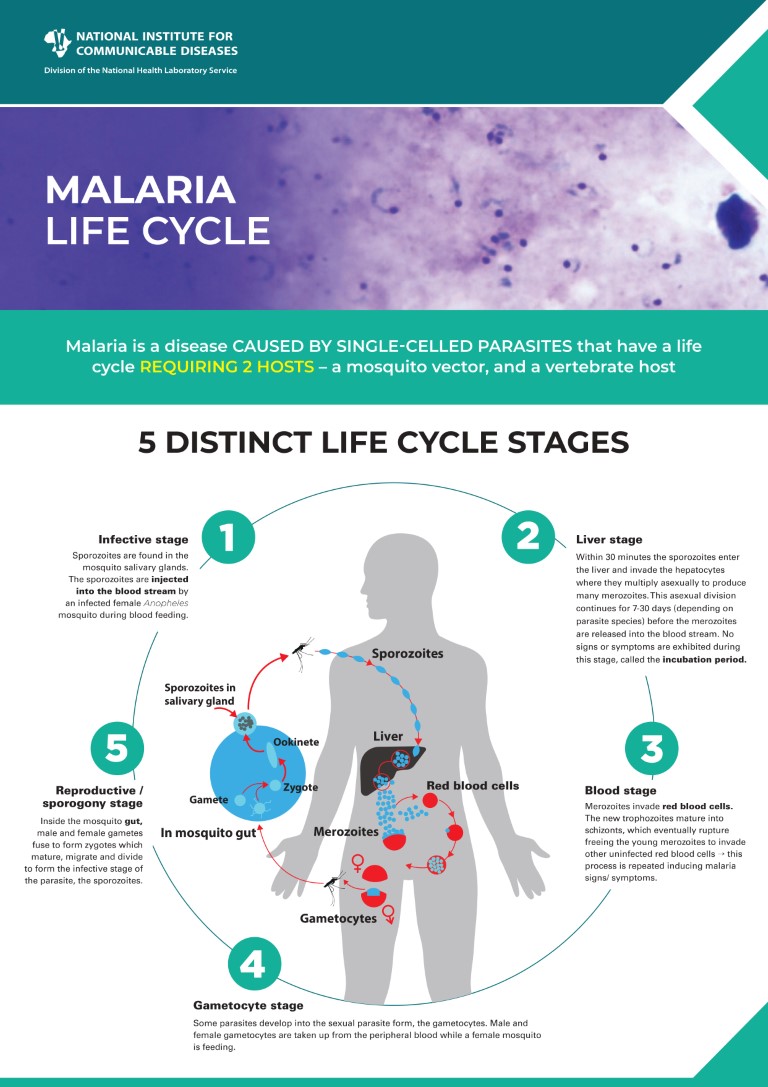
The NICD defines malaria as a ‘potentially life-threatening disease caused by blood parasites of the genus plasmodium’.
The disease is spread by infected mosquitoes that bite humans. “In the human body, the parasites first multiply in the liver, and then infect the red blood cells.”
Malaria is one of the globe’s six major causes of death from communicable diseases, while – according to the NICD – 440 000 annual malaria deaths occur in Africa.
“In the past few years, (2015–2019) South Africa has had between about 10 000 and 30 000 notified cases of malaria per year, and the National Department of Health is planning to eliminate it (ie, no local transmission) by 2023. However, there are increasing problems with the importation of malaria cases, vector control spraying programme delivery, vector insecticide resistance, and many health provision challenges that stand in the way of this objective,” its website states.
Read original story on letabaherald.co.za