Hippo harvesters were acting illegally
According to the Act therefore, it does appear that the utilisation or consumption of an animal killed by a motor vehicle on a public road is indeed illegal, unless written permission in the form of a permit has been granted by the Department of Economic Development, Environment and Tourism Limpopo (LEDET).
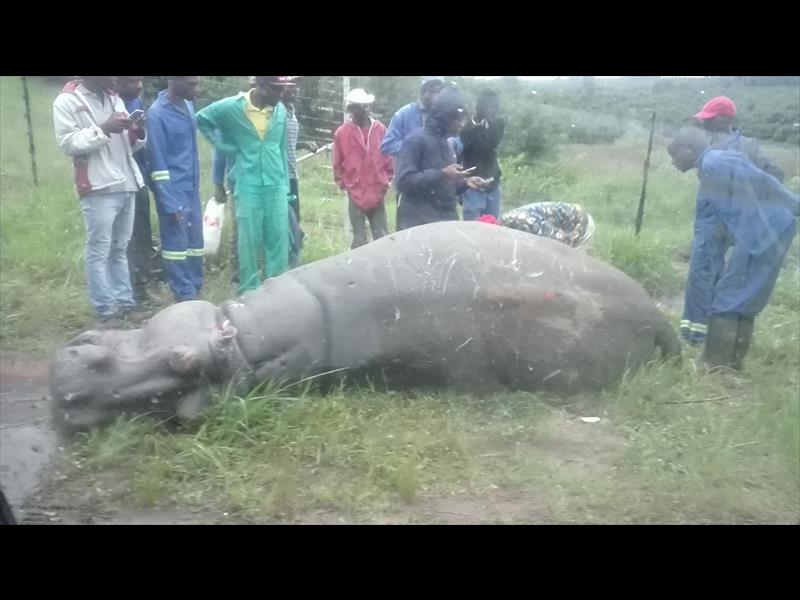
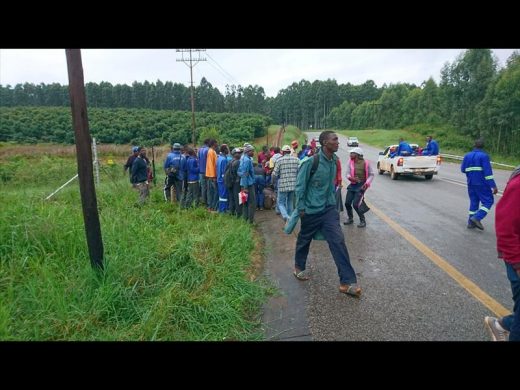
A hippo that was hit by a heavy goods vehicle on the road just outside Modjadjiskloof on the morning of Monday, February 26 was later butchered by local people for meat.
According to Ellie Potgieter from Letaba SPCA, a Checkers vehicle struck the hippo in the early morning, at approximately 05:45.
The driver of the vehicle was uninjured.
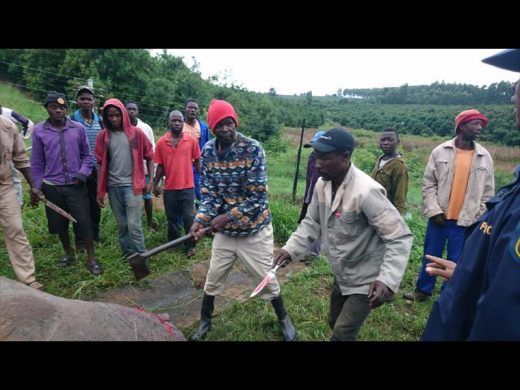
By the time the SPCA arrived on scene, the hippo had already succumbed to its injuries from being struck by the vehicle and local residents began chopping the carcass to pieces in order to utilise the meat.
The story caused quite a stir on social media with some locals being outraged whilst others were firmly sticking to the idea of, ‘waste not, want not.’
Letaba Herald recently reported on a similar incident whereby a monkey was being braaied by a local man on the roadside.
At the time, Ellie Potgieter from the Letaba SPCA said to Letaba Herald that their is no law in prohibiting anyone in eating any animal.
“A person may eat any animal. It is the same as if you would go and shoot an antelope. If a person is hungry, and the animal is killed in a humane way, there is nothing the SPCA can do to lay charges. As long as the animal is not killed and commercially sold to gain profit out of it,” Potgieter told the Herald.
However, since publishing the story, Herald received an email which outlined that the utilisation and consumption of wild animals without a permit is indeed illegal.
Read: TZANEEN: Having a vervet for breakfast is legal
Lourens Willemse, Director of Boots on the Ground anti-poaching group, told the Herald,”I read the article about the vervet monkey being legal for consumption… it is not legal to consume any wild animal without permits given by respective land owners, nature conservation etc. this also includes public roads.” Willemse informed the Herald.
Willemse attached the Limpopo Environmental Management Act No.7 of 2003 and highlighted the laws that were applicable to this specific case.
The Act does indeed state the following:
“37. Picking up or removal of wild animals.—(1) No person may pick up or remove a wild animal which has not been hunted or caught lawfully or which has been killed or caught, or apparently killed or caught by an animal or bird of prey, unless such person has obtained the written permission of the owner of the land on which such wild animal was found beforehand or, where the owner is not available, of the office of the environmental compliance officer or the official in charge of the police station nearest to the land on which the wild animal was found. (2) For the purpose of subsection (1) “land” includes a public road.”
““wild animal” means the carcass, egg, flesh, (fresh or cured), biltong, hide, thong, tooth, tusk, bone, horn, shell, scale, claw, nail, hoof, paw, tail, ear, hair, feather or any other part or derivative of any of the animals mentioned in paragraphs (a) to (e).”
According to the Act therefore, it does appear that the utilisation or consumption of an animal killed by a motor vehicle on a public road is indeed illegal, unless written permission in the form of a permit has been granted by the Department of Economic Development, Environment and Tourism Limpopo (LEDET).
With the case of the hippo, Letaba Herald contacted LEDET Officer, Tsakane Tshuketana for comment and was advised that LEDET had not granted permission for the meat to be harvested, “Our officials should have been there to monitor the situation. The people acted illegally.”
Read: WARNING: Video-Aggressive hippo’s at Tzaneen dam
Another LEDET Officer informed the Herald that there are often concerns over the health of the animal and so the carcass needs to be inspected by a veterinarian before permission is given for the meat to be distributed for human consumption.
Legally wrong but logically right? Many still argue that it is better to see the meat utilised rather than left to decay.
What is your opinion? Feel free to share with us, beth@herald.co.za or bertus@herald.co.za