Foundation saves historic baobab tree
A mission to save the historic baobab tree in Leydsdorp where a fig tree has lodged itself in the crown of the baobab, was successfully conducted recently.
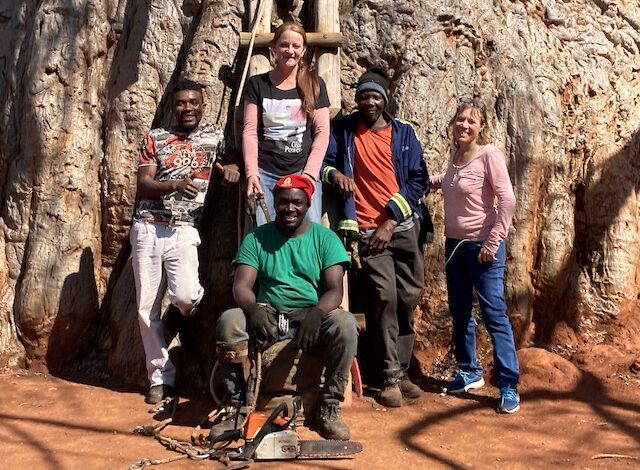
Dr Sarah Venter, founder of the Baobab Foundation and a dedicated team of tree climbers spent the day to see if they can save the famous baobab at the request of the owner of the farm and the tree guardian, David de Meyer. Venter said that as one of South Africa’s highly visited baobabs it was important to remove the fig which, if not removed, could eventually strangle the baobab.
The giant baobab is situated close to the historic mining town of Leydsdorp, outside Gravelotte. In the late 1880’s a brief gold rush to the area attracted gold-diggers from all over the world, but due to high death rates among the prospectors, mainly due to malaria, and the opening of the gold fields on the Witwatersrand, Leydsdorp was soon abandoned.
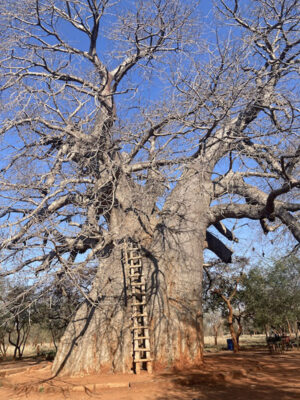
All that remains today is a hotel and pub and a few abandoned buildings, but it is also the site of one of South Africa’s most visited baobabs. The Leydsdorp baobab is a magnificent tree which has a girth of 19.67 metres and a height of 26 metres. It has a large hollow in the main trunk that visitors can climb into and a rickety wooden ladder that goes up the main trunk of the tree affording a view of the surrounding woodland.
Also read: TZANEEN: World famous Baobab… splits again
In 2017, Dr Adrean Patrut, a Hungarian researcher, dated the tree to just over 1100 years old (adjusting for the loss of wood in cavity). Using carbon dating techniques, which is regarded as the most reliable form of dating, he took samples from the inside of the hollow which were analysed at Woods Hole Oceanographic Institution in the United States.
The carbon dating also suggests that the tree would have been a similar size during the gold rush, 150 years ago. The tree climbers, led by Petro Jacobson, the owner of Tree Top Surgeon in Makhado, and her experienced helpers Lufuno Makhari, David Sethe and Dankie Mababo climbed the tree equipped with ropes, harnesses, helmets, hand saws and a chain saws.
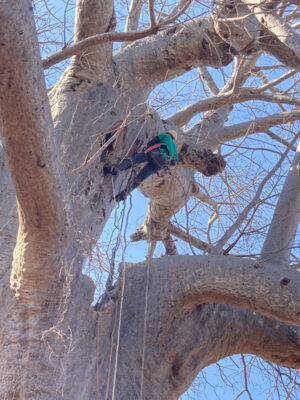
They managed to remove the large fig tree growing in the center of the crown and three smaller trees found on the upper branches and trunk. The roots of the larger tree had already grown over three metres in length, and some had started to wrap themselves around the tree. Fig trees are known to strangle other trees, eventually leading to the host tree’s death.
“Even though it may have taken a very long time before the baobab succumbed, the sooner it was removed, the better,” said Venter. “The larger fig tree had already embedded itself deep into the trunk and it took a lot of work to dislodge it,” she concluded.