Limpopo pharmacists demand employment
Limpopo pharmacists protest for employment, demanding action from the Department of Health to address staffing shortages and improve healthcare services.
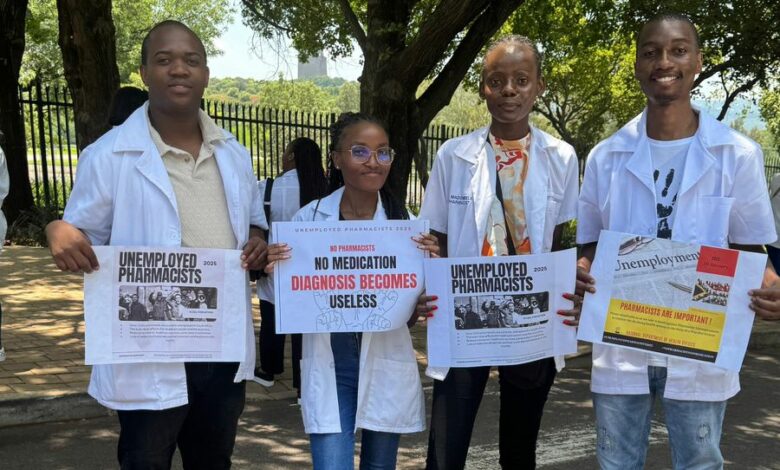
LIMPOPO – Qualified pharmacists in Limpopo recently staged a protest outside the Limpopo Department of Health in Polokwane, demanding employment.
The group has given the department 14 days to respond to their demands for appointment letters.
In a memorandum submitted to the department, the protesters urged officials to employ more than 200 pharmacists in the province. They called for post-community service pharmacists to be placed in government health institutions within their respective district municipalities upon completing their service.
The memorandum also highlighted the need to fill vacancies left by pharmacists who have either exited the system or been promoted, arguing that hiring for these existing roles would not require additional budget allocations.
Kamogelo Ramodike, a pharmacist who completed his community service at Sekororo Hospital in Maruleng, investigated the quality and compliance of pharmaceutical services in primary healthcare facilities.
His study, which involved interviews with 50 patients from 10 clinics, revealed significant gaps in patient knowledge about medication. Only 17 patients could name their medications, while 27 were aware of their purpose.
Alarmingly, none of the medications was properly labelled, and patients reported receiving minimal counselling on their prescriptions.
The study also found serious deficiencies in medication safety education; only five patients knew what to do in case of adverse reactions, and just two had been informed about potential side effects by their healthcare providers.
The lack of employment opportunities for pharmacists remains a critical issue, according to Nhlanhla Mafarafara, president of the South African Association of Hospital and Institutional Pharmacists.
He pointed out that of the 18 300 pharmacists registered with the South African Pharmacy Council, not all work directly with patients, as some are employed in depots, management, or academic institutions. Public healthcare facilities, he stated, are generally overcrowded, leading to a high patient-to-pharmacist ratio. This forces pharmacists to work at an accelerated pace, reducing the time available to educate patients on proper medication use.
Mafarafara stressed the need for collaboration between the government, private sector, and regulatory bodies to address these challenges.