Rhino poaching solutions highlighted at conservation event
Dr Bart Gazendam discussed rhino poaching and dehorning as an anti-poaching strategy at the Phalaborwa Natural Heritage Foundation's conservation evening.
LIMPOPO – The fight against rhino poaching took centre stage at the latest conservation evening hosted by the Phalaborwa Natural Heritage Foundation (PNHF) on Wednesday, March 5.
Wildlife veterinarian, Dr Bart Gazendam, a specialist in wildlife medicine at Wildscapes in Hoedspruit, delivered a compelling presentation titled Saving One Horn at a Time, emphasising the critical role of horn-trimming as a temporary but effective anti-poaching strategy.
Gazendam began by shedding light on the alarming statistics surrounding rhino poaching, noting the continued demand for rhino horn despite international bans and the lack of scientific evidence supporting its traditional medicinal use. The illegal market’s high valuation of rhino horn has driven devastating losses, posing a severe threat to rhino populations across South Africa.
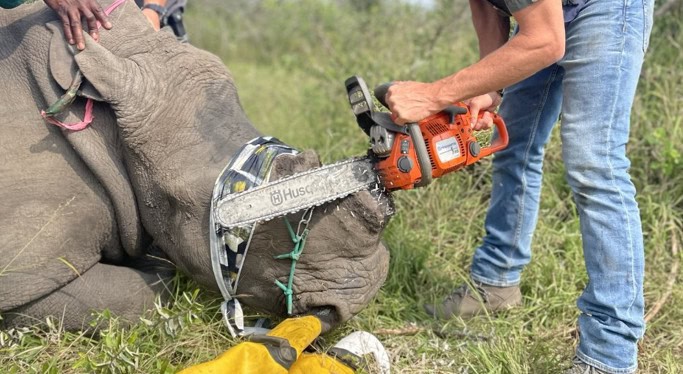
A key solution explored in the discussion was dehorning, a process in which part of the rhino’s horn is carefully removed to deter poachers while ensuring the animal’s safety. Gazendam explained that when performed correctly, dehorning does not harm the rhino, as it does not damage the germinal layer of the horn.
Additionally, the horn naturally regrows over time. He detailed different techniques used, such as the “Square Cut” and the “Zim Cut,” addressing concerns regarding potential complications.
Importantly, scientific research suggests that dehorning has minimal impact on rhino behaviour, reproduction, or overall survival. However, Gazendam stressed that while dehorning is an effective short-term deterrent, it must be complemented by other conservation strategies, including translocations, close monitoring, and the deployment of anti-poaching units.
As the presentation concluded, Gazendam urged greater public involvement in conservation efforts. He provided valuable resources for students and professionals interested in wildlife medicine, emphasising that dehorning, while not a permanent solution, remains a crucial tactic in safeguarding South Africa’s rhino population.
His message was clear: while dehorning is only one piece of the puzzle, it remains a crucial tactic in the fight to save South Africa’s rhinos.