Giyani water progress stalls over funding crisis
Mopani Mayor Pule Shayi says phase 2 of Giyani’s water project remains stalled due to the lack of R3.1bn in funding.
LIMPOPO – In an honest and straightforward address that mixed frustration with a call for acknowledgement, Mopani Mayor Pule Shayi outlined the harsh realities of Giyani’s water crisis on Friday.
Mayor challenges outdated corruption narrative
The national discussions remain fixated on past corruption, while present progress is being stalled by a severe shortage of funds.
Speaking at a community event in Jim village, the mayor challenged the persistent narrative in parliament that defines Giyani solely by the scandal-ridden Nandoni pipeline project of a decade ago.
He said this makes it difficult for people to see the current progress.
“Every time parliament discusses the lack of water in Giyani, they refer to corruption that happened many years ago,” Shayi said. “Even when we make good progress now, no one mentions it. They are still stuck in the 2014 corruption scandal,” he explained.
He highlighted the real, on-the-ground achievements from phase 1 of the water reticulation project as proof of the district’s progress.
“In N’wakhuwani village, people are drinking water from household taps. The same applies in Mhlava Welem, Muyexe, Khakhala, Thomo, and Gaula,” he said, noting that some areas still have only half of their households connected.
However, Shayi said phase 1’s completion is being delayed at a single community, Risinga View, where substandard work is being corrected.
“The contractor was instructed to redo the work,” Shayi explained, adding that the work should be completed by the end of December.
Phase 2 stalled by lack of R3.1bn funding
With all the challenges the district faces, the Shayi’s biggest concern now is the deadlock delaying phase 2, which is meant to connect the remaining 31 villages.
Shayi revealed that he has spent eight months trying, without success, to secure R3.1b from the national Department of Water and Sanitation.
“My challenge now is that as we complete phase 1, I need to move on to phase 2, but I do not have the money. I have spent eight months begging,” Shayi said, describing the intense local pressure he faces daily to complete phase 1.
“These days I can’t even drive around Giyani because traditional leaders constantly ask when their villages will receive water,” he said.
Treatment plant capacity limits full water rollout
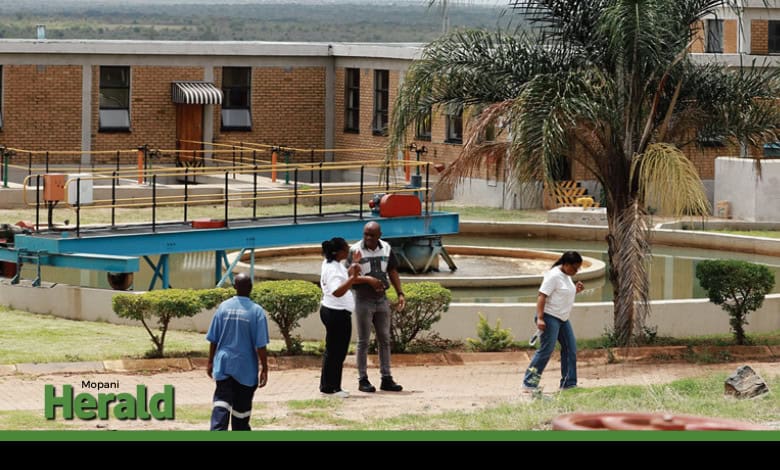
Compounding the problem is the inadequate capacity of the Nsami Dam water treatment plant, which currently produces only 30 mega-litres per day, which he said was insufficient and cannot support the distribution of water to every household in Giyani, even if both phase one and phase two were completed.
Shayi said the district had at least received money totalling more than R30m to extend the current water treatment plant by adding 10 ML (megalitres) more capacity to bring it to 40 ML of its daily output, saying this would be helpful.
“This expansion is critical not only for households but also for future economic development, including the increased demand that will come with the establishment of the Tshwane University of Technology (TUT) campus in Giyani,” he said.
He also indicated that he is not giving up on his request for money and needs to secure at least half of the total amount needed for the phase 2 project in order to move forward.
“We are crossing our fingers that they give us at least R1.6b by early next year,” he said, adding that with the money, he would be able to cover at least 16 villages of the remaining phase 2.