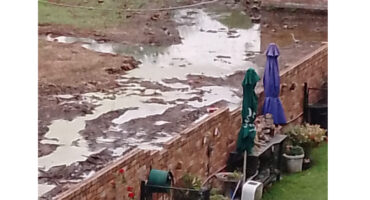

The Lepelle Water Crisis Committee marched to the Sekhukhune District Municipality offices in Groblersdal on September 17, demanding urgent action to address the district’s longstanding water shortages.
The march was attended by community members and political party representatives, who joined the committee in submitting a petition to the municipality. The petition was signed by traditional leaders from across the region.
Committee threatens regional shutdown
Committee chairperson Kgakaebotse Sodi said repeated attempts to engage the municipality over the water crisis had failed to produce tangible solutions.
“We tried to engage the municipality in several meetings in which we wanted to present our 10-point plan,” Sodi said.
“We even hosted a summit, but the municipality failed to show up.”
He said the failure to secure meaningful engagement prompted the committee to take its concerns to the municipality through the march.
According to Sodi, the municipality was given until September 28 to respond to the petition, but failed to do so.
“Failure to respond will give us no choice but to embark on a shutdown of the region in protest over the lack of access to water,” he said.
Sodi said the committee hoped the petition would demonstrate the seriousness of the water crisis affecting communities across Sekhukhune.
Residents share water with livestock
He questioned why residents continued to experience water shortages despite the presence of the Flag Boshielo and De Hoop dams in the district.
“There is a lot of water in Sekhukhune District and we wonder how possible it is that people continue to live without access,” Sodi said.
He also criticised the committee’s exclusion from stakeholder consultation processes, saying it should be allowed to contribute to discussions about addressing the crisis.
“We need to be included in the consultative processes so that we can give input,” he said. “We believe in our 10-point plan to change the lives of people of the district.”
Sodi said residents were being forced to resort to increasingly difficult measures to obtain water, with some communities allegedly relying on water sources shared with livestock.
“People are suffering,” he said.
“They don’t have water. They are forced to drink water with animals. They carry a burden of having to use wheelbarrows to take water to their homes on a daily basis, even though our dams are full.”
He said the situation was particularly difficult for elderly residents who, according to the committee, were forced to use their pension grants to buy water.
Call for permanent solution
Leeuwfontein resident David Setlamorago said the lack of access to water adversely affected community members.
“The problem has been going on for years and there has not been any meaningful intervention from the municipality,” Setlamorago said. “There is a serious need for a permanent solution to the problem.”
The Observer sent a media enquiry to municipal spokesperson Lemson Moropjane on September 22. A response had not been received by the deadline on Monday.
An update will be provided as soon as the municipality responds.