The event centred on how innovation and entrepreneurship talent could power South Africa towards a knowledgeable economy.
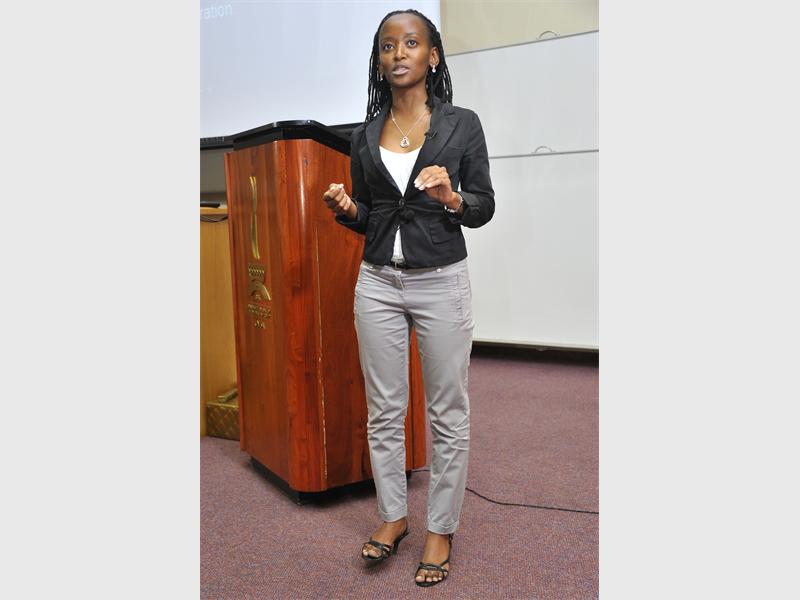
One of the keynote speakers at the event was S’onqoba Maseko, who currently heads up the FNB Innovators Programme. Maseko has been named as one of Destiny Magazine’s top forty trailblazers. She spoke from a personal perspective regarding both entrepreneurship and innovation in this country and has a strong message for both the private sector and academia: the future belongs to those who innovate.
Maseko believes that the challenge is tertiary level students are trained in disciplines and theory which can become obsolete in a few years.
“We need to nurture the entrepreneurial ethos. To build a sustainable country it becomes less about the core technical skills that you may have and more about how well equipped you are at problem solving,” she said.
Maseko highlighted the fact that students are fixated on obtaining a degree. Thinking beyond their qualification as to how they could change the world is not a large part of the equation.
Maseko said, “As well as tapping into the academic ecosystem, we should also be developing a symbiotic relationship with government so that we have the capacity to leverage our weight in order to provide funding for the commercialisation of ideas coming out of universities.”
Innovation, she reiterated, necessitates building a bridge between research and the private sector. She said, conversations which involve a combination of the private and public sectors with academia and civil society needed to be had in order to ensure that businesses in South Africa are commercialising the right things. “As a country,” she said, “we often cripple ourselves from progress in that we are not willing to partner. I believe that there is always a common ground.”
She suggested that one way to stimulate innovation is to start problem solving at the grassroots level. “Forget reverse engineering,” she said. “Replicating solutions from other countries will not solve South Africa’s challenges.”
Maseko raised the issue of the National Development Plan, which outlines broad strategies to reach development targets set for 2030. Although an advocate of the plan, she pointed out that the key to its success is in implementation.
“Now is the time to kick-start long-term dialogue to develop partnerships which, in turn, will reveal powerful opportunities for innovation,” she said.
What innovative ways can the private sector and government use to improve South Africa’s GDP? Join the discussion in the comments below.