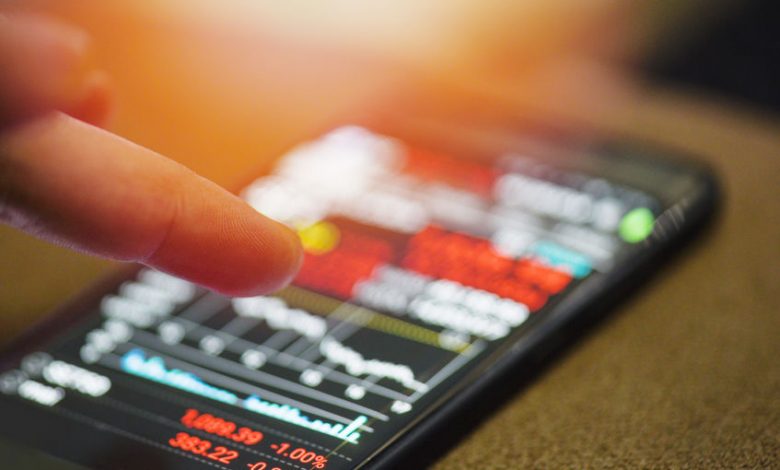
Online trading or trading through internet or electronic trading systems has grown considerably over the years.
Now, most of the exchanges and financial markets worldwide are connected to the internet through advanced electronic trading technologies and APIs that allow online brokerages to operate. Almost all exchanges and markets have made a move away from traditional phone-based trading, trading floors by offering online access – as it offers them more efficiency, participation and cost-effectiveness.
Online trading makes buying and selling of financial instruments easy and fast from anywhere using any device, for which you just need an app or platform that is offered by a brokerage firm. Unlike in past when it used to have delays due to traditional models involved – like one would have to call his/her brokerage to place orders in the market.
These delays often costed many traders with their potential profits or even caused losses. Trading figures of almost every financial market in the world have increased rapidly after they have been introduced to the internet as they increased market participation by bringing more retail traders to the market.
Retail trading has grown significantly in the past two decades since the start of the 2000s. Retail trading is a financial market segment which makes up small and individual investors that trade financial instruments.
Online trading ecosystem has allowed numerous low-cost small-scale brokers to start operations. And the availability of multiple brokers in the market has benefited the traders as the competition has forced brokers to offer competitive pricing, technologies and better features to the traders.
Online retail trading has also grown considerably in South Africa, with the availability of many local brokers and traders that can invest in various instruments from stocks, commodities, ETFs, derivatives, CFDs on forex, bitcoins through online trading platforms that are provided by JSE and FSCA regulated brokers.
In this article, we look at some of the basic steps that one can use to trade online:
- Choose an instrument that you want to trade
Out of the wide variety of trading instruments available in South Africa, it is important to choose the one that is best suited to your trading objective, risk appetite and financial literacy. Each instrument has different returns, risk factor, volatility and is ideal for different types of traders. The price movements in each financial market can fluctuate due to different reasons that can be difficult to predict. Generally, instruments that are ideal for short-term speculation are likely to be of high risk, while a suitable instrument for long-term investing should be less risky.
- Learn about the chosen instrument and the associated risks
Traders must make adequate efforts to know the basic details and features of each available trading instruments. The majority of the beginners in trading face unwanted outcomes due to a lack of education and experience. Suppose, if you wish to trade with stocks and their derivatives, then you must make the required efforts to analyse the concerned stock technically or fundamentally. Similarly, to predict the price movements in forex trading, you need to explore the national and international economic activities that can possibly affect the prices of currency pairs. Each trading instrument in South Africa has multiple risk elements that need to be considered insightfully before selecting the instrument.
New traders should read the educational content available online on various financial education websites like Investopedia.com, fool.com etc. or read books of established authors in the field to gain trading knowledge. Demo trading accounts can be quite useful for the newcomers in the market to gain experience and check the suitability of the trading instruments without investing with real currency.
- Seek for a reliable online broker or trading application
Each trading instrument that is available in the market carries a third-party risk involving counterparty or the broker, like in case if the broker gets defaulted or practises deceitful activities for self-interest. The third-party risk cannot be completely eliminated but can be mitigated to a much lower level by choosing a trustworthy and reliable broker that is regulated by JSE or FSCA, depending on the instrument you want to trade.
The stock and bond market of South Africa, along with their derivative instruments, are regulated by the Johannesburg Stock Exchange (JSE) while the forex and CFD market is regulated by the Financial Sector Conduct Authority (FSCA). FSCA is a top-tier regulatory authority that overlooks brokers activities and safeguards the traders and investors interest in the capital markets. JSE is a stock exchange that also provides a license to brokers and overlooks their activities.
Each broker that is available in South Africa needs to be regulated by either JSE or FSCA or both depending on the trading instrument they offer. For example, best forex brokers in South Africa like Hotforex, Avatrade, IG Markets are licensed by FSCA while top stockbrokers like ABSA Stockbrokers, FNB are regulated by both JSE & FSCA. Traders must compare all the top regulated brokers and compare their fees to take advantage of the competitive pricing of trading instruments on offer, and choose the one that offers optimum service at reasonable prices. The spread, commission, brokerage or any type of fee involved in online trading is different for each broker.
Due to the availability of a large number of online brokers, it may not be that easy to compare their pricing, but it would beneficial for the trader to do this. This can be done by writing down fees of each broker from comparison websites or directly from the broker’s website. Comparing the safety and reliability of the broker is very important and must not be overlooked.
The safety of investors is largely dependent on the creditworthiness of the broker which is backed by its regulatory licenses and years of experience in the field. And if the broker is a publicly listed company then it brings even more transparency and creditworthiness.
This can be a challenging task sometimes as it required diligent checks. For this, traders must verify the licenses, check background information of the broker’s company, see online reviews of the broker from experts or other clients to ensure trustworthiness. Apart from pricing and safety, traders can also check customer support, available trading instruments, trading platform, and required features.
- Open an online trading account
After the selection of a broker, the next step is to open an online trading account with the selected broker. The majority of the highly chosen brokers in South Africa offer multiple types of accounts that differ due to fees, availability of tools and features. The suitability of the account type depends upon the trading frequency and volume traded by an individual trader.
Potential traders must make adequate efforts to check every feature of the account type and choose the most suitable account. The account opening process for any online broker or trading app is simple and generally takes 24 hours to be completed. Traders need to enter basic details and provide address and contact proofs for completing the KYC process. After completing the KYC, users can deposit the funds and start trading. Besides this, traders might need to provide FICA documents for AML requirements.
- Keep track of the important market news
Throughout the trading process, it is of utmost importance to keep track of the chosen capital market and keep an eye on the factors that can affect its price movements. It can be burdening to track every price movement in forex or CFD instruments as it operated throughout the day. Nevertheless, keeping an eye on the market trends, economic, national or international activities, regular and trusted news can be highly advantageous for the traders as it can increase their outcomes when they make informed trades.
Important points to consider before you trade online:
- Traders must have a predefined trading objective that should be realistic and fall within the risk appetite.
- Online trading should not be considered as a short cut to make bountiful cash. Even the most experienced traders face drastic outcomes at times.
- Do not take the unwanted risk of losing the money that you are not willing to lose.
- Check the risk-to-reward ratio before choosing an instrument. The potential gains from the trades should be higher than the risk.
- Beginners should avoid using high leverage on complex instruments like derivatives, CFDs or forex.
- Traders must inquire about all the trading, non-trading fees and hidden charges involved before opening the account.
- The use of risk management trading tools like stop-loss, limit order, etc, can be quite beneficial for the traders.
- Use the demo account or trading simulator to trade with virtual currency and gain adequate experience before making actual trades.
- Analyse each potential risk element and apply the risk management techniques to mitigate them to the lowest level.
- Do not follow anyone’s advice until it is from an authorised financial advisor.
- Learn about market regulations and do not choose an unregulated broker or advisor.