
Predicted showers and thunderstorms this afternoon as heatwave scorches Mpumalanga
Lowvelders are feeling the heat. A dominating high pressure in the upper levels of the atmosphere is responsible for the extreme heat and dry conditions.
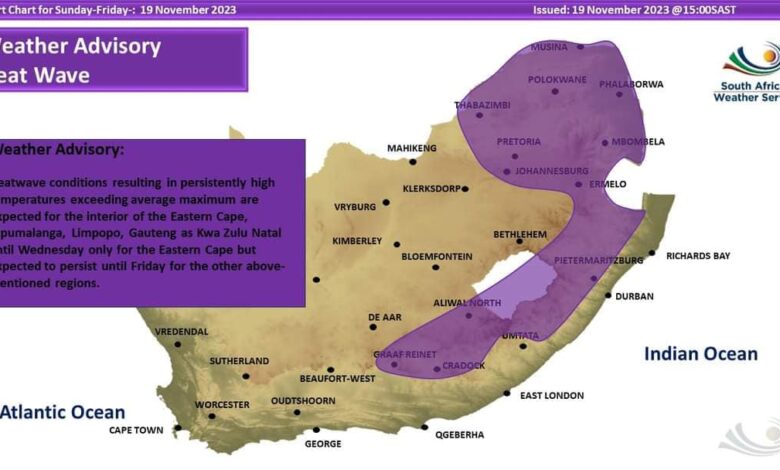
The South African Weather Service (SAWS) has issued a warning of heatwave conditions that will most likely continue until the end of the week.
“Heat wave conditions with persistently high temperatures are expected in Gauteng, Limpopo, Mpumalanga, over the western half of KZN, as well as the eastern and central parts of the Free State and the North West until Friday, and over the western interior of the Eastern Cape until Wednesday,” the SAWS said in the statement.
Weather for Today (Tuesday, 21 November 2023):
🌤️🌧️⛈️Hot in the northern parts, otherwise partly cloudy and warm with isolated showers and thunderstorms over the eastern parts, but scattered in the north-east.#saws#southafricanweather#southafrican pic.twitter.com/v6aKrZsBvb
— SA Weather Service (@SAWeatherServic) November 21, 2023
It will be very hot in Mpumalanga and the Lowveld, otherwise it will be partly cloudy and warm to hot with isolated showers and thundershowers in the afternoons.
Also read: WATCH: Trouble explodes on N4 at Lebombo Border Post and traffic is backed up past Hectorspruit
#COP28 #SAWS #Southafricanweather https://t.co/jzKflpbSwP
— SA Weather Service (@SAWeatherServic) November 20, 2023
The SAWS also warned of extremely high fire danger conditions that are expected in places in the Northern Cape, the Limpopo Valley and the northern parts of the Limpopo Lowveld.
According to Vox Weather, a dominating high pressure over northern South Africa, in the upper levels of the atmosphere, is responsible for the extreme heat and dry conditions.
“When a high pressure sits over an area it results in the sinking of air through the atmosphere. The air compresses and heats up as it sinks. Sometimes, the scorching heat is ensnared in what is called a heat dome”
How to beat the heat?
- Stay indoors in a well-ventilated or air conditioned room.
- If working outside, wear protective clothing and take breaks at regular intervals.
- Avoid playing strenuous sports or engaging in excessive manual labour, as one runs the risk of heat exhaustion or sunstroke.
- Dress in cool, lightweight clothes which are not constricting. The wearing of hats (preferably with a wide brim) as well as the generous application of sunblock should be encouraged if one is outdoors for any length of time.
- Remain adequately hydrated by drinking plenty of liquids (not alcohol).
- Outside playtime for children should ideally be restricted or prohibited between 10:00 and 16:00.
- The aged as well as infants are particularly vulnerable to dehydration and/or heatstroke and should be afforded extra care and attention during prolonged spells of hot weather.