IEC vice chair says SA’s electoral system lacks accountability
Janet Love remarked there is no aspect of accountability in the current system, as all leaders in South Africa are elected indirectly.
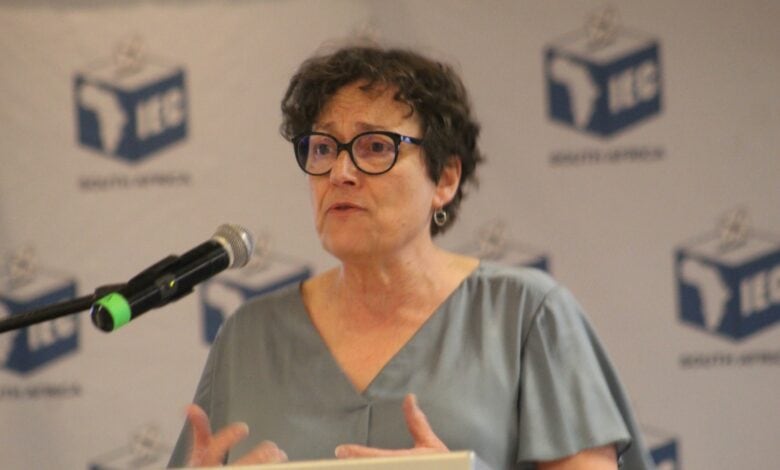
The Independent Electoral Commission (IEC), some political analysts and scholars deliberated on the South African Electoral System after 30 years at the Thought Leadership Seminar at Emnotweni Arena on Thursday, October 17.
There are two kinds of electoral systems in South Africa. Constituency-based elections are when voters in each local area elect an individual candidate to represent them in parliament. The person who wins the majority of votes in each area becomes a member of parliament (MP). The party with the majority of MPs forms the government. In this kind of election system, the individual MP holds the seat, not the political party he or she belongs to.
Proportional representation elections are voters in a large area voting for political parties. The political party chooses the people who will become its MPs. Each party is allocated a number of seats proportional to how many votes it got in the election.
Before 1994, the country made use of constituency-based elections, but since then, national and provincial elections have used proportional representation and party lists, while local government elections uses a mixture of both.

The IEC’s vice chairperson, commissioner Janet Love, said the system needs to be fair, inclusive and simple. “It should therefore maximise accountability and give voters a direct choice resulting in full participation of the election process. All leaders in South Africa are elected indirectly; there is no element of accountability, which is a major challenge. The system also needs to provide accessible information to the public, not only political information, but public participation and post-election information. The South African Constitution does have in place some criteria of which leaders should be elegible on any level of legislature. However, the reality is that it does not require accountability. We only have a single round of voting in South Africa, while other countries have two rounds to ensure the truth of the voters,” Love said in her keynote address.
ALSO READ: Young innovator ready to serve Black Management Forum in Mpumalanga
The seminar entailed various speakers such as a professor of political economy or the University of Johannesburg, Prof Isaac Khambule, a researcher of the National Research Foundation and lecturer in applied linguistics of the Tshwane University of Technology, Dr Yanga Majola, and a governance, politics and developmental specialist, Lukhona Mnguni. It was moderated by a lecturer of political science and international relations of the University of Mpumalanga, Khanya Vilakazi.