President Ramaphosa visits Mpumalanga to address service delivery
The Department of Public Works plans to build 288 bridges by the end of the 2025/26 financial year; 17 of those being planned for Mpumalanga.
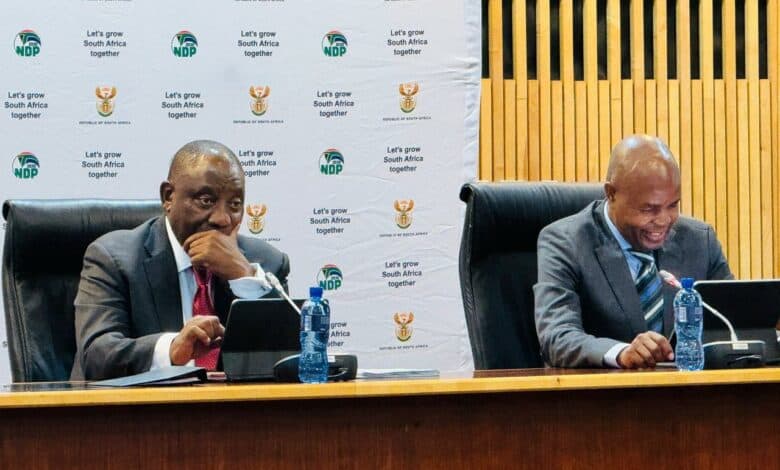
President Cyril Ramaphosa conducted a two-day visit to the province to host service delivery talks with the Executive Council (Exco) and hand over three new bridges in the Nkangala District Municipality.
The Exco, led by Premier Mandla Ndlovu, met with Ramaphosa on Tuesday, December 10. The meeting was part of the president’s engagement with the provinces to enhance intergovernmental co-ordination and improve service delivery in line with the priorities of the seventh administration.
The meeting afforded the provincial government an opportunity to present its five-year programme and further discuss possible interventions on service delivery.
Ramaphosa addressed Mpumalanga’s unemployment rate, stating that it is higher than the national average.
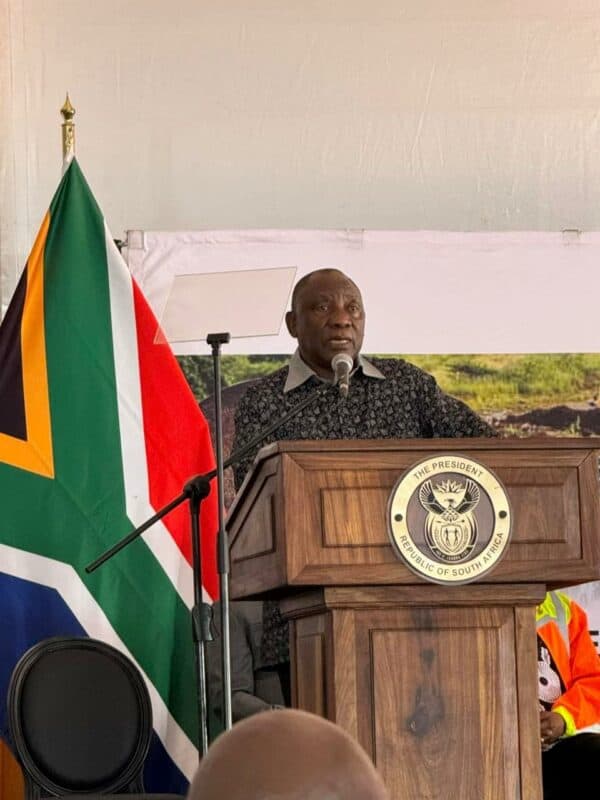
“We know that nearly half of the young people in the province are unemployed; more than half the population live below the poverty line. For Mpumalanga, inclusive growth and job creation must, therefore, be at the forefront of all the efforts that we can embark upon.”
The second day of the presidential visit was to the three bridges in Vezubuhle, Leratong and Zakheni as part of the Welisizwe Rural Bridge Programme.
This programme focuses on addressing the critical infrastructure needs of rural and disadvantaged communities by tackling the existing backlog and creating job opportunities.
Ramaphosa was joined by Ndlovu, the minister of public works and infrastructure, Dean McPherson, and the deputy minister, Sihle Zikalala, to officially unveil the completed bridges in the Thembisile Hani Local Municipality.
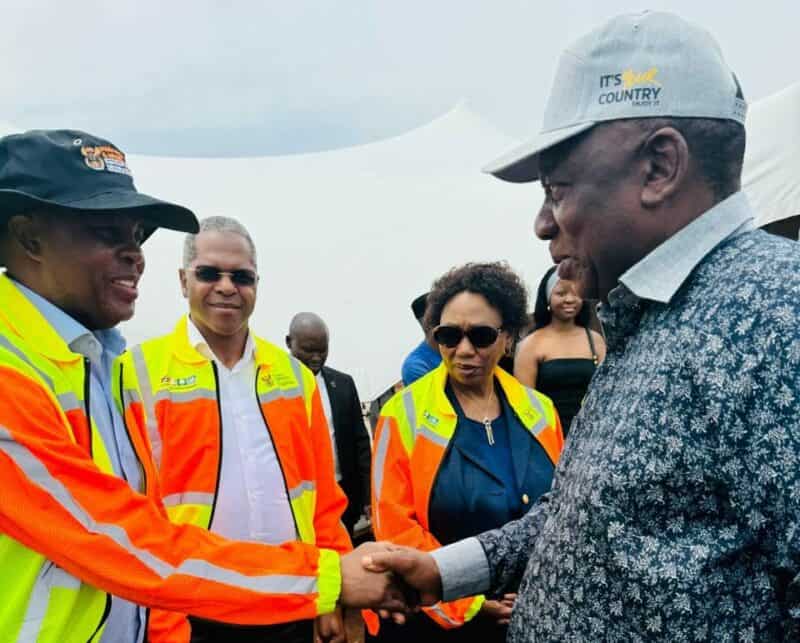
During his address, Ndlovu, highlighted the advantages and disadvantages of sharing a border with Mozambique and the Kingdom of eSwatini. He listed issues such as undocumented immigrants and illegal mining.
“We are carrying the brunt of illegal and undocumented immigrants. This has its own negative consequences including cross-border and increased community crime, illegal mining especially in Sabie, Barberton and Pilgrim’s Rest, mushrooming informal settlements, undocumented schoolchildren, overburdened health and education facilities as well as social infrastructure like water, sanitation
and roads.
“We want to caution our people on the upheaval that is not settling down in Mozambique since the outcome of their general and presidential elections. Mozambicans must learn from us South Africans, because since 1994, all political parties accepted the outcome of the elections,” Ndlovu said.

On Wednesday, December 11, they engaged with the community at the Solomon Mahlangu Stadium.
While addressing the residents, Ndlovu said the Thembisile Hani Municipality, which is receiving its water from the City of Tshwane Metropolitan Municipality, is affected by Tshwane’s municipal issues.
“We wrote to the minister of water to intervene; we requested rand water to assist us.”
He also said Moloto residents have complained about the absence of a police station in their area.
“We are in talks with the SAPS to solve this problem,” Ndlovu said.
Ramaphosa delivered a keynote address in which he highlighted the critical need for improved infrastructure and connectivity in rural communities.

“We are here as government to report that we have delivered on our promise to address the problem of old and dilapidated bridges in Mpumalanga. Communities have been struggling with this for some time. Poor transport infrastructure has been making it difficult to get to and from places of work, schools, the hospital and clinic, and to towns and cities in rural areas.
ALSO READ: Just Energy Transition plans 10 power station shutdowns in Mpumalanga
“In some cases, what would normally be a quick journey from one place to another takes double the time, because there is no bridge,” Ramaphosa said.

Ramaphosa revealed that the Department of Public Works has set a target of constructing 288 bridges by the end of the 2025/26 financial year; 17 of those being planned for Mpumalanga.
“An amount of R38b has been allocated for this purpose over the 2023/24 and 2025/26 financial years,” the president said.