Auditor-General paints grim picture of local government as various Mpumalanga municipalities fail to improve performance
Nearly a quarter of South African municipalities are in such dire financial straits that their ability to continue operating is uncertain.
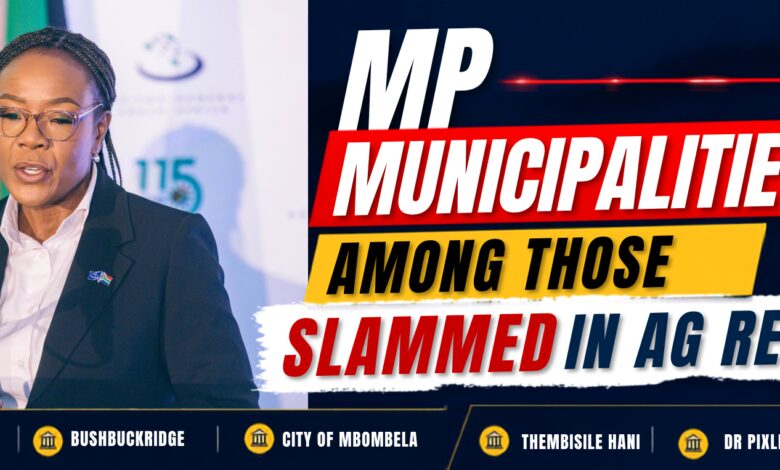
Auditor-General (AG) Tsakani Maluleke tabled a consolidated report on Local Government Audit Outcomes 2024/25 on June 24.
Maluleke said limited progress has been achieved since the fifth administration, and the state of South Africa’s local government remains concerning, as the outgoing sixth administration did not achieve the desired improvements.
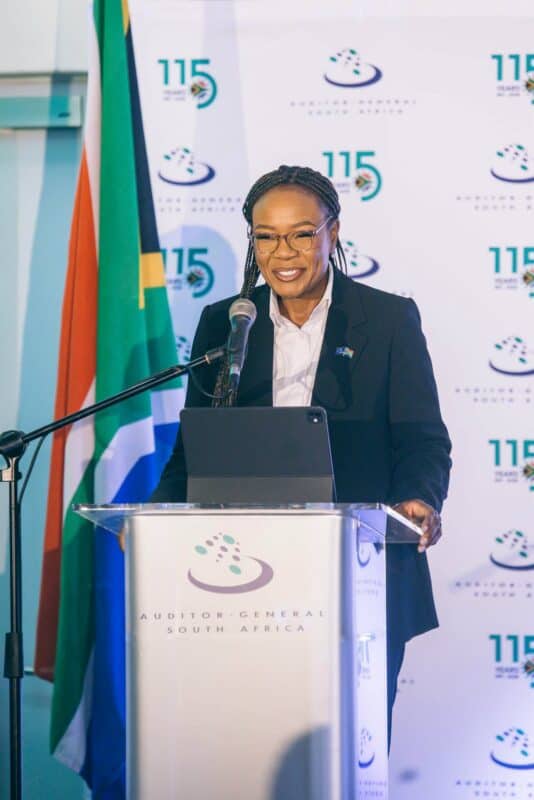
Nationally, 39 local municipalities have relied on the audit process to achieve unqualified audit opinions for the past four years. Five of those are in Mpumalanga – Nkomazi, Bushbuckridge, City of Mbombela, Thembisile Hani and Dr Pixley ka Isaka Seme.
Maluleke said the financial position of almost a quarter of municipalities (62 municipalities, totalling 24% of completed audits) was so dire that 54 disclosed a going concern uncertainty in their financial statements. Eight received modified audit opinions on their financial statements due to a lack of disclosure thereof.
Of the 62 municipalities, 33 (53%) had this going concern uncertainty for four years or more. This means that although these municipalities continued to operate, their financial position has prevented them from being fully functional for many years. Examples in Mpumalanga include the City of Mbombela, Emalahleni, Govan Mbeki, Lekwa, Msukaligwa, Nkomazi, Thaba Chweu and Victor Khanye.
“We reported material findings on compliance due to a failure to prevent unauthorised expenditure at 147 municipalities. For examples, eMalahleni overspent on multiple areas budgeted for, amounting to R1.80b. This was mainly due to non-cash items such as impairments and depreciation that were not adequately budgeted for,” Maluleke said.
The 2024/25 expenditure budget of the municipalities was R35.84b. Municipalities received R8.31b in equitable share grants and R4.76b in other grants from the national government. Despite these allocations, the province continued to experience growing fiscal pressure. According to Maluleke, the financial crises in municipalities stems from weak budgeting practices and ineffective financial management.
“These weaknesses have led to unfunded adjustments budgets, driven by unrealistic revenue projections, insufficient oversight by accounting officers, escalating Eskom debt and significant water and electricity losses. As budgets remain disconnected from operational realities, municipalities continued to incur rising unauthorised expenditure and operating deficits. This forced some to fund 2024/25 obligations from future budgets – thereby compromising financial sustainability and undermining service delivery performance and community well being.”
ALSO READ: Three Mpumalanga municipalities hit with funding freeze
Maluleke said municipalities also struggled to collect revenue for basic services, with poor debt collection leading to limited cash flow, making it difficult for municipalities to finance their operations and settle supplier accounts. By year-end, municipalities owed arrears (including interest) of R25.83b to Eskom and R3.38b to water boards, and they took an average of 438 days to pay suppliers, incurring interest and penalties of R1.2b.
Of the main infrastructure related conditional grants of R3.40b received in 2024/25, intended for infrastructure development and maintenance, 100% was spent. Despite this high level of spending, Maluleke explained, municipalities did not consistently deliver the planned infrastructure on time or to the required standard.
“The municipal infrastructure grant was misused in Nkomazi, as unspent municipal infrastructure grant funding was used for operational expenditure and was not cash-backed. This contributed to poor infrastructure conditions and negatively affected service delivery,” she said.
“Municipalities are unable to effectively plan for and maintain infrastructure, as evidenced by low spending on repairs and maintenance – averaging only 3,4% of the value of infrastructure assets, well below the National Treasury norm of 8%. This has resulted in the deterioration of infrastructure and continued water and electricity losses. This was confirmed through environmental inspections of wastewater treatment works at some municipalities.”
ALSO READ: MTPA hikes tariffs to fund tourism infrastructure upgrades
Maluleke directed a call to action to the mayors, speakers and council members who will be elected at the end of this year.
“Local government requires fundamental and far-reaching reform, driven by capable, collaborative and ethical leaders that are committed to building municipalities characterised by sustained institutional performance, accountable leadership and officials, transparent systems and processes as well as strong institutional integrity,” she said.