
State of disaster fails to impress civil society groups
Organisations are also sceptical about the appointment of another minister to an already bloated cabinet.
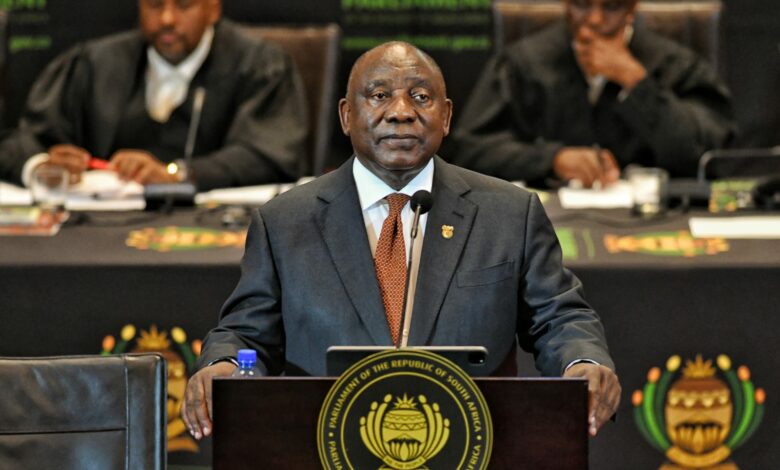
Civil society groups say President Cyril Ramaphosa’s State of the Nation Address (Sona) failed to inspire confidence and they are not convinced a state of disaster is the solution to the electricity crisis.
Organisations are calling for a much more coherent approach to the energy crisis.
In his address, Ramaphosa zeroed in on issues pertaining to the electricity crisis and declared a national state of disaster. He also announced that an electricity minister would be appointed soon.
Civil society groups believe the announcement of the state of disaster and the creation of a minister of electricity position was an ad hoc response to the energy crisis.
The Organisation Undoing Tax Abuse (Outa) says Ramaphosa acknowledged many of the problems but did not offer believable solutions.
“He offered many promises, many of which we’ve heard before. It would be wonderful if these promises were realised or even under way. The president sought to inspire hope but he only succeeded in reminding us how bad the situation really is. His address confirms the country has been poorly managed for too long,” says Outa CEO, Wayne Duvenage.
Duvenage says Outa does not believe that declaring a state of disaster was appropriate.
“This is not the mechanism to provide South Africa with energy security. It appears this decision is intended to give an impression that action is being taken, when the reality is that the government’s plan is weak.”
The organisation says it doesn’t believe that a state of disaster was going to cure government’s inability to address the crisis.
“It will not make previously inept officials and ministers suddenly competent and willing to do their jobs.”
Duvenage says adding a new minister of electricity to oversee the crisis would just add a further burden to an already bloated cabinet.
“We are not convinced this is a solution. Will we now have three ministers, each playing different roles in the electricity landscape: A minister of public enterprises, a minister of mineral resources and energy and a minister of electricity?
“Who will be accountable for what? Setting up new ministries or positions does not fix problems in ineffective departments.”
The solar energy industry says it was hopeful that the solar panel tax breaks will bring some relief.
Ramaphosa announced that households will be assisted through the rolling out of rooftop solar panels and businesses will be able to benefit from a tax incentive.
CEO for Sola Group, Dom Wills, says the Sona showed the president’s intention to raise the stakes in handling the electricity crisis by dedicating more resources and removing obstacles to progress in energy production.
“I’m hopeful that the acceleration of energy projects could mean much-needed less red tape for connecting new plants. I’m less positive about the effect that another minister working with the Eskom board will have.
“The energy availability factor is low for a number of technical and commercial reasons which Eskom has been working on intensively since André de Ruyter has taken over. The tax breaks for rooftop solar and loans to small businesses are very welcome — 5 000 GW of rooftop solar would more than halve load shedding.”
The World Wide Fund for Nature South Africa (WWF) says while reforms such as subsidising rooftop solar for households and businesses to feed back into the grid are to be welcomed, government must guard against leaving poor communities behind.
“If middle to high-income households are incentivised to defect from the grid, this would effectively put the burden of the cost of grid maintenance and management on low-income households.”
The WWF shares similar sentiments to Outa, that the announcement of the state of disaster and the creation of a minister of electricity was a reactive response to the energy crisis.
The organisation adds that the separation of electricity from the energy portfolio had the potential to further undermine coherent energy planning.
Read original story on www.citizen.co.za

