
Total accused of dirty tactics in Cape coast gas extraction application
Conservationists accuse Total Energies of promising jobs instead of revealing the potentially devastating effect their exploration will have on critical ocean breeding grounds.
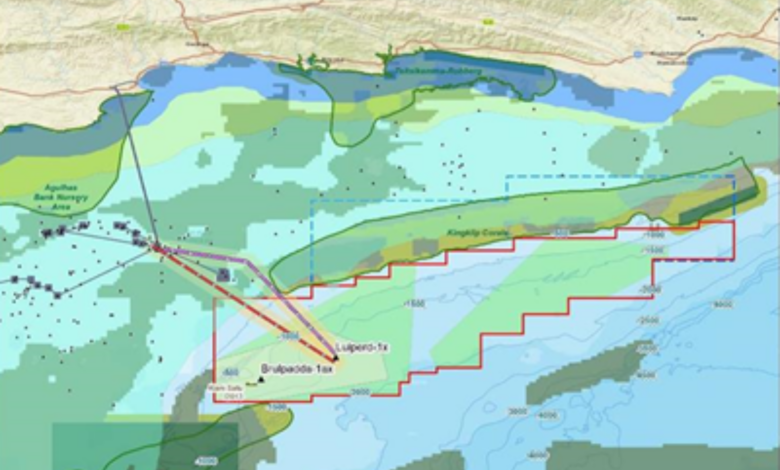
Several conservation bodies along the Garden Route have lambasted Total Energies for the methods used to push through the environmental approval for the proposed offshore gas extraction along the Southern Cape Coast.
They questioned what they say is Total’s apparent ‘change of tactics’ by accentuating job opportunities to broaden its approval base, following setbacks Shell received in seeking similar approval along the Eastern Cape coast.
The Production Right and Environmental Authorisation Application by Total aims to continue exploration in the block, Block 11B/12B, stretching from Cape Agulhas to offshore of Robberg, which will require drilling four additional wells and conducting seismic profiling.
The objections and registration process close tomorrow (February 14).
The area of interest targeted for the abstraction of gas borders on critical breeding grounds with significant biodiversity known as the Kingklip Corals, the Agulhas Bank Nursery and the marine protected areas to the north of the gas extraction zone.
Seismic surveys have been implicated in the past as altering the behaviour of marine life, such as whales and dolphins attempting to escape airgun surveys.
Job opportunities
The criticism of Total follows a series of environmental impact assessment (EIA) meetings organised by WSB – the environmental consultants of Total – and held mainly in townships in Mossel Bay, George and Knysna.
Two other meetings, that allegedly were sparsely advertised, took place in the Piesang Valley Community Hall in Plettenberg Bay on January 20.
Conservationists representing the Duineveld Kusvereniging, Garden Route Waste Warriors and Wessa (Wildlife and Environment Society of South Africa) Eden, say interest in the meetings was promoted via loud hailers in townships encouraging attendance and promoting job opportunities.
In response to a series of questions put to WSB about the allegations, it referred Knysna-Plett Herald to the registration website for interested and affected parties.
“This is the process in terms of the EIA regulations; all comments received from registered I&APs [interested and affected parties] are included in the comment and response register and will be addressed in the finalisation of the scoping report,” says WSB.
“We of course acknowledge the interest in the ESIA process by the press, however, the project team cannot respond to comments outside of the regulatory process.”
The Total Energies project team did not respond to questions from the newspaper prior to publishing.
Skirting the issue
Dr Ted Botha, a Wessa representative and former professor of botany at Rhodes University, attended both meetings in Plettenberg Bay and says environmental questions he asked were not replied to.
“The presentation was accompanied by a non-technical ‘summary’ which was presented in a glossy full colour brochure, which was divided into three sections,” he says.
“These delivered fairly low-level information concerning the preparation, setting of wells, acquisition, delivery and production procedures to be followed in the project. Much of the presentation was of a technical nature and I doubt that this was clear to more than a handful of all attendees.”
He says what is particularly disturbing is that the real issue – marine disturbance – was ignored.
“Unfortunately, the map as presented in the slide show and in the brochure was reduced to the point that the legends to the various critical zones in block 11B and 12B were not discernible. I wonder if this was a deliberate ploy. One hopes not,” he says.
“There is a distinct possibility that activities associated with the setting up of wells during the drilling process, and/or accidental spillage, could disrupt the inhabitants of this sensitive area.”
Botha says a critical question is: ‘Who is going to buy the gas?’
“There was vague reference to Petro SA or Eskom as clients, but no hard evidence was presented. My overall impression is that that this ‘roadshow’ was simply that: A roadshow to which a variety of interested and supposedly affected people were invited – indeed 100-plus people were bused in and provided with snacks at the end of the proceeding.
“Notably, most of the questions revolved about job creation and unemployment, which has little to do with the reality of gas extraction in the Mossel Bay area.”
Scoping process ‘sham-loaded’
Muriel Hau-Yoon, who represents the Duineveld Kusvereniging, the Ystervark-fontein Bewaararea, Groenkant Private Natuurreservaat and the Garden Route Waste Warriors, makes additional serious claims.
A concern is that the public participation process was launched during December, a ‘notorious holiday period for problematic EIA applications to slip in beneath the radar’, according to Hau-Yoon.
She attended two public meetings – on January 16 in KwaNonqaba and on January 18 in Thembalethu – which she says were sparsely advertised.
“We find it odd that the meetings were held in areas that aren’t universally accessible.”
Hau-Yoon says the meetings were held in townships and that attendees were bused in to swell the audiences.
“The hall at KwaNonqaba was jam-packed and overflowing with over 400 local residents. They told me WSP, the environmental consultant, had gone around the township yesterday with a loudhailer inviting them to register for jobs. So they all turned up in masses with their ID books.”
She says there were about 30 questions from the floor – all relating to jobs.
“Not a single environmental concern was raised,” says Hau-Yoon who adds that a local lawyer welcomed Total’s application wholeheartedly.
“He then condemned the Bloom Association of the Netherlands who planned to stop the project, ‘just as they had stopped Shell’s seismic exploration’,” Hau-Yoon says.
“Clearly, Total is sham-loading the scoping process with signatures of township residents from Mossel Bay to St Francis Bay to claim that they had conducted an extensive public participation process. Why else would they choose mainly township venues such as KwaNonqaba, Thembalethu and Khayalethu for the public meetings?”

