
KZN floods in 2022 one of the most catastrophic natural disasters – study
Researchers from the Witwatersrand and Brighton universities have submitted their findings about the horrific events of last year.
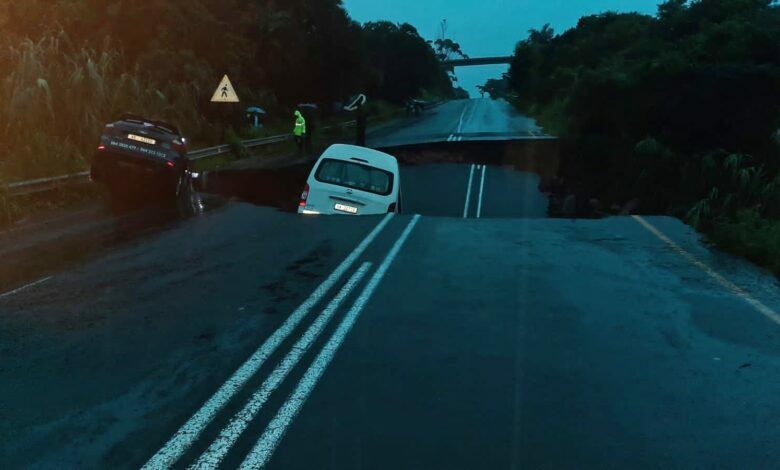
Research shows that the April 2022 floods that hit KZN were one of the most disastrous natural events to have hit the province.
According to researchers from the University of the Witwatersrand (Wits) and the University of Brighton in the UK, this was in terms of lives lost, homes and infrastructure damaged or destroyed and economic impact.
Professor Stefan Grab from Wits University and his colleague Professor David Nash constructed a geographical history of flooding disasters in KZN by sifting through thousands of archived articles held in old newspapers, colonial and government records, early missionary records, and meteorological records which became available from the 1850s onwards.
They defined extreme flooding events, where major rivers were overflowing their banks, together with one or more significant consequences, such as the loss of human life, livestock, agricultural fields and crops, and infrastructure such as buildings, roads and bridges.
The study, which reconstructed the history of floods in KZN since the 1840s, confirmed that the April 2022 floods were likely the most catastrophic natural disaster yet recorded in KZN and that flooding events have doubled over the last century or more.
“Right after the floods, many commentators like the media, some scientists and others were quick to report that the floods were the most severe ever recorded. Our aim was to place the floods into perspective and see if this and other statements related to the disaster were factually correct by building a historic geographic account of past floods and associated extreme rainfall events for the province of KZN and particularly the greater Durban region,” says Grab, the lead author of the study.
The scientists found that while the floods were indeed the most catastrophic in terms of lives lost, infrastructure damaged, and economical loss, the flood was not actually the biggest in terms of the area affected, homes destroyed, or the amount of rainfall that fell collectively over a few days.
“When you look at a natural disaster you need to look at it in context. Whether the April 2022 floods were the ‘worst in living memory’ is debatable, as a flooding event in September 1987 affected a larger geographic area of KZN and destroyed more homes than the 2022 event.”
According to the researchers, a catastrophic flooding event in Durban in 1856 which also took place in April – produced a greater quantity of rainfall over a three-day period than last year’s floods.
“It is difficult to compare the two floods in terms of which were the most severe. We must recognise that back in 1856 Durban was only a town with a much smaller population and economic infrastructure to that of today, and thus the percentage of individuals impacted or percentage of economic loss may well have been greater back in 1856. In addition, coping mechanisms and ‘outside’ support would have been far more restricted during the 19th century,” explains Grab.
Grab says with regards to the flood disaster, history was repeating itself.
“We need to prepare for bigger rainfall events in our cities, and that doesn’t just apply to Durban, it applies to all South African cities and towns. We must get our infrastructure, especially drainage systems, in order. It is urgent that we better prepare ourselves for the heavy rainfall and flood events that are guaranteed to come in time ahead,” he concludes.
Read original story on www.citizen.co.za

