
Watch: Young giraffe walks again after groundbreaking leg surgery
A young giraffe is defying the odds, walking with his herd just two weeks after groundbreaking surgery to save his severely injured leg.
A young giraffe, initially given little chance of survival after a severe leg injury, is now walking with his herd two weeks after undergoing groundbreaking surgery.
Pretoria Rekord reports the procedure posed a unique challenge, as no existing reference existed for splinting a giraffe’s leg in such a condition.
“There is so little of nature left that we must save whatever we can. That is why we did our very best with the small giraffe to save his leg,” said Dr Willem Daffue from the Kroonstad Animal Hospital.
Daffue led the surgical procedure, drawing on his extensive experience treating giraffes.
He partnered with a team from the University of the Free State’s Department of Animal Sciences for the operation.
“Time was critical, as prolonged immobilisation could lead to severe health complications,” he added.
Daffue said the young giraffe bull is recovering well after the mid-February operation.
“He is defying expectations,” said Daffue.
The game farm owner and staff report that he is walking with the herd and keeping pace with the others—an encouraging sign of his progress.
The giraffe’s leg was severely damaged, with the lower leg loose and broken, posing a risk that the bones could pierce the skin.
Under sedation and local anaesthesia, the veterinarians cleaned the wound and removed damaged bone fragments.
They then stabilised the leg using surgical stainless steel pins and reinforced it with a thick splint, supported by PVC pipes for added stability.

The operation took place on a remote game farm between Dealesville and Boshof.
Daffue explained that due to the giraffe’s long neck, breathing under anaesthesia is challenging.
Since its trachea is long and narrow, a large volume of dead air remains inside, preventing full expulsion of old air when breathing. To compensate, a giraffe’s lungs are larger, ensuring enough oxygen reaches its body.
“If a team is not very careful, a giraffe can easily die when operated on, so the animal must be closely monitored,” said Daffue.
He emphasised the value of giraffes, noting that like many wild animals in Africa, they face growing threats.
The International Union for Conservation of Nature lists giraffes as vulnerable to extinction due to population declines caused by human activity. This classification applies to eight of the nine giraffe subspecies, excluding the South African species.

The remarkable mission united experts from across the world to ensure the animal’s survival.
Dr Andri Grobbelaar, a PhD graduate specialising in giraffe healthcare and welfare, told Rekord the young bull is a ‘real little fighter’.
“He also very graciously accepted our help. After the procedure, we observed it must have been a strange feeling to be able to use the leg again, but it only took a while and he was on his way.”
Grobbelaar developed a love for working with giraffes after observing them in Bloemfontein’s Naval Hill reserve.
“I have just always loved these animals and find them so endearing,” said Grobbelaar.
According to Prof Francois Deacon from the University of the Free State, the farm owner noticed the young giraffe limping with a suspected broken leg.
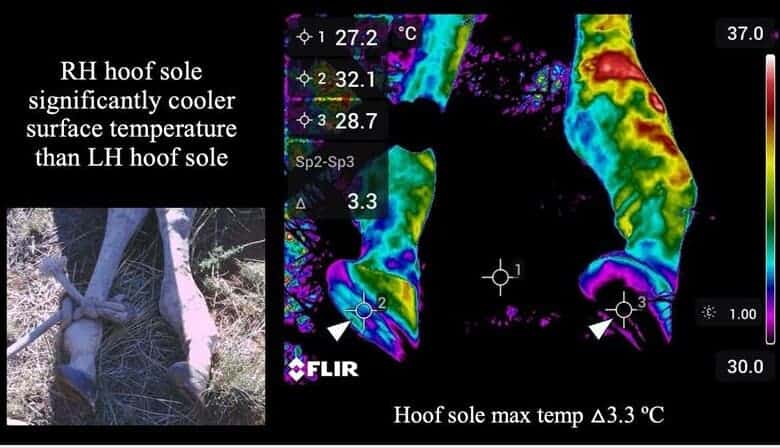
The timing was fortuitous, as a team of American veterinarians researching giraffe hoof health was visiting the university.

While the exact cause of the injury remains unclear, Deacon speculates that rough terrain may have played a role.
“The farm has rocky outcrops and uneven surfaces, so it’s possible the giraffe’s leg got caught between rocks or stepped into a warthog hole, leading to the fracture,” he explained.
Rescuing a wild giraffe is no small feat, especially in a remote location.
Immobilising the animal safely required refined capture techniques. A team of five experienced wildlife veterinarians, including experts with published research on giraffe capture, collaborated to ensure its well-being.
“The terrain made it difficult to get close enough to dart the giraffe, and once immobilised, we had to act quickly,” said Deacon.
To monitor the giraffe’s progress with minimal disturbance, the team used drone technology to track the animal remotely.
Two American veterinarians, Dr Liza Dadone and Dr Steve Foxforth — both experts in giraffe care from international zoo environments — were instrumental in administering antibiotics and advising on hoof care, further aiding the animal’s recovery.
“If healing progresses as expected, the splint will be removed, and he could have up to a 50% chance of making a full recovery,” said Deacon.
Watch the young bull get up after the procedure:
Breaking news at your fingertips… Follow Caxton Network News on Facebook and join our WhatsApp channel.
Nuus wat saakmaak. Volg Caxton Netwerk-nuus op Facebook en sluit aan by ons WhatsApp-kanaal.
Read original story on www.citizen.co.za