
3 mass shootings, 40 dead: What is driving SA’s gun violence?
A string of deadly shootings has raised fresh questions about what is fuelling violent attacks across the country.
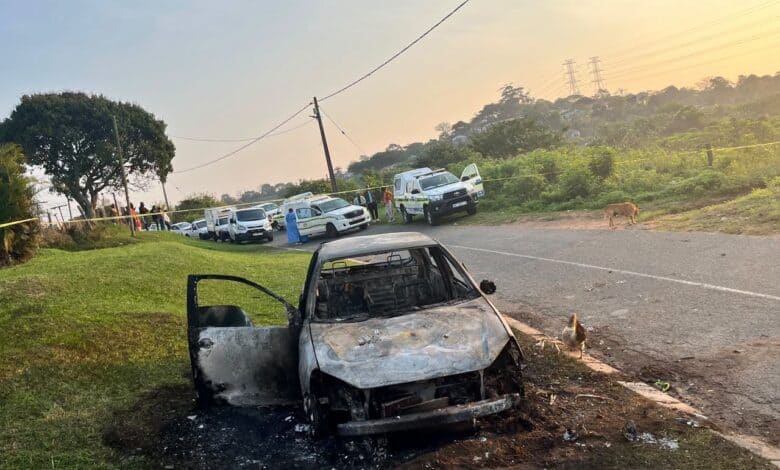
South Africa has been hit by three mass shootings in less than a week, leaving at least 40 people dead and nearly 28 others wounded in attacks in KZN, Gauteng and the Western Cape.
While the three shootings are not known to be connected, crime experts say the incidents highlight common drivers of gun violence, including organised crime, territorial disputes, firearm availability and a lack of crime intelligence.
KZN
Last Tuesday (September 22), 12 people were killed and two others wounded when three gunmen allegedly entered a home in KwaMakhutha, about 30km from Durban, and opened fire on people at a house party.
Gauteng
On Saturday (September 26) in Wedela near Carletonville, 18 people were killed and 14 wounded at a tavern by eight people reportedly armed with AK-47s and pistols.
It is alleged that patrons were drinking inside and outside the tavern when the suspects arrived and opened fire on those outside. The suspects then entered the tavern and continued shooting at patrons inside.
They allegedly searched some patrons and took their cellphones before fleeing in two unidentified vehicles. Two vehicles were also set alight.
Western Cape
Yesterday (September 27), 10 people were killed and 11 injured during a shooting in Lwandle, about 40km from Cape Town.
According to police, the gunmen entered the shisanyama (venue where meat is braaied) and shot at patrons. Five victims died at the scene, while five others later died in hospital.
Organised crime
Chad Thomas, a crime expert and forensic investigator, believes organised crime is responsible for many of these shootings.
“In KZN, it could be in reaction to business disputes and route rivalry in the taxi industry. In the Western Cape, it’s mostly related to turf wars amongst drug and extortion gangs. In Gauteng and North West, the majority of cases relate to turf wars among zama zamas [illegal miners].”
Thomas explains that multiple gunmen are frequently involved in the attacks because there is a greater chance of hitting the intended target.
“The problem is that the indiscriminate shooting results in the collateral damage of bystanders being killed or injured,” he says.
Thomas adds that the choice to commit the shootings in taverns, entertainment venues and private gatherings tells us that this is normally where the intended target would go to relax.
“In sophisticated, targeted assassinations, the target would be surveilled and taken out in the place easiest to infiltrate.”
Difficult for police to prevent
Thomas says these types of attacks are particularly difficult for police to prevent because of a number of factors.
“Poor police intelligence, lack of community co-operation, and little to no paid informants in particular areas make it virtually impossible to prevent.”
No service delivery
Thomas adds that informal settlements where there has been little or no service delivery are notoriously difficult to patrol because of inadequate roads, road signs and lighting.
He says these underserved areas are at risk of falling into the hands of criminals through theft and corruption.
“It is as yet unclear to us whether firearms are coming into South Africa across our borders, and this requires further investigation.”
Crime expert Willem Els says these shootings indicate the ready availability of firearms, especially high-powered, military-grade weapons such as AK-47s.
He adds that taverns and entertainment areas are normally where shootings take place because this is where targets let their guard down.
Inter-group violence
Dr Chandre Gould, a senior researcher at the Institute for Security Studies, says mass shootings are often linked to conflict between groups, retaliation, territorial disputes, extortion and other forms of organised crime.
“They are deadly because these groups have access to firearms.”
Gould says the groups involved and the nature of the conflicts may differ, with some linked to extortion, the taxi industry or illegal mining, but the common factor is access to firearms.
She says this highlights serious gaps in firearm control, noting that many guns used in crime were once legally owned by the police or military, private security companies or licensed gun owners.
Firearms driving lethal violence
Gun Free South Africa (GFSA) says the shootings are a stark reminder of the extent to which firearms are driving lethal violence in South Africa.
“Every day in South Africa, people are shot and killed or injured in firearm-related incidents. GFSA’s current figures indicate that 33 people are shot dead with guns every day,” explains Dr Stanley Maphosa, the organisation’s director.
He adds that it is important to distinguish between what causes violence and what makes violence lethal.
“A dispute, conflict or criminal enterprise may be the underlying cause or motive, but the availability of a firearm can transform that conflict into a mass killing. A firearm gives an individual or group the capacity to kill multiple people rapidly and from a distance.”
Maphosa says the organisation has consistently identified weak firearm management, poor enforcement, corruption and the failure to prevent firearms from leaking from the legal market into criminal hands as important contributors to South Africa’s gun-violence crisis.
Availability of firearms
He adds that the availability of firearms is critical to understanding mass shootings.
“We should be careful about automatically describing every firearm used in a shooting as an ‘illegal firearm’. Communities cannot determine whether a firearm is legally or illegally possessed simply by looking at it. That can only be established through investigation, recovery, tracing, licensing records and, where relevant, ballistic examination. This distinction matters because firearms enter the criminal market through several routes.”
He explains that they can be illegally manufactured or smuggled, but legally owned firearms can also become part of the illegal pool when they are lost, stolen, diverted, trafficked or obtained through corruption.
“SAPS currently estimates that about 22 guns are lost per day by civilians (individuals and private security). The key issue, therefore, is not simply whether a gun was originally legally or illegally acquired.
“The focus must be on illegal possession, illegal trafficking and illegal use, as well as on preventing legally held firearms from entering the criminal market.”
Prevention
This should include:
- Strengthening firearm stockpile management within SAPS and all other institutions holding firearms.
- Investigating and prosecuting corruption and negligence that allow firearms to leak from legal custody.
- Tracing every firearm recovered from a crime scene to establish where it came from, how it entered the illegal market and whether it has been used in other crimes.
- Strengthening intelligence-led operations against firearm traffickers and the networks supplying criminal groups, rather than focusing only on the end-user found in possession of a firearm.
- Improving ballistic and forensic capacity so that firearms can be rapidly linked to other shootings and murders.
- Ensuring that lost, stolen, surrendered and confiscated firearms are properly recorded, secured and, where appropriate, destroyed.
- Strengthening oversight of licensed firearm owners and dealers, including systems to identify and act on firearms that are repeatedly lost, stolen, or diverted.
- Improving the functioning of the Central Firearms Registry and firearm record-keeping systems because reliable records are a crime-fighting tool.
Reducing mass shootings
“The key measures to reduce mass shootings require a comprehensive strategy combining effective firearm control, intelligence-led policing, functioning criminal justice systems and community-based violence prevention,” adds Maphosa.
In each incident, police have launched a manhunt for the suspects, but no arrests have been made.
Police urge anyone with information that could assist with the investigations to contact 08600 10111 or submit information via the MySAPS app.
All information received will be treated confidentially.
Breaking news at your fingertips… Follow Caxton Network News on Facebook and join our WhatsApp channel.
Nuus wat saakmaak. Volg Caxton Netwerk-nuus op Facebook en sluit aan by ons WhatsApp-kanaal.
Read original story on www.citizen.co.za