West Coast National Park: A bird watcher’s dream destination
West Coast National Park near the town of Langebaan provides a key habitat for several endemic birds unique to South Africa.
Terrestrial Bird Conservation Programme, BirdLife South Africa
West Coast National Park conserves 275km2 of coastal fynbos and offshore island habitat near the town of Langebaan.
About 87% of the reserve is covered by strandveld vegetation. This shrub-filled landscape provides a key habitat for several endemic birds unique to South Africa.
The scratchy call of the southern black korhaan (Afrotis afra) can be heard descending from the dune ridges in the early mornings, before they disappear between the shrubs to forage. The elusive, endemic Karoo lark (Calendulauda albescens) is often mistaken for a rodent, as it darts in and out of the cover of dense bushes. The walkway to the Seeberg Hide is an excellent place to look for these sneaky skulkers.
Endangered black harrier

Black harriers (Circus maurus) can be seen flying just above the vegetation line, in search of small rodents, birds and reptiles. These birds have been listed as Endangered, having experienced large population declines over the past 20 years, with less than 1,000 individuals remaining. It is estimated that black harriers have already lost over 50% of their viable habitat, making West Coast an important refuge for this species.
Langebaan Lagoon, together with the five Saldanha Bay islands, forms one of South Africa’s 23 RAMSAR sites, as a recognised wetland of international importance. BirdLife South Africa also lists the area as a globally Important Bird and Biodiversity Area . The lagoon is not fed by a river, resulting in a generally stable salinity and creating the perfect environment for a high abundance and diversity of algae, molluscs, crustaceans and fish. This rich food source is vital for the many migratory waders which flock to the West Coast during its summer months. It is estimated that the national park hosts up to 10% of South Africa’s coastal wader numbers during the summer months – over 20 000 birds. Some of these Palearctic visitors include curlew sandpiper (Calidris ferruginea), red knot (Calidris canutus), and ruddy turnstone (Arenaria interpres). Chestnut-banded plovers (Charadrius pallidus), greater (Phoenicopterus roseus) and lesser Flamingos (Phoeniconaias minor) are found year-round.

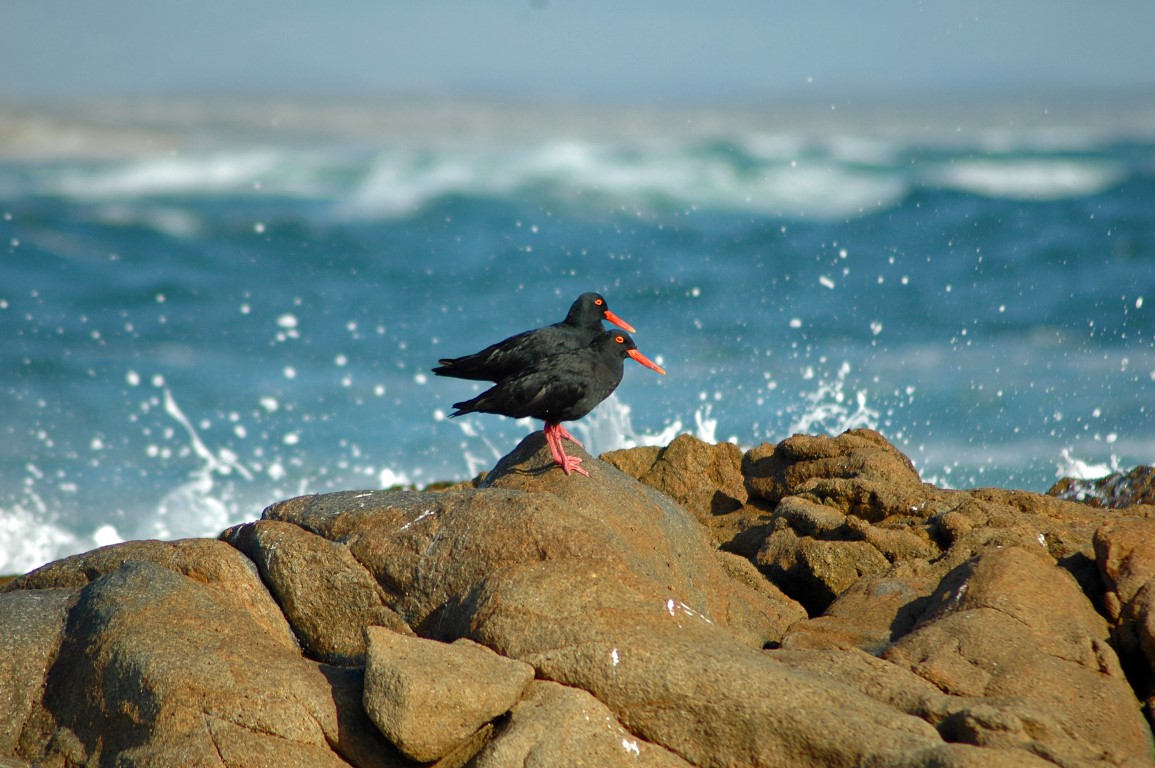
The Saldanha Bay Islands provide important breeding grounds for roughly 80 000 seabirds, including Cape gannets (Monis capensis), African black oystercatchers (Haematopus moquini), kelp gulls (Larus doninicanus), and Cape cormorants (halocrocorax capensis).
West Coast National Park hosts over 280 different bird species and should be on every birder’s destination dream-list.
Article by: Melissa Whitecross