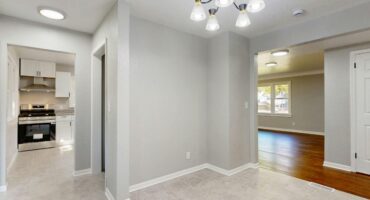
The property market is finally starting to move faster, and it is a great time for sellers to take advantage of the momentum.
The price is usually the main draw card of a property and, if not priced correctly and offering value compared to the hundreds of properties available to buyers, it can delay the sale, says Tiaan Pretorius, manager for Seeff Centurion.
Determining the correct asking price when a property is listed on the market for sale is often one of the most difficult issues. Gerhard van der Linde, MD for Seeff Pretoria East says sellers tend to have a much higher expectation of the worth of their property compared to the market realities. The biggest risk for sellers is that serious buyers tend to overlook an overpriced property, resulting in lost opportunities.
The reason for the higher price expectation is often that the seller actually needs to make a particular profit. It is therefore vital for the seller to be upfront with the agent about their financial needs. Van der Linde emphasizes that this is particularly crucial if the sale must be completed urgently. The agent can then advise the seller on what can realistically be achieved within a particular timeframe.
How is the asking price determined?
Pretorius says the main tool used by property agents to determine a suggested listing price is a Comparative Market Analysis (CMA). This analysis considers recent sales of similar properties in the area, as well as those listed on the market. It compares like for like in terms of property size, condition, and features, to establish a realistic price benchmark.
Various factors determine the asking price. These include the location and amenities in the area, size and condition of the property, demand for the particular property type and style, demand for the area, and current economic and market trends.
The property is also assessed in relation to other properties in the neighbourhood. For example, the property might have desirable extras such as a braai room and a swimming pool which could entice buyers to pay slightly more for the home. Elaborate extras are, however, not a guarantee of a higher price. That is one of the main reasons why property agents caution against overcapitalising, says Pretorius.
The pitfalls and consequences of overpricing
Given that property listings are now all online, buyers have access to all properties on the market. Van der Linde says that buyers can therefore immediately assess the choice of properties available in their desired price band, and will likely only contact those which appear to offer value for money.
It follows that a property which stands out as overpriced will be overlooked. The result is that it will attract fewer buyers, if any, and could consequently stay on the market for longer.
Overpricing in relation to the market will simply drive potential buyers to competing properties. Buyers usually look in particular areas because it fits with their affordability. If the price is out of step with peer properties, it will simply drive buyers to competing properties on the market.
You may then end up having to reduce your asking price which might also be off-putting to buyers. Price drops can have a negative impact as it can create the impression that the seller is desperate which can lead to lower offers.
Van der Linde says decades of experience has shown that rather than attracting a higher price, an overpriced property may end up selling for lower than what it would have if priced correctly at the outset.
Issued by: Gina Meintjes