Classic vanilla crème caramel made in a multicooker
Once you've mastered making vanilla crème caramel with our step by step guide this favourite dessert is surprisingly easy to make.
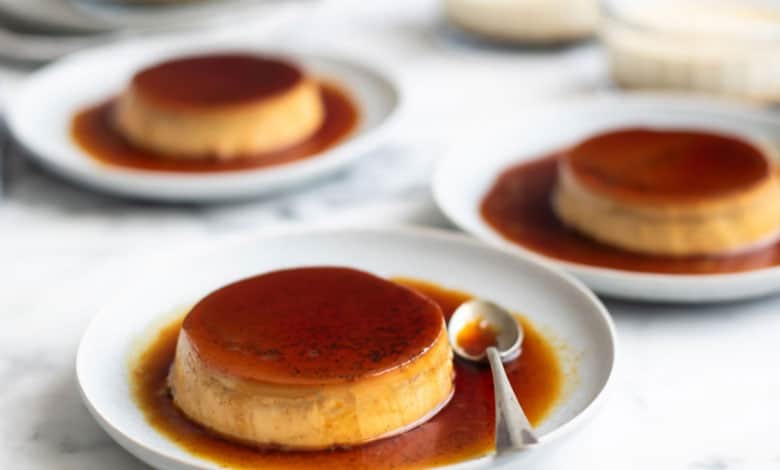
Vanilla crème caramel has been a loved dessert for centuries. Although it’s thought to have emerged in Europe, it shares roots with custard-based sweets from France, Spain, and even ancient Rome. The French perfected its smooth texture, while Spain popularised flan, its close cousin. Over time, it spread across continents.
The idea of making crème caramel can feel intimidating – too light, and it lacks depth; too dark, and it turns bitter. Then there’s the custard, which needs just the right balance of eggs, milk, and sugar to set without curdling. The good news is that this dessert is actually surprisingly easy to make. Recipe compliments of Instant Pot.
Ingredients
For the caramel:
- White granulated sugar
- Water
For the custard:
- Regular cream (you can use whipping or pouring)
- Whole milk
- Large eggs and egg yolks
- Caster sugar & white granulated sugar
- Vanilla extract
- You’ll also need six ramekins and foil
Method
Make the caramel:
- Heat sugar and water in a small pot until it turns dark amber. Be patient but stay close—it can burn quickly.
- Divide the caramel between ramekins and let it set.
Prepare the custard:
- Warm cream and milk in your Instant Pot on sauté mode.
- Whisk eggs, yolks, sugar, and vanilla in a bowl. Slowly add the warm cream while whisking to avoid scrambling the eggs.
- Strain the custard through a fine mesh sieve for a smooth texture.
Assemble and cook:
- Pour the custard into the ramekins over the caramel. Remove air bubbles with a blow torch or a knife.
- Cover each ramekin tightly with foil, folding the edges securely.
- Place ramekins on the trivet in your multicooker with 1 cup of water. Cook on high pressure for 10 minutes and let the pressure release naturally.
- Chill the ramekins in the fridge for at least 6 hours or overnight. Before serving, dip each ramekin in warm water to loosen, then invert onto a plate.