Whether you’re starting from scratch or simply want to zhuzh a flower bed, these five indigenous plants are the way to go. Why indigenous? Because they are naturally suited to the local conditions, require less water, less fertiliser and are more resistant to local pests. It’s a win-win! Let’s go:
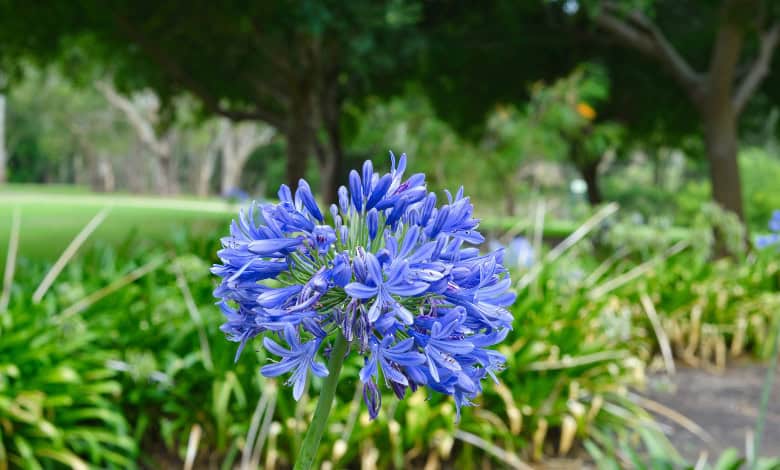
- Add blooming borders with agapanthus
Commonly known as the African Lily, this hardy plant produces beautiful clusters of blue or white flowers in summer. Agapanthus is excellent for borders or as a striking feature in your garden and once established, it requires very little water.
- Attract birds with aloes
These iconic South African succulents are known for their spiky leaves and stunning, nectar-filled flowers that attract birds and insects. Varieties like Aloe ferox (Bitter Aloe) and Aloe arborescens (Krantz Aloe) are perfect for dry gardens. Their ability to store water in their thick leaves makes them highly drought-resistant.
- Bring on bold colours with gazanias
Known for their daisy-like flowers in vibrant shades of yellow, orange, and red, Gazanias are tough, low-growing plants that flourish in hot, dry conditions. They’re a great choice for adding colour to your garden while being water-efficient.
- Choose spekboom for the air quality
Spekboom is a wonder plant that not only thrives in dry conditions, but also helps combat climate change by absorbing large amounts of carbon dioxide. It’s a succulent shrub that can be used as ground cover or as a decorative feature with its round, fleshy leaves.
- Banish pests with wild garlic
Tulbaghia violacea, commonly known as wild garlic, is a hardy and versatile indigenous plant. Its clumps of strappy leaves and delicate purple flowers make it a beautiful, yet practical choice for water-wise gardens. It tolerates drought conditions well and the plant’s garlic-scented leaves have the added benefit of repelling pests.
Find out more by visiting Blackwood’s.