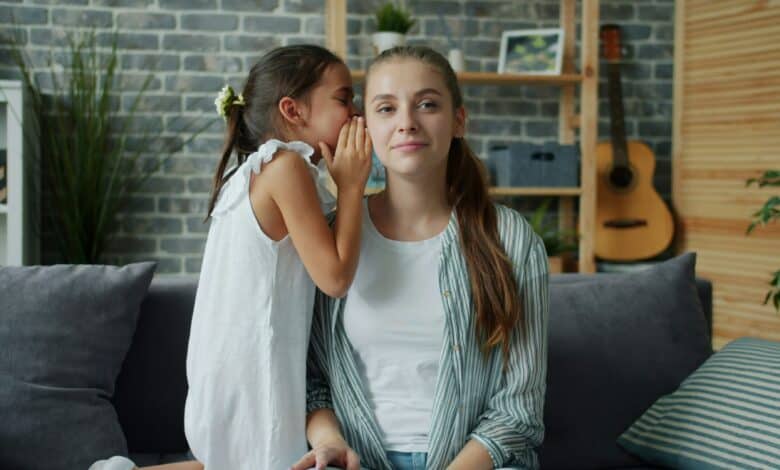
It is not related to higher level language or cognitive difficulties but rather stems from deficits in the neural processing of sounds. Children with CAPD may struggle to make sense of what they hear, especially in demanding environments, leading to difficulties in learning, communication, and social interactions.
The definition of CAPD can vary due to the wide range of symptoms that differ from child to child. It often overlaps with language disorders, making diagnosis tricky. Not all cases require treatment with some children adapting naturally, however early intervention can significantly improve outcomes.
How Auditory Processing Works
Auditory processing involves three interconnected systems that work together in a non-linear way, constantly exchanging information:
- Differentiating Acoustic Features: In the initial stage where sounds enter the ear and travel to the brain’s central auditory processing system.
- Analysing Phonemic Aspects: Here, sounds are transferred into their associated symbols, such as letters or words. This is crucial for foundational skills in reading, spelling, and pre-literacy.
- Discovering Meaning within Language: The final stage involves finding meaning in language, forming mental images, and interpreting what is heard.
A breakdown in any of these areas can disrupt the entire process. For example, imagine being in a foreign country and hearing an unfamiliar language, you can hear the sounds, but making sense of them is challenging.
According to the Auditory Processing Continuum by Musiek and Chermak (2007), this progresses from acoustic to phonemic to linguistic processing. Issues at the acoustic level might involve audiologists, while phonemic and linguistic challenges often require speech and language therapists.
Signs and Symptoms of CAPD
Children with CAPD often appear to have hearing problems, but standard hearing tests come back normal. Common indicators include:
- Difficulty understanding speech in noisy environments, such as classrooms with background chatter or in malls.
- Trouble localizing sounds (e.g., identifying where a sound is coming from).
- Taking longer to respond during conversations or frequently asking for repetitions (“what?” or “huh?”).
- Inconsistent or inappropriate responses to spoken language.
- Being easily distracted or struggling to pay attention.
- Poor performance in auditory related skills on speech, language, or psychoeducational tests.
- Associated challenges with reading, spelling, learning a new language, or following rapid speech.
- Difficulty with following complex directions, learning songs and nursery rhymes, or detecting prosody (e.g., sarcasm or jokes).
- Weak musical or singing skills.
These symptoms can impact listening, reading, and comprehension, often leading to frustration within school and social settings.
The Purpose of Assessing CAPD
Assessment is key to confirming CAPD, ruling out other disorders (like hearing loss or attention deficits), and identifying the root of auditory processing difficulties. A correct diagnosis enables a tailored treatment plan. A team approach is ideal to avoid over-assessment and ensure comprehensive care. Key team members include:
- Parents: Provide background information, medical history, developmental milestones, and observations of the child’s performance in various listening situations.
- Audiologist: Conducts hearing tests and CAPD assessments, coordinates the team, and offers recommendations based on the assessments.
- Speech and Language Therapist: Develops treatment plans based on phonemic and linguistic processing issues.
- Psychologist: Differentiates CAPD from attention difficulties or other neurological issues and provides a cognitive profile.
- Teacher: Describes classroom performance of the child and later helps implement modifications.
- Medical Professionals: Address co-occurring conditions.
Managing CAPD: Strategies for Success
The goal of intervention is to empower children to communicate effectively in diverse settings. Management combines direct therapy, compensatory strategies, and environmental modifications.
- Direct Intervention:
- Involves direct training of auditory skills.
- Speech therapy targets specific skills like auditory memory, auditory closure (filling in gaps), auditory analysis/synthesis (breaking down/building words), auditory figure-ground (ignoring noise), auditory discrimination (differentiating sounds), and auditory-visual integration (taking sounds and matching them to letters).
- Compensatory Strategies:
- Ability to incorporate cognitive or higher-level problem-solving skills to help children overcome learning difficulties using a top-down approach.
- Whole-Body Listening: Encourages sitting up straight, making eye contact, tilting the head toward the speaker, and keeping feet on the floor, which is especially helpful for attention issues.
- Step by step re-ordering: Teach children to paraphrase instructions, use visualizations, or recode information into pictures.
- Cognitive Techniques: Promote problem-solving, use memory aids, paraphrasing and taking responsibility for listening behaviours.
- Environmental Modifications:
- Classroom Adjustments: Use FM systems for amplification, preferential seating (near the teacher, away from noise), acoustic improvements (rugs, posters to reduce echo), visuals to supplement auditory input, pre-teaching vocabulary, recorded lessons, and buddy systems.
- Teaching Styles: Speak slower, use visual aids, and implement tools like a “talking spoon” for turn-taking.
- Home Management:
- Acceptance and Support: Separate the disorder from the child. Encourage transfer of skills from therapy to homework.
- Daily Strategies: Speak slower, ensure eye contact during instructions, chunk tasks, have the child repeat instructions back to you, and develop note-taking skills as they grow older.
- Parent Counselling: Stay in regular contact with therapists and teachers. CAPD can be lifelong, but strategies help manage it effectively.
CAPD doesn’t have to define a child’s future. With the right support, children can thrive academically and socially.
For more information and additional resources, visit www.bellavista.org.za