Help! My dog won’t stop chewing everything
Dogs need to chew… but training them to know what they can chew is key to saving your belongings from those destructive teeth.
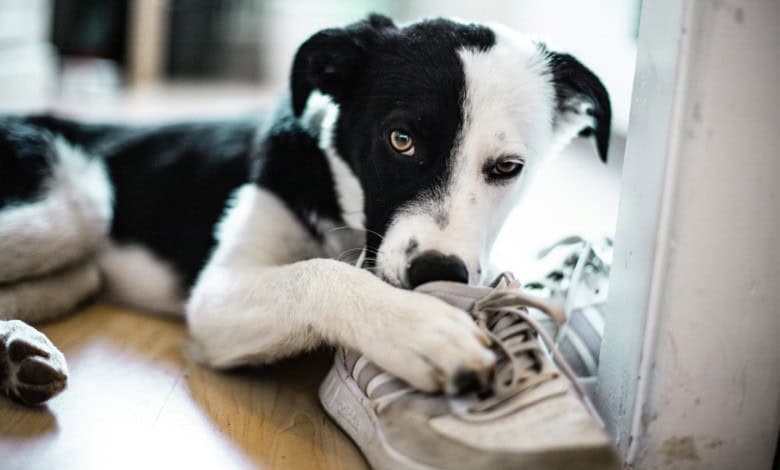
Chewing is good for your pooch. It helps calm them down and even releases feel-good endorphins. If, however, your dog is chewing on everything, this is a sign that something is wrong and needs to be understood and fixed.
Having too much pent-up energy can be mentally and emotionally frustrating for your dog – hence he will resort to his own methods of stress relief. Chewing is particularly stimulating during an episode of separation anxiety, so we know it’s linked to stress relief.
The goal is not so much to prevent your dog from chewing, but to rather redirect his chewing to a more positive and constructive behaviour. How? Here are four steps to get you started:
1. Identify when your dog chews
Figure out if the chewing happens at specific times or during certain scenarios. Does your dog chew while you are home or when you are out? Does the chewing happen when your dog is bored or when he doesn’t have access to toys or friends?
2. Identify your dog’s reasons for destructive chewing
Boredom, anxiety and frustration are some pretty common reasons why dogs chew destructively. If your best friend was out all day and you had nothing to do, wouldn’t you eventually get bored and frustrated?
Write down your dog’s routine: when does he wake up? What does he do first? What kind of attention does he get in the morning, afternoon and evening? When does he exercise? When and for how long does he play with you? When does he get some obedience training? If there are gaps in his schedule where exercise, walking, playing and training should be, it’s likely that those gaps are filled with destructive behaviours like chewing, barking, and digging.
3. Create a routine
Routine helps to remove your dog’s anxiety and build his self-confidence. When your dog knows that he gets a walk in the morning, is fed after his walk, has a play session in the middle of the day, another walk in the evening, with some training in between, this reduces his anxiety about what’s coming next. His self-confidence has a firm foundation in predictability and doing enjoyable things with you.
If there is a time of day during which you are unable to supervise your dog or he needs to spend time on his own, make sure he is confined in an area where he is unable to chew destructively. Don’t let him freely roam around your home and expect him to not find something to chew. Set him up for success.
4. Redirect your dog’s destructive chewing
If you’re at home and you find your dog chewing on something he shouldn’t be – catching him in the act – don’t simply rip away the inappropriate object and scold him. This will not reduce his anxiety, nor will it stop him from chewing. Dogs do not understand the word or implication of ‘don’t’. Instead, call your dog’s name, clap your hands; do anything to distract him from chewing, give him a command and then reward him for doing what you ask (such as sit, down, or place). Use your obedience training sessions to teach your dog to leave random things alone – that he can only bite or chew an appropriate object that you give him (such as a treat or a chewable toy). This will take lots of repetition, but it can make your time spent with your clever pup challenging, fun and especially rewarding when the result is that he doesn’t chew destructively anymore.
For more on pets, visit Get It Magazine.