
4 nabbed as Tshwane vows zero tolerance for land invasions
Following a tip from community members, metro police officers demolished and removed a number of unlawful structures.
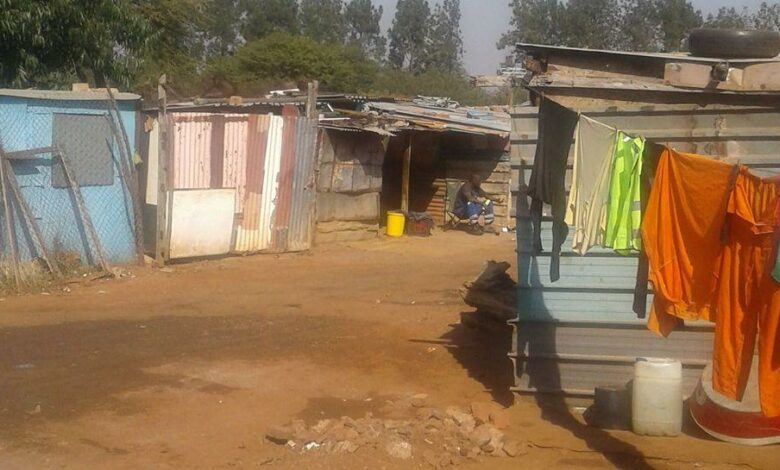
The Tshwane Metro Police Land Invasion Unit arrested four people during an anti-land invasion operation in Kameeldrift, north-east of the Pretoria CBD, recently.
This follows a tip-off from community members last Sunday.
“The concerned community members informed the metro of plots being marked and sold on suspected municipality-owned land,” Tshwane Mayor Cilliers Brink told Pretoria Rekord.
Last Monday, Tshwane Metropolitan Police Department (TMPD) members responded and found that an invasion was indeed underway.
Metro officials verified the information that the invaded land did, in fact, belong to the metro, which prompted the land invasion unit to respond.
Brink said the unit demolished and removed several illegal structures.
“During the removal operation, the TMPD removed three complete structures and hundreds of poles that would be used to construct more illegal structures.”
He added that the four people were impersonating metro officials and selling stands illegally.
“The group was also charged with fraud as they claimed that they were acting on instructions to register individuals and sell the stands.”
He advises people to refrain from illegally buying stands.
“Do not allow anyone to sell your land unless it is through a lawful and legal process.”
‘All political parties to blame’
However, a resident of a squatter camp in plot 175 expressed a different view.
Petrus Ntlhomeng said the metro was to blame for the rapid growth in land invasion in Kameeldrift.
“The metro promised to relocate people for the past 25 years, and to this day they haven’t moved anyone. People in plot 175 have lost patience and decided to relocate themselves and occupy land.”
Ntlhomeng said the population was growing in the squatter camps, leading to rapid growth in the area.
“Had they moved people, this could have been avoided.”
He added that children who grew up in the camps are now looking for their own places.
This means they will occupy any land and erect shelters, as they have reached the age where they can’t stay with their parents anymore.

Nthlomeng said all the political parties that were in charge of Pretoria had promised to establish new townships.
“Since the first municipal elections, we have been promised new townships. But it was all a political campaign.”
Nthlomeng explained some people have been living in community halls with no means to move.
“If the metro is failing to establish townships and relocate us, we ask them to just give us land, and we will do it ourselves,” he added.
Concerned resident
Resident Mitchel de Berg said she was worried about the illegal structures being erected.
“A large number of shacks and shelters being erected is worrying; should a shack catch fire, it would rapidly spread to all the other shacks.”
She said the invasion has a negative impact on the environment because the dwellers burn plastic, which causes pollution, while, according to her, some of them litter all over the area.
“Should illegal immigration and land grabs continue, the value of our property will fall.”
Human Settlements’ view
“Kameeldrift’s formalisation efforts and future development are negatively impacted by land grabs,” said Human Settlements MMC Ofentse Madzebatela.
Madzebatela said more land invasions resulted in many other urban management and developmental problems.
“The illegal occupiers will require services at the expense of the metro and law-abiding citizens.”
He added that, in most cases, they acquire services illegally.
The metro’s approved budget can only address issues through the integrated development plan and only for 12 months.
Madzebatela said the invasion of land mostly occurs after the approval of the budget, making it difficult for the city to provide services.
“It is difficult to provide rudimentary services or even formalise all informal settlements due to limited funds, the capacity of our infrastructure, and the scarcity of land.”
Madzebatela added that the prevention of land invasion is the only mechanism available to the metro to plan, control, and regulate development.
“It must be noted that it is only the metro that has the constitutional obligation to develop and provide services to residents.”
He said the metro appointed a service provider for the establishment of townships to relocate the dwellers.
“All feasibility studies were completed, and the township establishment application was submitted in November 2020.”
He explained that the township establishment application was at an advanced stage.
The metro wants to commence with the allocation of stands in the new financial year, according to Madzebatela.
“This will be based on the final draft layout with all positive comments and the final position.”
He said the metro is negotiating with the owners of various portions of land around Kameeldrift 298-JR, intending to acquire land for human settlement purposes.
Read original story on rekord.co.za

