
Covid-19 zoonotic transmission at Gauteng zoo reveals risk for big cats in captivity
A study by scientists at the University of Pretoria found that the transmission of the Covid-19 Delta variant from humans posed a risk to zoo animals.
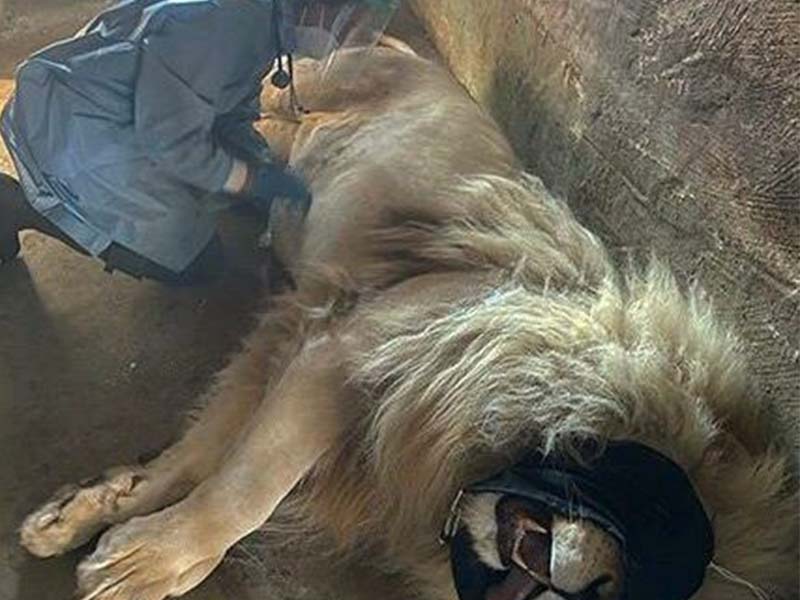
A study by a team of scientists from the University of Pretoria (UP) has revealed that the Delta variants of Covid-19 was a danger to some zoo animals.
Transdisciplinary scientists found that reverse zoonotic transmission of Covid-19 from asymptomatic animal handlers at a zoo posed a risk to big cats kept in captivity.
The study, SARS-CoV-2 Reverse Zoonoses to Pumas and Lions, South Africa, was led by Prof Marietjie Venter, head of the Zoonotic, Arbo- and Respiratory Virus Programme at UP’s Department of Medical Virology; and Prof Katja Koeppel, associate professor of Wildlife Health at the University’s Faculty of Veterinary Science.
This is the only study on the African continent that entailed genomic One Health investigations, and was conducted at a private zoo in Gauteng.
The findings of the study were recently published in Viruses journal.
One Health is an approach that recognises that the health of people is closely connected to the health of animals and a shared environment. Close contact with animals and their environment provides opportunities for diseases to spread between animals and people.
“In 2020, the team tested the faeces of two pumas that had previously shown signs of anorexia, diarrhoea and nasal discharge,” said Koeppel.
“They tested positive for Covid-19, and exhibited mild symptoms. They were medicated and made a full recovery after 23 days. Unfortunately, we could not carry out an investigation into the source or the specific variant involved in the outbreak.
“The samples were diagnosed by real-time PCR at the time of the outbreak, but when we tried to sequence the sample a year later, there was insufficient RNA left for genome sequencing.”
A year later, during South Africa’s third wave of the Covid-19 pandemic, the team conducted a study on three sick lions at the same zoo.
“The lions had breathing problems as well as runny noses and a dry cough for up to 15 days,” Koeppel said.
“A persistent cough was seen between five and 15 days, with two lions experiencing difficulty breathing. One lioness developed pneumonia that did not respond to antibiotics.”
Respiratory swabs were submitted to Prof Venter’s programme, where the cases were investigated.
Staff and lions were monitored in the weeks that followed for the presence of SARS-CoV-2 and, within 15 to 25 days, all three lions made a full recovery.
“A One Health investigation into the source of infection was conducted on 12 staff members who had been in direct or indirect contact with the lions,” Venter said.
“Swab and serum testing were carried out.”
One staff member who had direct contact with the lions and another who had indirect contact tested PCR positive for SARS-CoV-2 two weeks after the start of the lion disease course. All three lions were PCR positive.
“These two individuals and three other staff members also tested positive for anti-spike IgG antibodies,” Venter said.
“None of the staff interviewed reported any recent symptoms of Covid-19; however, the zoo keeper developed mild symptoms the following day and was confirmed positive.”
More tests were done.
“This data suggests that SARS-CoV-2 was circulating among staff during the time that the lions got sick, and suggests that those with direct contact with the animals were likely responsible for the reverse zoonotic transmission.”
Genome sequencing was conducted on the humans and three lions, and tests revealed that each of the infections was a Delta variant.
The two pumas and three lions presented with respiratory illness that was similar to Covid-19 in humans. The animals did not respond to antibiotic treatment but recovered after treatment with anti-inflammatory drugs and supportive care.
According to the study, transmission of the Delta variant to these animals could result in more severe disease as animals tested positive for up to seven weeks after becoming sick.
“This extended period of potential virus shedding poses a risk of infection to animals in close proximity and possibly humans. The animals were therefore placed in quarantine until they tested negative,” the scientists said.
Postdoctoral students Dr Adriano Mendes and Dr Amy Strydom of the Zoonotic, Arbo- and Respiratory Virus Programme were responsible for the initial diagnoses and genomic investigations of the human and animal cases; while Dr Lia Rotherham and Prof Misheck Mulumba, director of the Agricultural Research Council Onderstepoort veterinary research campus, confirmed the diagnoses.
The scientists said the timeline of infections of the lions from a Covid-positive human was difficult to estimate as all staff members were asymptomatic during the outbreak.
They said that reverse zoonotic transmission of SARS-CoV-2 from asymptomatic animal handlers pose a risk to large felines kept in captivity.
The scientists stress that precautions such as vaccinating staff, wearing masks when entering cages and preparing food, infection control through use of disinfectants, and distance barriers for members of the public should be put in place at zoos.
“This is to protect potentially endangered species from getting infected and dying,” Venter and Koeppel said.
“These measures are also important because of the risk of new variants emerging if the virus establishes itself in other animal reservoirs; these variants could be transmitted back to humans.” Members of the public are also urged to be aware of the possibility of infecting their pet cats and dogs if they have Covid-19.
“A One Health approach – where human and animal health specialists as well as environmental specialists work together – is essential to investigate and prevent zoonotic disease transmission,” the scientists said.
Read original story on rekord.co.za

