
CSIR celebrates 75 years of success
The home was originally valued at R10-million, however, auctioneers kicked off with a R5-million asking price.
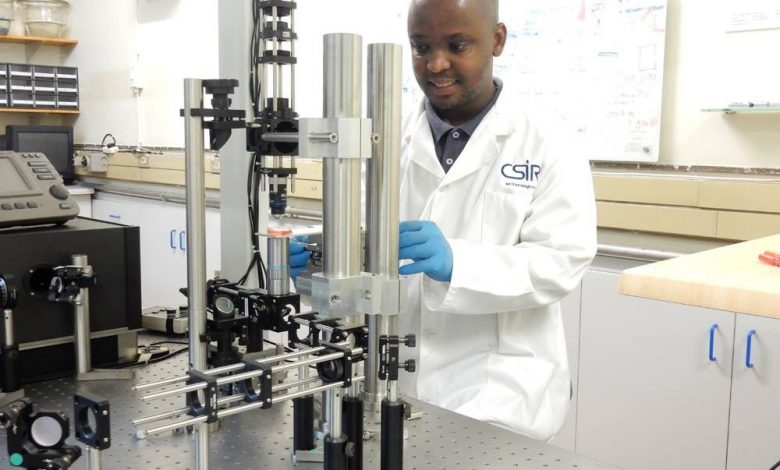
The Council for Scientific and Industrial Research (CSIR) has been congratulated for its contribution in shaping the country’s science, engineering and technology landscape.
CSIR celebrated more than seven decades of existence conducting research aimed at improving the quality of life of all South Africans.
The council was established through an act of parliament in 1945.
Higher education, science and innovation minister Dr Blade Nzimande whose portfolio includes the CSIR, said it the organisation had played a significant role in supporting both the public and private sectors through directed research that was aligned with the country’s priorities, its mandate and its science, engineering and technology competencies.
“Within a few months into the Covid-19 pandemic, the CSIR repurposed some of the labs in support of government’s drive for a massive roll-out of testing.
“It is one of the leading organisations in the development of much-needed ventilators and rapid testing kits and the tracking and tracing of Covid-19 cases across the country.”
Nzimande said CSIR had put South Africa on the global map by leading research and technological development in the country in the past decades.
“Over the years, I have been observing, with great pride, the work that the organisation does, work that has made a huge contribution to our country.
“We are proud of what the CSIR has achieved. We also pay tribute to the leadership, the scientists and all the support staff who over the years, particularly since the new dispensation into our democracy, have passionately contributed to the transformation of the organisation.”
He said the CSIR’s outstanding work included the organisation’s online services, Worldnet Africa and CompuServe, that have been sold to MIH Limited, to form MWEB which marked the start of commercial internet services in South Africa.

“Today, the company continues to take advantage of the demand for connectivity.”
Nzimande said the CSIR officially opened its clinical and botanical supplies unit in 1999, and the facility was key in scientific studies that aimed to add value to South Africa’s rich biodiversity and indigenous knowledge.
“It helps bridge the gap between laboratory research and clinical trials through the production of pharmaceutical-grade herbal products.”
He said the centre for high-performance computing affords local researchers the advantage of using massive computing power in their quest for new knowledge and application.
“In 2015, the centre provided a dedicated computing cluster to help the European Organisation for Nuclear Research, CERN, with two-particle detector experiments.
“In 2002, the CSIR made a breakthrough in biomedical stem cell technology by generating the first induced pluripotent stem cells in Africa.”
Scientists used the cells to study the interactions between pathogens and specific cell types in the context of African genetics.
Nzimande said all these researches conducted by the CSIR stood head and shoulders above similar organisations in the rest of Africa.
“The CSIR has been committed to pushing boundaries in our quest for excellent research, technological innovation, and industrial and scientific development.
“This is evident in the many sectors of our economy that you are impacting through the support you provide to government and the citizens, addressing the majority of the focus areas outlined in the national development plan,” he said.
In April, president Cyril Ramaphosa said South Africa should be proud to have the CSIR “which is always trying to be ahead of the curve in terms of bringing solutions for the nation”.
Read original story on rekordeast.co.za

