
‘Demon dog’ on way to recovery in Mpumalanga
An abused and severely malnourished dog has been given a second chance by a canine rescue organisation.
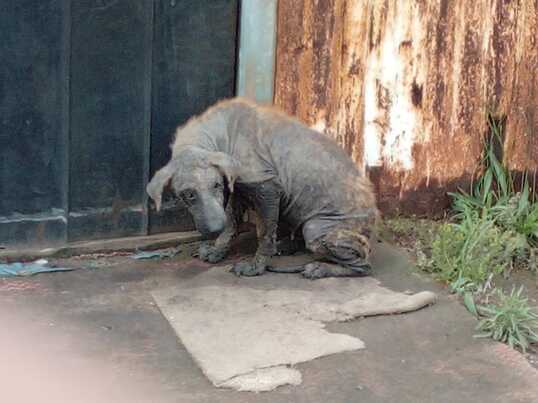
Rescue dog Rosie Bud has made a miraculous recovery a year and four months after being saved by Project Uthando’s Dada Pietersen and Nicolas Ngcongwana.
The then mange-infested Rosie was labelled a ‘demon monster’ by the community in an informal settlement in Bethal, Mpumalanga, and was surrendered into the care of Pietersen and Ngcongwana in November 2022.
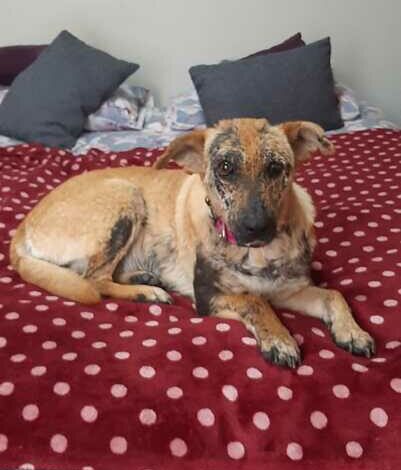
It has been a long road to recovery for Rosie, who still has long-term health problems from the mange caused by severe neglect.
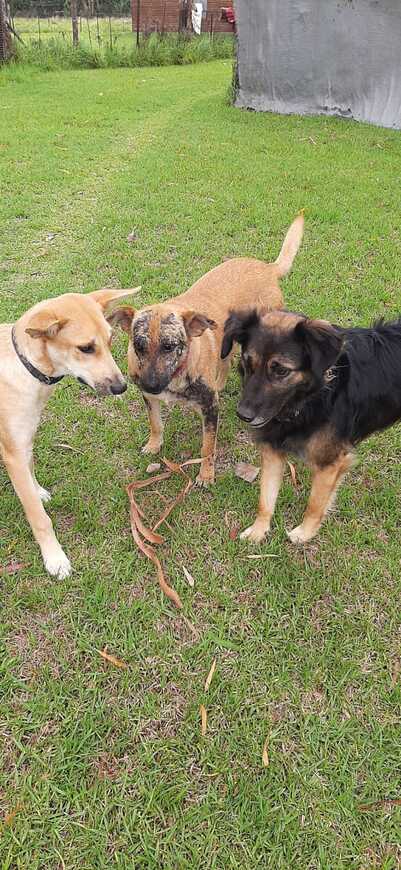
Looking at Rosie now, compared with when Ridge Times first reported on her, one would never say she is the same dog.
When she was rescued she also had an enlarged liver, blindness and swelling in one eye, and swelling in one of her lymph nodes.
“Rosie was on Bravecto and Nexguard treatment, but due to her liver condition I am now treating her with a natural remedy,” says Pietersen.
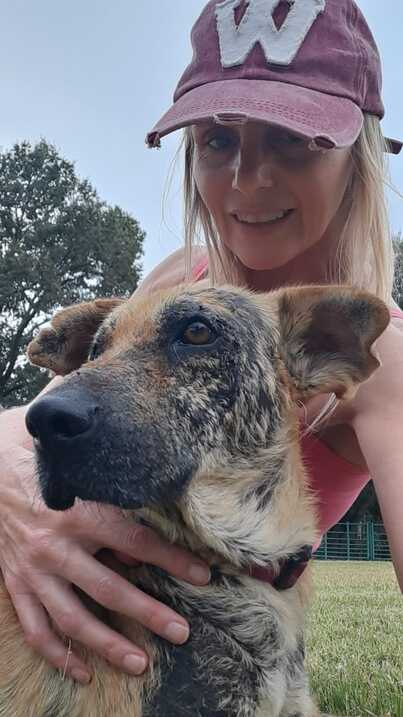
The severe infection of Rosie’s paws, which would ooze with pus, has healed up nicely and there has not been an infection for more than nine months.
“She loves other dogs and makes friends easily with new K9 rescues that come into our care,” says Pietersen.
Rosie does not trust nor go to any humans, except Pietersen and Ngcongwana.
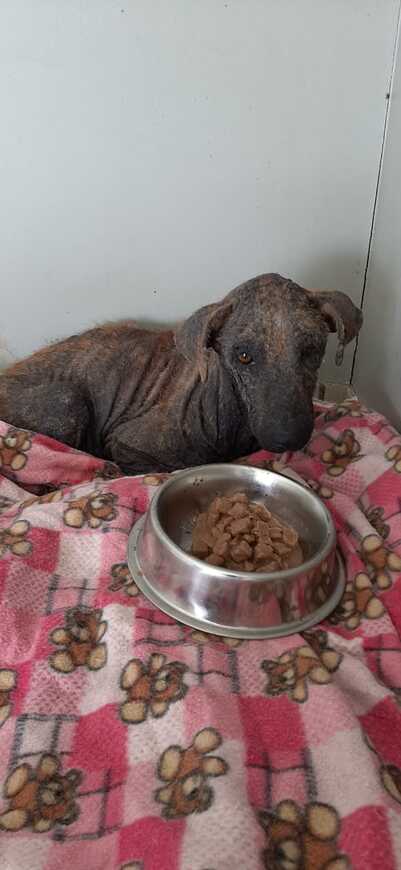
As for her diet, Pietersen says: “She will eat anything. I had to change her diet a month ago to more raw meat and veggies because she is gaining too much weight.
“She loves her raw goat milk with bone broth and blueberries in the morning, as well as the odd chicken foot or chicken neck. Any raw meat is high on her list.”
Pietersen says Rosie loves her tummy being scratched and has a funny nature.
“She loves to nibble on my arms and hands. Rosie also learnt from her best buddy Tiger how to play with leaves that fall from the trees,” says Pietersen.
Pietersen and Ngcongwana try to help sterilise dogs in informal settlements.
“Depending on vet availability, we try to take in four to six rural dogs monthly for sterilisation, however, money is limited,” says Pietersen.
Read original story on www.citizen.co.za