
Don’t bury it, recycle it
South Africans are urged to improve their recycling habits ahead of Global Recycling Day tomorrow.
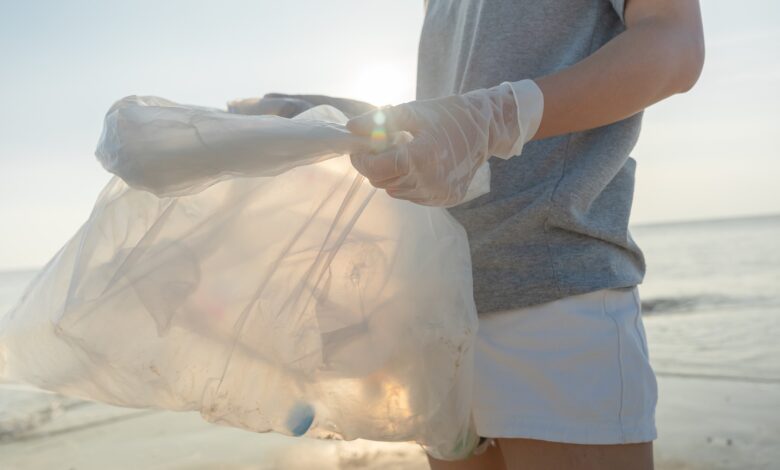
While South Africa recycles an average of 1.1 million tons of paper and paper packaging each year, a significant amount is lost when it is discarded with wet waste, thrown away as litter or stored in homes and businesses as documents and paper packaging.
As such, with Global Recycling Day being celebrated tomorrow, citizens are urged to improve their recycling habits.
Available statistics indicate that South Africans generate roughly 122 million tons of waste per year of which 90% is landfilled or dumped illegally.
Around 10% is recycled or recovered for other uses.
“Recycling or separation-at-source is one of the simplest ways to commence a waste reduction journey,” says Samantha Choles, the communications manager of the Paper Manufacturers Association of South Africa, advising that paper recycling is a good place to start.
“By putting certain items aside for recycling collectors and participating in dedicated recycling programmes, we can all make a big difference to our planet, another people’s livelihoods and our personal waste footprint.”
Recycling saves landfill space
It is estimated that one ton of paper products collected for recycling saves around three cubic metres of landfill space. This means that 3.3 million cubic metres of space is not filled with the very useful commodity of paper and paper packaging but goes back into the manufacturing loop.
For South African paper packaging and tissue producers, recycled paper is an alternative fibre and key raw material for corrugated boxes and paper bags, newspapers, tissue products, kitchen and industrial paper towelling, cereal boxes, and moulded paper products like egg boxes and cup carriers.
Sustainable tree use
Recycling paper is often coupled with the rationale of ‘saving trees’, but this notion is misguided as the trees used in papermaking are farmed sustainably.
Trees are planted, and the wood is harvested and converted to pulp, paper or timber products.
Only 10% of the total plantation area is harvested over a year, and this same area is replanted within 12 months. This makes paper and wood a renewable resource.
Although paper fibres can be recycled anywhere between six to 25 times, they are not infinitely recyclable. Virgin or fresh fibre will always be required to keep the paper cycle going.
Recycling reduces emissions
When paper is mixed with wet waste, it becomes contaminated and starts to degrade, adding to greenhouse gas emissions. When paper is kept clean and dry for recycling, carbon that is stored in paper stays locked up for longer.
Recycling supports the economy
On any given day, recycling collectors weave through cities and suburbs for recyclable items that they can resell at a buy-back centre.
“Collectors are a vital cog in the recycling system, especially where mandatory separation and recycling programmes do not exist,” says Choles.
Larger recycling businesses and paper mills also contribute to society and the economy by providing employment – from sorting and baling, to managing recycling processes, all the way through converting paper into new products.
“Let’s not forget the people in the background such as finance, human resources, engineers, maintenance crews and everyone who keeps the process flowing,” notes Choles.
Recycling has that feel-good factor
Every person uses paper in one way or another every day, from cereal boxes to milk cartons, from documents to school reports, and the ever-essential toilet roll core and common cardboard box.
Separate your paper recycling into a dedicated bag or box for collectors to keep it clean, save them time, and from digging through rotting, smelly waste. Recyclable paper products should be kept clean and dry to ensure that the collector earns maximum value.
Some items are still recyclable even if they are not taken by a recycling collector who prefers higher-value items that are neither too light (polystyrene) nor too heavy (glass).
Know your paper recyclables – from the bathroom to the kitchen sink
It’s not just white paper and cardboard boxes that are recyclable, says Choles, adding that several products can be recycled.
“We suggest placing paper recycling bins in common areas of your home or where you have the space. This makes recycling a lot easier.”
Kitchen:
- Grocery delivery bags and takeaway bags
- Paper packaging from cereal, tea, sugar, pasta, doggy treats and other dry goods
- Milk or juice cartons* – no liquids
- Pizza boxes – no leftover pizza
- Egg cartons and take-away cup holders
- Tubing from kitchen towel rolls
- Paper cups* (minus the lid – this is made of polystyrene but can be recycled via other means)
Bathroom and bedroom:
- Cardboard tubes from toilet paper rolls
- Boxes galore from shoes, facial tissue, toothpaste, soap, cosmetics and medicine, etc.
Office/study:
- Copy and printing paper, notebooks (minus wire binding and non-recyclable covers)
- Paperback books – donate old books to a library or community centre but for those that are well-worn, a new life awaits through recycling.
Front door:
- Post – if you still get any, including envelopes, postcards and advertising mail
- Magazines
- Newspapers
- Cardboard boxes from your online shopping
- Separation of the different waste streams – paper, cardboard, glass, tin, plastic, and e-waste – is critical to ensure that we reduce recyclables going to landfill, reduce pollution and create a culture of ‘green thinking’.
Read original story on www.georgeherald.com

