
Giraffe drowns in KZN nature reserve
An attempt to treat a giraffe's injury, that was caused by a snare, went awry when the said animal got stuck in a donga.
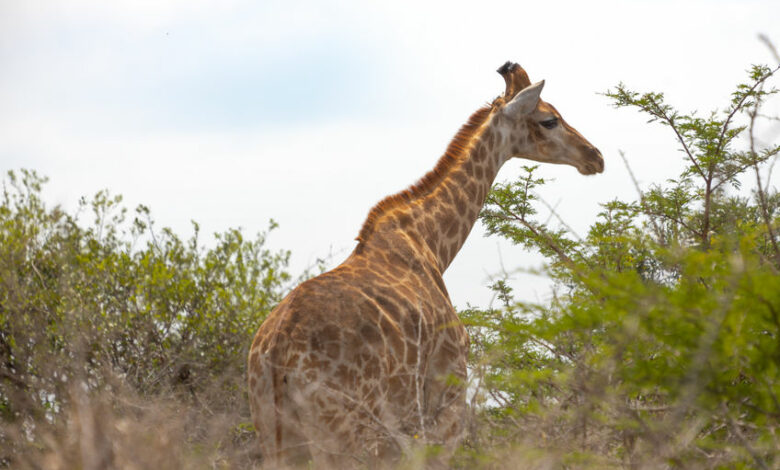
December’s unusually heavy downpours brought a tragic twist to a giraffe rescue operation in Bisley Nature Reserve, KZN, when an injured giraffe drowned in a large donga filled with rainwater recently.
Friends of Bisley Nature Reserve (FOBNR) chairperson Peter West said the giraffe had previously been spotted with a limp, sustained from a snare injury, and the FOBNR team had darted the giraffe so it could be treated.
“However, while waiting for the sedative to kick in, the giraffe crossed the river near the bird hide, where the water saturated ground gave way under its weight, plunging it into a mass of water, where it drowned.”
After discovering the animal’s body, the municipality and Bisley Nature Reserve team removed it from the donga as the chemicals the team used to treat the animal’s injuries meant that it would not be safe to consume by other animals or humans.
On top of FOBNR members’ continued fight against poaching, West said these torrential downpours have had a myriad of negative impacts on the conservation of nature reserves. Some of the major problems include locating and removing snares, soil erosion, and flooding.
“The high volume of mud caused by rainfall makes snares less visible so they are more difficult to locate and remove.”
Moreover, West said, Bisley Nature Reserve heavily relies on volunteers, and when the weather is bad, people do not come out in numbers.
“This means there are fewer people on our snare patrol teams. The large quantity of rain also leads to soil erosion and flooding. Both of which endanger our wildlife.
“Soil erosion causes dongas to form, and flooding means that those dongas can be filled with water. When this happens, animals can fall in, and not get out, as was the case with this giraffe.”
West said that climate makes conservation of a nature reserve difficult across the world, but in South Africa, the weather has made things particularly difficult as the rains were not anticipated to be so heavy this season.
West added that while summer rains will end soon, problems will persist as, after La Niña, there could be the opposite weather phenomenon, El Niño, which brings drier conditions.
Drier conditions, West said, will bring the opposite adverse effect of drought, which is what led to the formation of FOBNR in 2019, after animals starting dying of hunger in the reserve.
Read original story on www.citizen.co.za