
Google’s key search moments over 25 years
In celebration of its 25th anniversary, Google highlights its key moments in ‘search’, and how it has made the function more helpful, from images to artificial intelligence.
While Google, when launched, was far from the first search engine, it quickly became known for its ability to help connect people to the exact information they were looking for, faster than they thought possible.
Over the years, it has continued to innovate and make Google Search better every day.
From creating entirely new ways to search, to helping millions of businesses connect with customers through search listings and ads – starting with a local lobster business advertising via AdWords in 2001 – to having fun with Doodles and Easter eggs, it has had quite a journey.
In celebration of its 25th birthday, the search engine takes a look at the milestones that made it more helpful in the moments that matter, and played a big role in where it is today. Learn more about its history on its Search Through Time site.
2001: Google Images
When Jennifer Lopez attended the 2000 Grammy Awards, her daring Versace dress became an instant fashion sensation and the most searched Google phrase at the time. Back then, search results were only a list of blue links, so people couldn’t easily find the image they were looking for. This inspired the creation of Google Images.
2001: ‘Did you mean?’
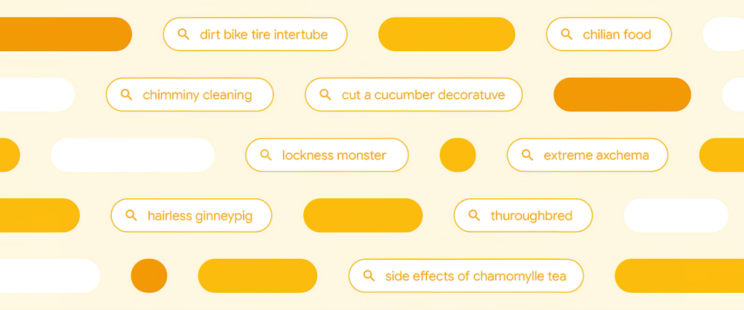
‘Did you mean?’, with suggested spelling corrections, was one of Google’s first applications of machine learning. Previously, if a search had a misspelling (like ‘floorescent’), it would help you find other pages that had the same misspelling. These usually weren’t the best pages on the topic. Over the years, it has developed new AI-powered techniques to ensure that even if a finger slips on the keyboard, the searcher will find what they need.
2002: Google News
During the tragic events of September 11, 2001, people struggled to find timely information on the Twin Towers in Search. To meet the need for real-time news, Google News was launched the following year, with links to a diverse set of sources for any story.
2003: Easter eggs
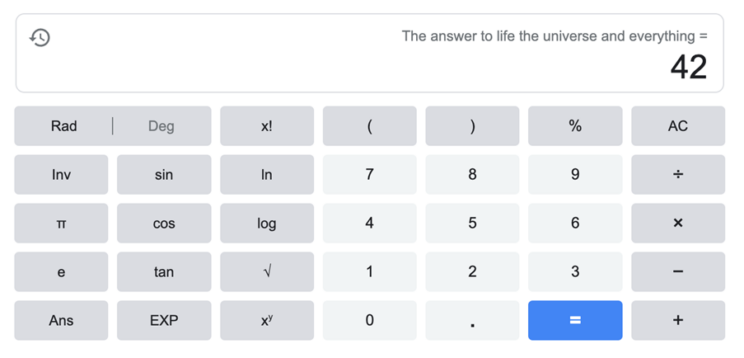
Google has developed many clever Easter eggs (intentionally hidden messages) in Search over the years. In 2003, one of the first ones gave the answer to life, the universe and everything. Since then, millions of people have turned their pages askew, done a barrel roll, enjoyed a funny recursive loop and celebrated moments in pop culture.
One of Google’s earliest Easter eggs is still available on Search.
2004: Autocomplete
Wouldn’t it be nice to type as quickly as you think? Cue Autocomplete, a feature first launched as ‘Google Suggest’ that automatically predicts queries in the search bar when someone starts typing. Today, on average, Autocomplete reduces typing by 25% and saves an estimated over 200 years of typing time per day.
2004: Local information
People used to rely on traditional phone books for business information. The web paved the way for local discovery, like ‘pizza in Chicago’ or ‘haircut 75001’. In 2004, Google Local added relevant information to business listings, such as maps, directions and reviews. In 2011, it added click-to-call on mobile, making it easy for people to get in touch with businesses while they’re on the go. On average, local results in Search drive more than 6.5 billion connections for businesses every month, including phone calls, directions, ordering food and making reservations.
2006: Google Translate
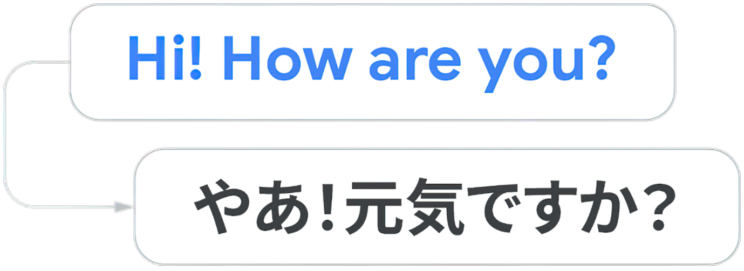
Google researchers started developing machine translation technology in 2002 to tackle language barriers online. Four years later, it launched Google Translate, with text translations between Arabic and English. Today, Google Translate supports more than 100 languages, with 24 added last year.
2006: Google Trends
Google Trends was built to help the company understand trends on Search with aggregated data, and creates its annual Year in Search. Today, Google Trends is the world’s largest, free dataset of its kind, enabling journalists, researchers, scholars and brands to learn how searches change over time.
2007: Universal Search
Helpful search results should include relevant information across formats, like links, images, videos, and local results. Google thus redesigned its systems to search all content types at once, decide when and where results should blend in, and deliver results clearly and intuitively. The result, Universal Search, was its most radical change to Search at the time.
2008: Google Mobile App
With the arrival of Apple’s App Store, the company launched its first Google Mobile App on iPhone. Features like Autocomplete and ‘My Location’ made search easier, with fewer key presses, and were especially helpful on smaller screens. Today, there’s so much you can do with the Google app – available on both Android and iOS – from getting help with your maths homework with Lens, to accessing visual translation tools in just a tap.
2008: Voice Search
In 2008, the ability to search by voice on the Google Mobile App was introduced. This expanded to desktop in 2011. With Voice Search, people can search by voice at the touch of a button. Today, search by voice is particularly popular in India, where the percentage of Indians doing daily voice queries is nearly twice the global average.
2009: Emergency hotlines
Following a suggestion from a mother who had a hard time finding poison control information after her daughter swallowed something potentially dangerous, Google created a box for the poison control hotline at the top of the search results page. Since the launch, it has elevated emergency hotlines for critical moments in need, like suicide prevention.
2011: Search by Image
Sometimes, what you’re searching for can be hard to describe with words. Google thus launched Search by Image so that people could upload any picture or image URL, find out what it is and where else it is on the web. This update paved the way for Lens.
2012: Knowledge Graph
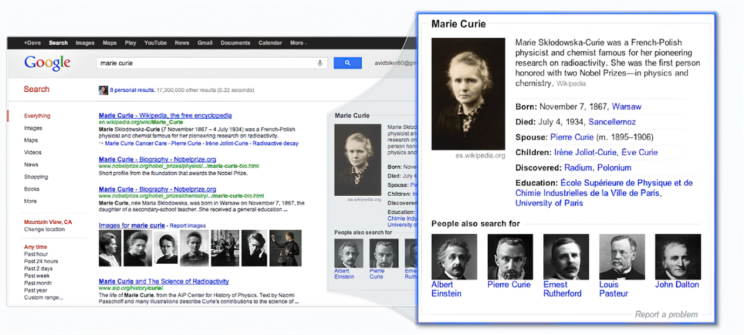
Knowledge Graph, a vast collection of people, places and things in the world and how they’re related to one another, to make it easier to get quick answers, was then introduced. Knowledge Panels, the first feature powered by Knowledge Graph, provided a quick snapshot of information about topics, such as celebrities, cities and sports teams.
2015: Popular Times
Popular Times, a feature in Search and Maps, was launched to help people see the busiest times of the day when they search for places like restaurants, stores, and museums.
2016: Discover
By launching a personalised feed, now called Discover, the search engine helped people explore content tailored to their interests in the Google app, without having to search.
2017: Lens
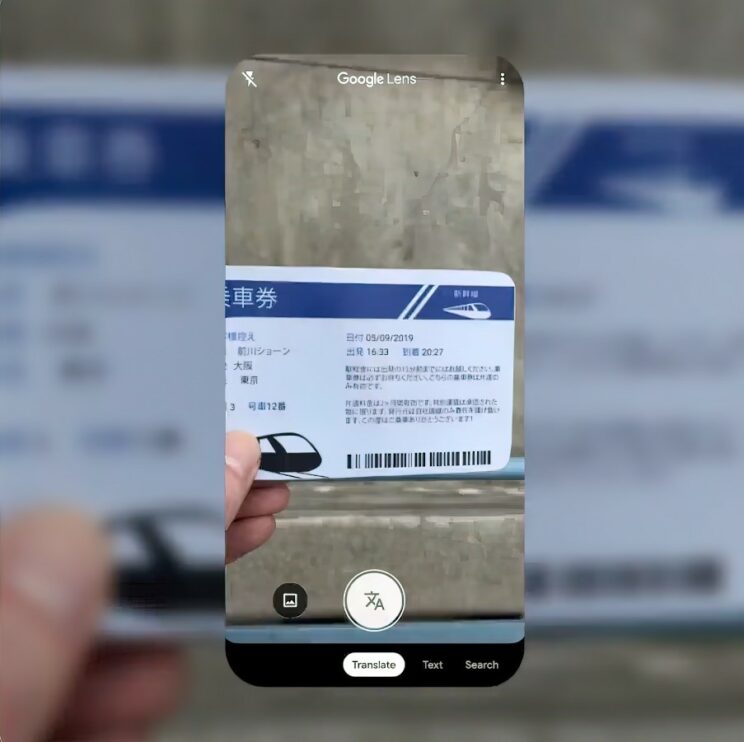
Google Lens turns your camera into a search query by looking at objects in a picture, comparing them to other images, and ranking those other images based on their similarity and relevance to the original picture. Now, you can search what you see in the Google app. Today, Lens sees more than 12 billion visual searches per month.
2018: Flood forecasting
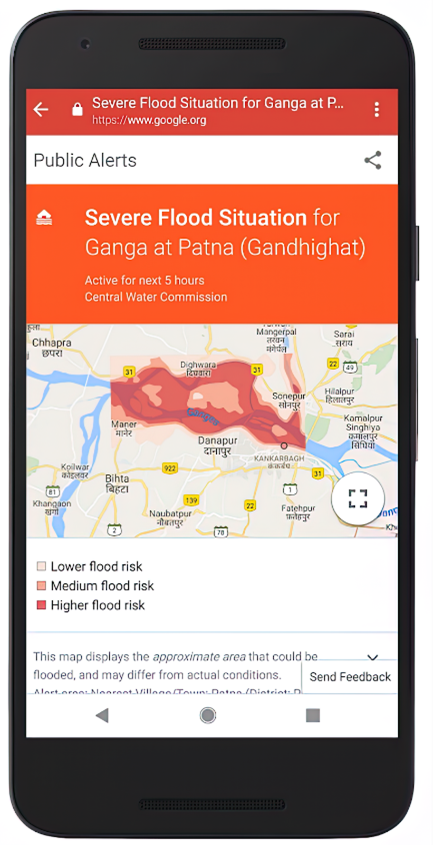
To help people better prepare for impending floods, Google created forecasting models that use artificial intelligence (AI) to predict when and where devastating floods will occur. Started in India, the company has expanded flood warnings to 80 countries.
2019: BERT
Google understands language. In 2018, it introduced and open-sourced a neural network-based technique to train its language understanding models – Bidirectional Encoder Representations from Transformers (BERT). BERT, which considers the full context of a word, was applied to more than 70 languages after rigorous testing in 2019.
2020: Shopping Graph
Online shopping became a lot easier and more comprehensive when Google made it free for any retailer or brand to show their products on the search engine. It also introduced Shopping Graph, an AI-powered dataset of constantly updating products, sellers, brands, reviews and local inventory that today consists of 35 billion product listings.
2020: Hum to Search
It launched Hum to Search in the Google app to ease users’ frustration at not being able to remember a tune stuck in their heads. The machine-learning feature identifies potential song matches after a hum, whistle or melody, and information about the song and artist can then be explored.
2021: About this result
To help people make more informed decisions about which results will be most useful and reliable for them, ‘About this result’ was added next to most search results. It explains why a result is being shown and provides context about the content and its source, based on best practices from information literacy experts. About this result is available in all languages where Search is available.
2022: Multisearch
To help you uncover wanted information – no matter how tricky – Google created an entirely new way to search with text and images simultaneously through Multisearch. This enables the user to, for example, snap a photo of their dining set and add the query ‘coffee table’ to find a matching table. First launched in the United States, Multisearch is available globally on mobile, in all languages and countries where Lens is available.
2023: Search Labs and Search Generative Experience
With Search Labs, you can test early-stage experiments and share feedback directly with the teams working on them. The first experiment, Search Generative Experience, brought the power of AI directly into Search, enabling users to get the gist of a topic with AI-powered overviews, pointers to explore and natural ways to ask for follow ups. Since launching in the United States, it has added more capabilities, and others are on the cards.
Read original story on www.citizen.co.za

