
Has Durban fallen prey to urban decay?
A town planner says a dedicated budget and proactive maintenance are needed to solve Durban’s inner-city issues.
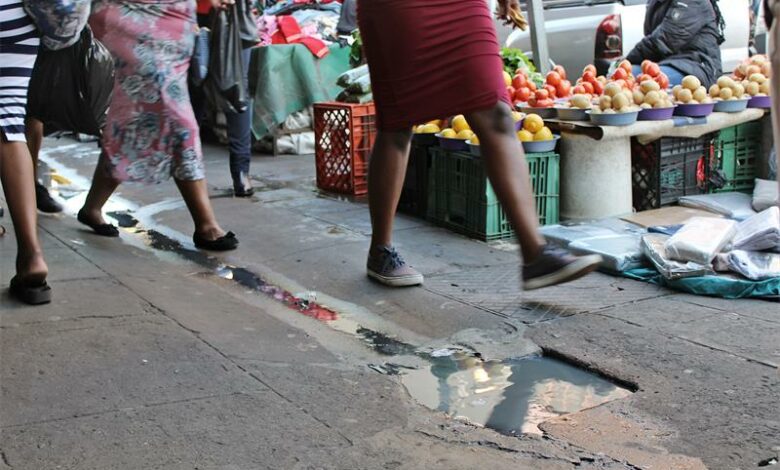
Although often not clean and intact, there is something functional about the chaos in Durban’s CBD. Town and regional planner, Dr Soobs Moonsamy, talks about the historical roots of the city’s urban decay, the problems it poses and how to fix it.
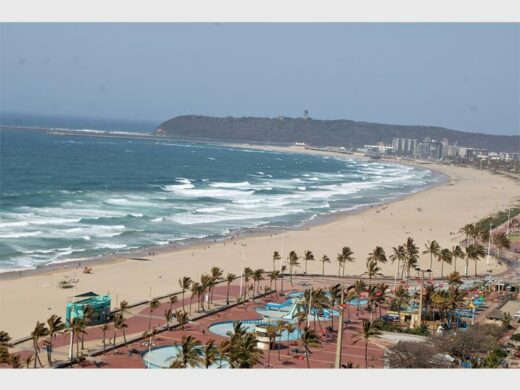
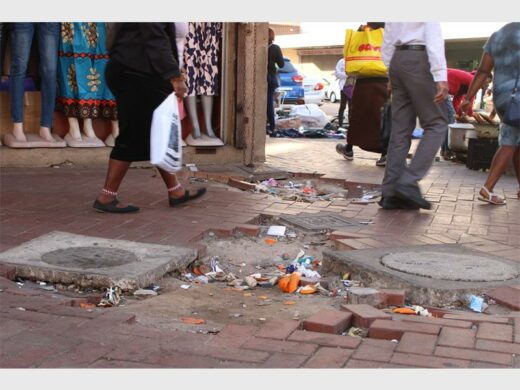
Roads riddled with potholes and litter meet the peeling paint of dilapidated buildings in Durban’s Central Business District. A few kilometres away, the Golden Mile shines in the sun along South Beach.
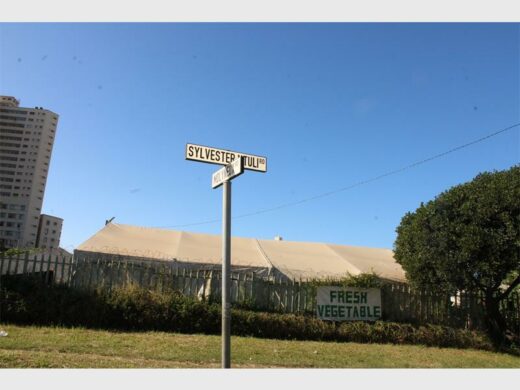
A pedestrian brushes into a pickpocket and walks away without his cell phone on a crowded corner. A shelter with a budding vegetable garden offers a lifeline to the city’s homeless, and thousands sustain themselves in the bustling business of Warwick Triangle. Durban is a city succumbing to urban decay, but not without a silver lining.
Speaking to Berea Mail, town and regional planner, Dr Soobs Moonsamy discusses how inner-city decline or ‘urban decay’ is a complex problem.
“There isn’t one particular problem but a host of problems that create a cycle of decline. The jurisdiction has a variety of issues and opportunities, and some function better than others,” says Moonsamy, speaking in her private capacity.
Defining the problem is further impacted by who is talking. While some view the city on an aesthetic level, others use what the city offers.
“Who lives in the inner city? Why are they there despite the problems? What remains in the inner city, and what is its value to eThekwini and the province? These questions are equally important,” says Moonsamy.
Among the city’s broader functions is the Durban port which caters to wide-scale logistics and the many facets of the city centred around the Durban tourism industry, including the beachfront and a bevy of hotels. The city is also home to several residents, students and those who are marginalised, such as the homeless, marginally employed, refugees and migrants. The diverse socio-economic gaps in the city’s inhabitants reflect the structures on the streets, such as universities, schools, healthcare facilities and places of work, including the informal sector and small, medium and micro-enterprises (SMMEs).
“This may not translate into cleanliness and the buildings being in a good state, but there is something functional about it as much as it is chaotic. Is the inner city dysfunctional in totality? No. Are there parts that are struggling? Indeed, yes.
“The functionality and cost of inner-city buildings is huge. There are buildings with lifts, old architecture and those with heritage value which make repairs difficult – further complicating maintenance,” says Moonsamy.
Obvious problems
For Moonsamy, there are some obvious problems, such as safety and security.
“Visible policing is needed to deal with petty and serious crime, without compromising the public space of the inner city and constitutional rights of people to move around. Crimes include drug use, sexual offences, pickpocketing and unscrupulous ‘landlords’.
“In terms of safety, infrastructure upgrades are needed to address damaged and unsafe pavements, missing manhole covers and blocked drains. There is also a need for more frequent inspections of unsafe buildings and problematic building use such as the proliferation of liquor outlets and bars that impact the inner city negatively,” says Moonsamy.
For Moonsamy, these improvements can only be achieved through partnerships involving government, non-government organisations (NGOs) and fixed-base operators (FBO) who can work alongside the marginalised, including the homeless, traders and waste managers.
“It is also important to reflect on irresponsible land and property owners. There are those who are unscrupulous, who allow their properties to decline, which affects their neighbours,” she says.
“There are about 100 bad buildings, which don’t just need a paint job – they are structurally compromised. The legalities are further complicated with deceased estates, hijacked buildings and untraceable owners,” adds Moonsamy.
Historical roots
Urban decay is linked to historical and present-day dynamics.
“The Group Areas Act (1950) created an artificial city in which scores of black people entered the city as labourers in transit only. The city was designed for just a few,” says Moonsamy.
As the Group Areas Act crumbled in the late 80s, early 90s, there was an influx of people of colour into the inner city.
“The 90s and 2 000s saw more people investing in the north, west and far north, such as Ballito, leaving the inner city to the marginalised and those who depended on public transport,” says Moonsamy.
Solutions
For Moonsamy, solving inner-city issues requires targeted spatial governance within the municipality, from waste collection to business and building inspectors, and safety and security personnel.
“A dedicated infrastructure budget needs to be combined with proactive maintenance and budgets for emergencies,” she says.
“An inner-city agency could take on certain functions by assignment,” she adds.
Read original story on bereamail.co.za

