
Ipsos study reveals 4 in 10 South Africans depend on social grants
The growing dependence on state support is exposing the widening gap between households needing assistance and the shrinking pool of income taxpayers.
South Africa’s growing dependence on social grants is placing increasing pressure on the country’s social assistance system and narrow tax base, according to new data from Ipsos, reports Parys Gazette.
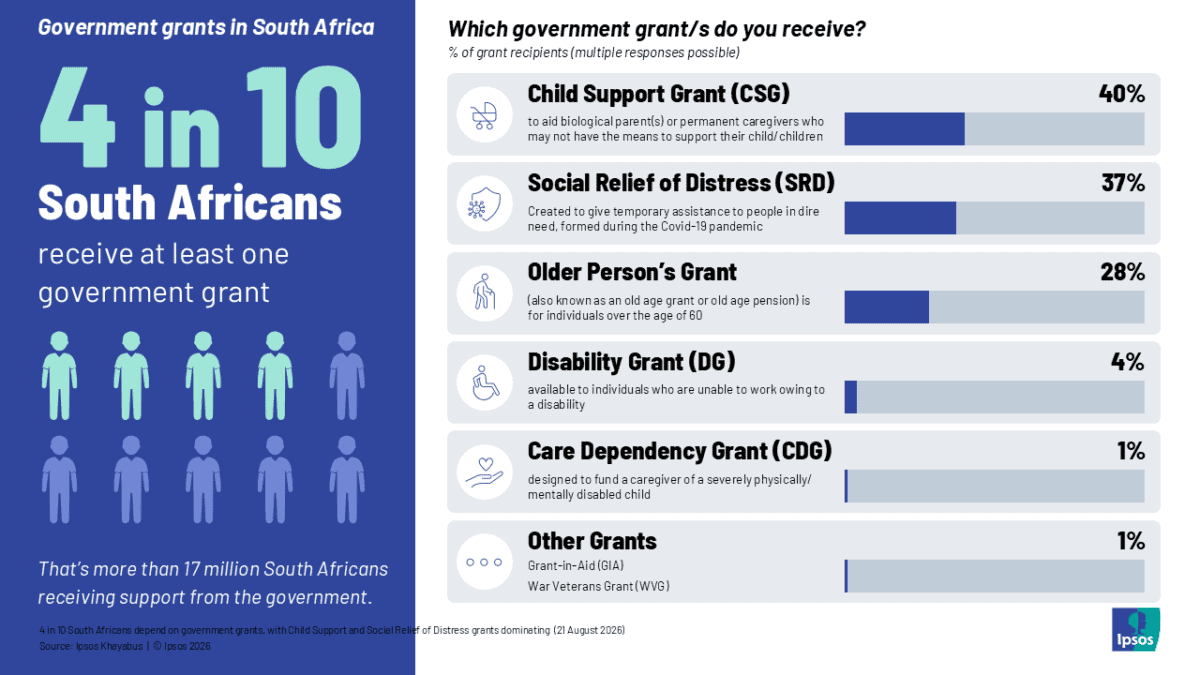
The Ipsos Khayabus Pulse of the People study shows that four in 10 South Africans receive a social grant, with the Child Support Grant and Social Relief of Distress (SRD) Grant accounting for 77% of recipients.
The findings come amid continued debate over grant values, eligibility requirements, and the future of the SRD Grant, which was introduced in May 2020 as temporary Covid-19 relief but is now in its sixth year.
Mari Harris, a political analyst at Ipsos in South Africa, says the findings highlight the difficult balance between social support and the country’s limited tax base.
“Four in 10 South Africans depend on grants to survive, yet less than a quarter of the population earns enough to contribute to income tax,” says Harris.
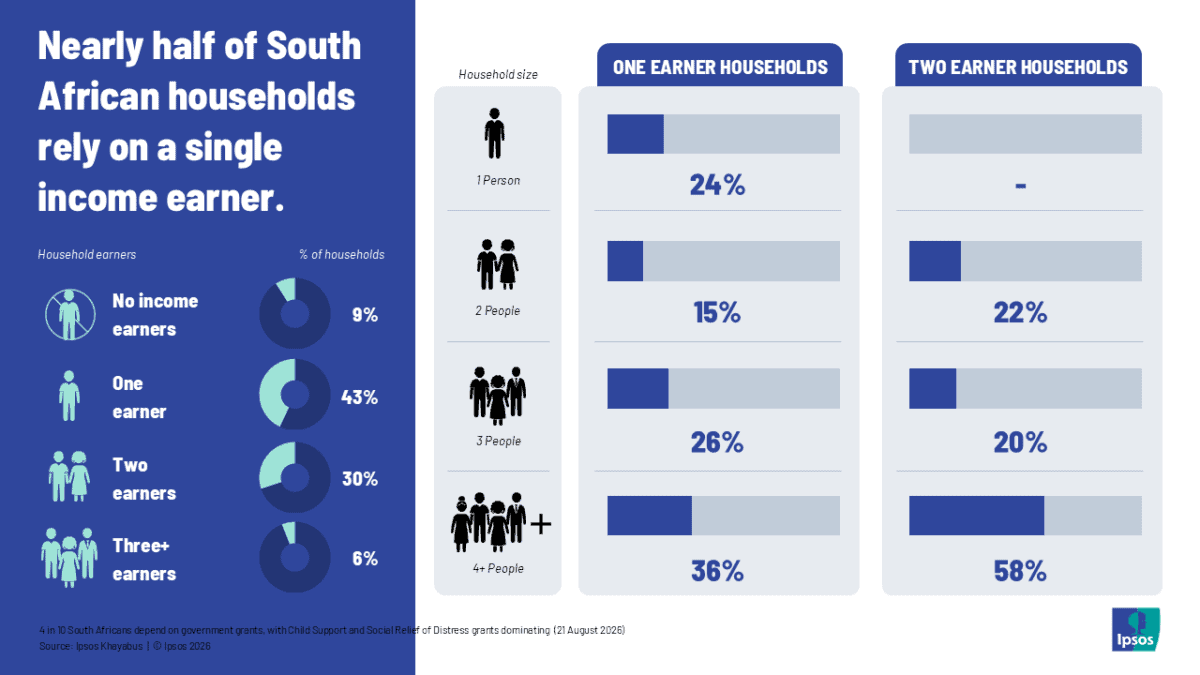
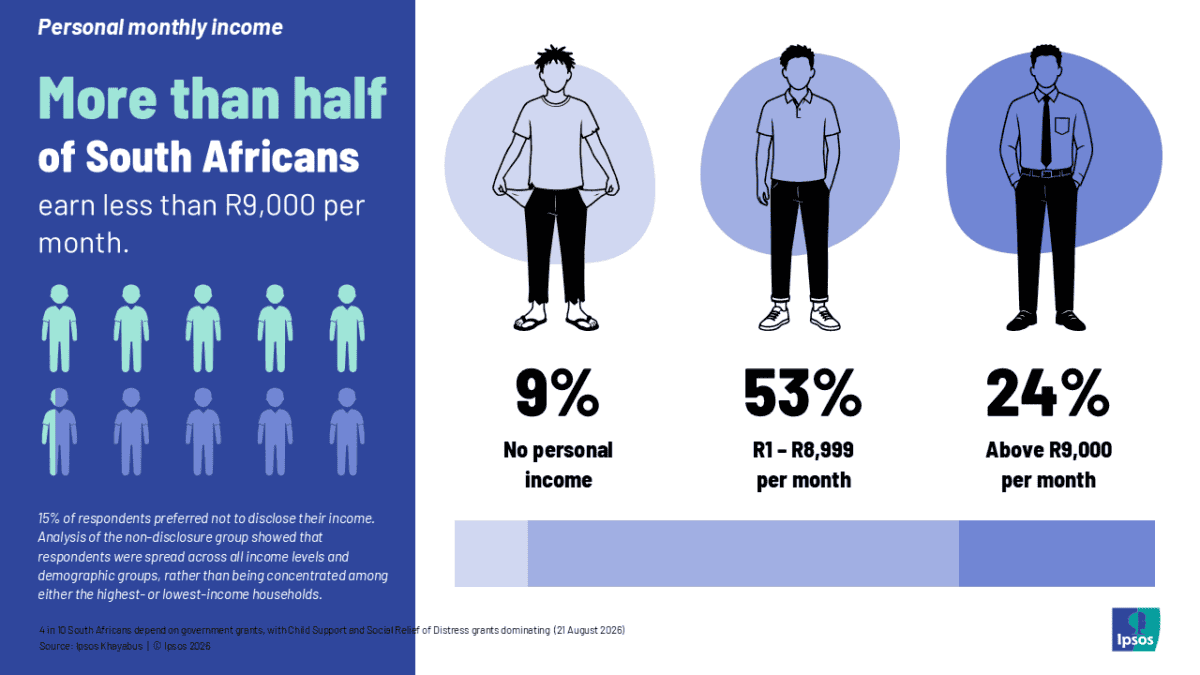
More than half (52%) of South African households have either one income earner or no income earner at all, while only about 24% of those surveyed reported earning more than R9 000 a month.
Child Support Grant dominant
The Child Support Grant remains the most common form of social assistance, reaching around four in 10 grant recipients.
The SRD Grant is the second most common form of assistance, despite originally being introduced as an emergency and temporary measure.
“Together, these two grants have become the primary mechanism keeping millions of households afloat,” says Harris.
Respondents could receive more than one type of grant, meaning the percentages for different grants add up to more than 100%.
SRD lifeline for young South Africans
The research shows particularly strong reliance on the SRD Grant among young people.
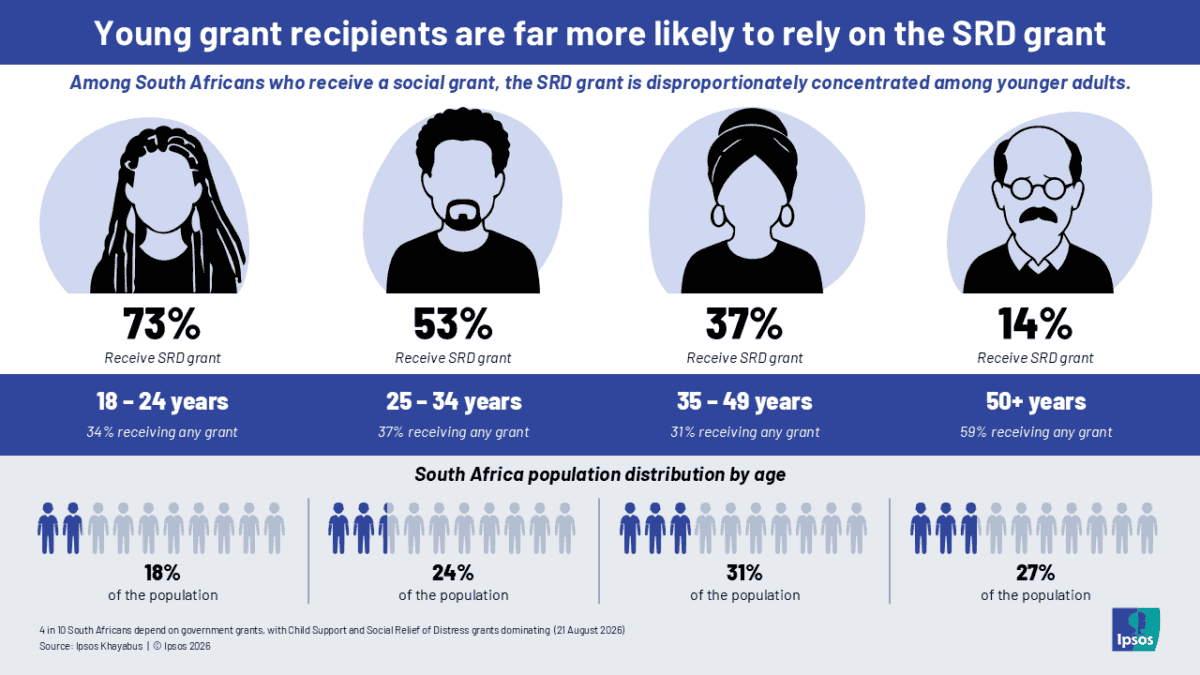
Around 34% of South Africans aged between 18 and 24 receive a social grant, and almost three-quarters (73%) of these young grant recipients rely on the SRD Grant.
Harris says the figures demonstrate how a measure originally intended to provide temporary Covid-19 relief has become a crucial source of income for young South Africans.
“With the high youth unemployment rate, the SRD grant has become the primary, and often only, income source for millions of young South Africans who cannot find work,” she says.
One income supporting entire households
The study also highlights the financial pressure on households with limited income.
Among single-earner households, more than a third (36%) have four or more people dependent on one income. Even among households with two earners, 58% support four or more people.
According to Harris, these household dynamics help explain both the dependence on grants and the pressure placed on those who earn an income.
Narrow tax base under pressure
The research points to a relatively narrow personal income tax base.
Only about 24% of respondents reported earning more than R9 000 per month. For individuals under 65, the current personal income tax threshold is R99 000 a year, or approximately R8 250 per month.
Ipsos noted that some respondents chose not to disclose their income, but analysis indicated that non-disclosure occurred across different income and demographic groups rather than being concentrated among either high- or low-income households.
“Our findings highlight the challenge of South Africa’s relatively narrow personal income tax-paying base,” says Harris.
She adds that both taxpayers and grant recipients are under financial pressure, highlighting the need for sustainable economic growth, greater employment, and a broader tax base while continuing to support vulnerable citizens.
Women more likely to receive grants
The research also reveals a significant gender divide in grant dependency.
Nearly half (49%) of women surveyed receive a grant, compared with 31% of men.
Women are more likely to receive the Child Support Grant, while men are more likely to receive the SRD Grant.
According to Harris, this reflects broader patterns in which women frequently carry greater responsibility for childcare and household support.
Grant dependence varies by province
Grant receipt also differs significantly across provinces.
The proportion of people receiving grants ranges from 32% in the Western Cape and 33% in Gauteng to 59% in North West.
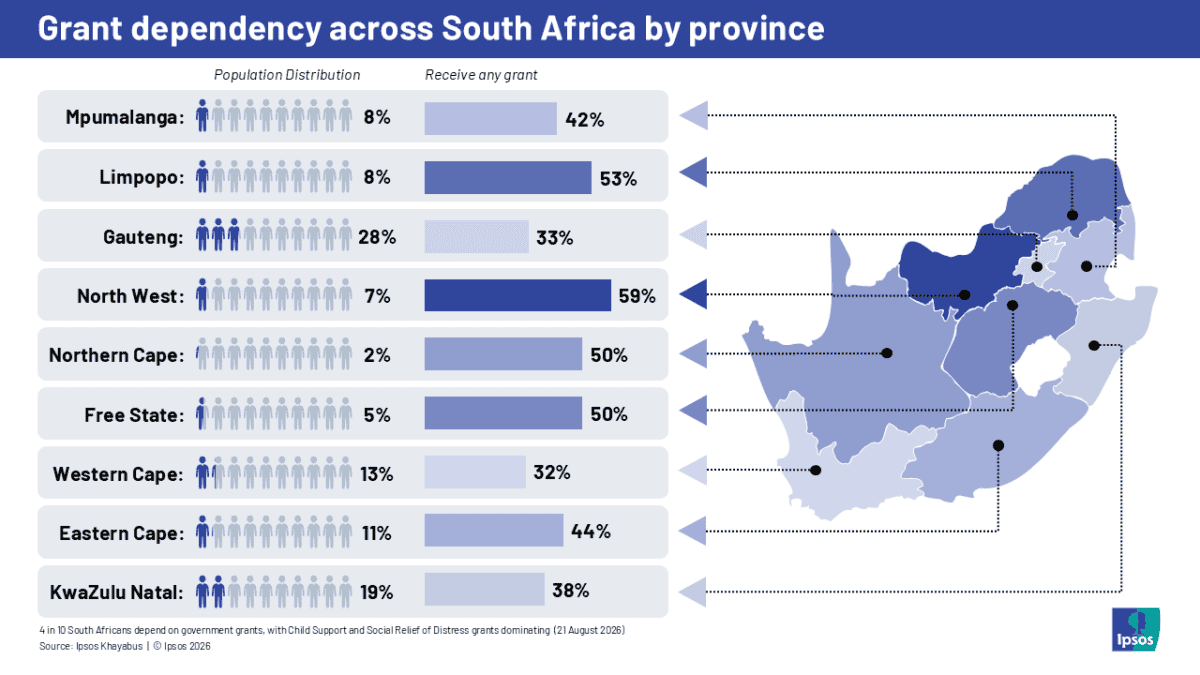
Ipsos attributes these differences to varying demographic and socio-economic conditions, including age profiles, household structures, and employment patterns.
Rural communities face greater reliance
Geography also plays a role in grant dependence.
Half (50%) of South Africans living in villages and rural areas receive a social grant, compared with approximately 34% of those living in metropolitan areas.
The figures highlight the different economic realities faced by rural and urban communities and the importance of taking local circumstances into account when developing social and economic policies.
Economic growth seen as long-term solution
Harris says the findings illustrate the difficult fiscal choices facing South Africa.
“Neither group is comfortable,” she says. “Grant recipients struggle to survive on amounts that haven’t kept pace with inflation, while taxpayers feel the burden of funding an ever-expanding system.”
She says the longer-term solution lies in sustainable economic growth that creates more jobs, expands the tax base, and enables the country to continue supporting its most vulnerable citizens.
Breaking news at your fingertips… Follow Caxton Network News on Facebook and join our WhatsApp channel.
Nuus wat saakmaak. Volg Caxton Netwerk-nuus op Facebook en sluit aan by ons WhatsApp-kanaal.
Read original story on www.citizen.co.za

