
More elephants for the Knysna Forest?
Is it fact, fiction or a plain pipe dream that more elephants could be introduced into the Knysna forest?
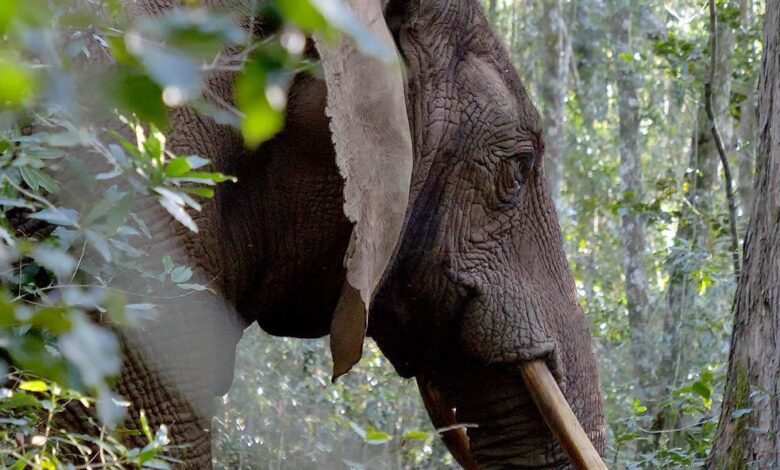
Stakeholders and interested parties held a meeting to discuss the possibility of introducing more elephants to the Knysna Forest.
At this point, there are solid plans in place, formulated by elephant experts and conservationists, but nothing can happen without the green light from SANParks, which will not be forthcoming until they have concluded various research, they say.
A meeting held at the Knysna Angling Club on 14 March to discuss introducing more elephants into the Knysna Forest was packed with close to 200 locals waiting with bated breath to hear what Herd Instinct (HI) – the name of the group spearheading this project – had to say.
HI is made up of environmentalist and filmmaker Ryan Davy, journalist Ivo Vechter, passionate Knysna resident, Rod Ward Able and Jarrett Joubert, who is a nature conservationist and the manager of the African Elephant Research Unit.
Joubert said that HI had been planning this meeting for a very long time in the hope that SANParks would come on board, but after many months of efforts to communicate with them, the meeting had to go ahead without their presence.
Joubert said he had no idea that there would be such a big turnout at the meeting.
“We didn’t know what to expect so the turnout was very encouraging. It shows the passion that locals have for our natural heritage,” he said.
Getaway Magazine writes that SANParks conducted two types of assessments to make evidence-based decisions for managing the only surviving elephant in the future and also to consider the re-introduction of more elephants to the forest.
In a statement, SANParks said, “Those respondents favouring the re-introduction of elephants in the Knysna Forest cited reasons ranging from ecological, cultural and historical values and also cautioned against commercial interest.”
Ecological studies looked at the current lone elephant’s physiological condition, behaviour in response to human activities, the identification of potential human-wildlife conflict areas, and the reason for the elephant population’s extinction.
Read original story on www.knysnaplettherald.com

