
Prasa still operates trains manually despite being ordered not to
The RSR issued the prohibition directive following the fatal accident at Elandsfontein Railway Station.
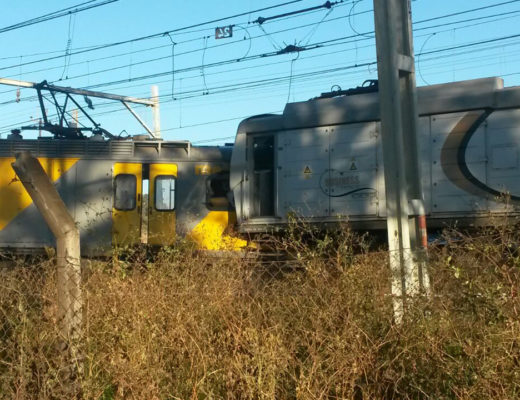
The Passenger Rail Agency of South Africa (PRASA) is operating on manual authorisation at various signals in Gauteng in breach of the prohibition directive issued against it by the Railway Safety Regulator (RSR) on June 2, reports the Kempton Express.
The RSR issued the directive against Prasa, after an investigating into the crash between two Metrorail trains at the Elandsfontein Station on June 1 revealed that the two trains were authorised into a section at the same time, thus indicating poor management and unsafe execution of the manual authorisation process.
Manual authorisation was necessary because the signals were not working due to cable theft. A commuter was killed and more than 50 others injured in the crash.
Steve Harris, general secretary of the United National Transport Union (UNTU), says the union inquired from the RSR if the directive is still applicable after UNTU members complained they were instructed by their supervisors to drive on manual authorisation.
“Prasa is of the view that the directive is not enforceable while the passenger rail service is engaging with the RSR to find alternative solutions to the regulators concerns.
“The state-owned enterprise is of the belief that it will bring its services to a halt if Prasa is forced to comply with the directive,” says Harris.
Madelein Williams, general manager of media and communication at the RSR, confirmed to UNTU on Thursday that the directive “remains in force until Prasa has addressed the safety risks identified by the RSR.”
“This creates a legal question of who would be held accountable for culpable homicide if someone dies in an accident today after a manual authorisation? Is it the RSR who is not ensuring that Prasa comply with its directive or is it Prasa who is ignoring the directive?” asks Harris.
The RSR issued the directive in terms of Section 36 of the National Railway Safety Regulator Act No16 2002 (as amended).
According to the media statement of the RSR the Elandsfontein crash prompted the railway regulator to consider the history of similar occurrences in the Gauteng region where PRASA failed to operate trains safely during abnormal working conditions.
“The operator is, therefore, directed to immediately cease operating trains in the PRASA Gauteng region under abnormal working conditions. Trains will be operated only when normal operating conditions have been restored,” the RSR directed.
Failure to comply with the directive is an offence in terms of Section 45 of Act 16 of 2002 as amended (National Railway Safety Regulator Act) and will result in a criminal charge and/or a penalty being imposed in terms of the Penalty Fee Regulations 2011 as amended.
Harris says according to the RSR it remains committed to its mandate and in ensuring that safety is the underpinning principle on railway operations at all times.
“UNTU does not see this commitment being implemented in practise if a state-owned enterprise can continue with its operations even when it is unable to implement the directive, “says Harris.
– Caxton News Service
Read original story on kemptonexpress.co.za

