
Primary schools’ full return ‘effective’ but social distancing still a struggle
Since the coronavirus outbreak more than a year ago, schools carried the responsibility of giving effective education using the rotational learning system which was found not to be useful for primary school children.
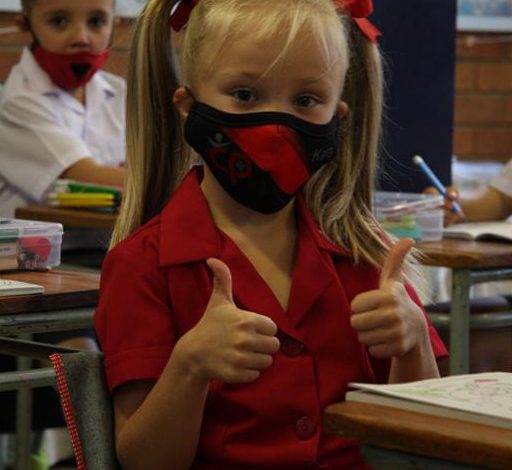
Even though primary school learners went back to full-time classes a month ago, social distancing remains an issue.
Since the coronavirus outbreak more than a year ago, schools carried the responsibility of giving effective education and also minimise the chances of cluster infections.
In an attempt to ensure schools would not become places of widespread infections, the Department of Education last year introduced a rotational learning system where only a controlled number of learners attended classes physically and others at home.
However, late last year, the department said the system was not effective in educating primary school learners as they were forgetful. Whatever the pupils would have learnt when in class – the next time they returned they would not remember.
On August 2, the full return of all pupils to primary schools ensued.
In Gauteng, Glenstantia Primary School principal Hennie Pretorius said the return of the learners went well but social distancing remained a problem among all age groups.
He said the school made internal adjustments to make it easier for Covid regulations adherence.
“The learners were already at 100% capacity return since the beginning of term two,” he said.
“Last term (second term) there were many learners and staff absent due to Covid and self-isolating, but this term attendance has been good. Very few learners are absent and there have only been two positive cases thus far this term.”
He said only one to two parents were hesitant about the full return of physical classes in the beginning but this was not a problem with the majority of parents.
“Learners are in a better routine and used to daily learning. Far better from an academic point and a lot more effective teaching and learning is done,” he said.
He said pupils from all ages were not in a learning and academic frame of mind during rotational learning.
“Parents do not have the time or knowledge to assist and supervise their children. Much work has been done during term two and three, and teachers are up to date with their expected coverage,” he said.
Chairperson of the school governing body at Lynnwood Ridge Primary School Thabang Chiloane added that said several learners did not return to full-time physical classes and they continued to stay home and receive the learning material.
“They only come to school to write formal assessments,” he said.
To cater for the majority of pupils that returned to school, Chiloane said the school bought hundreds of single desks as a measure to ensure distance.
“We needed to create extra classes and hire additional teachers to ensure smaller class numbers. Specialist classrooms like the art, music room, media centre, hall, etc, are being used as classrooms,” he said.
“The teachers are delighted to have the children back daily, as they can already see its difference to deep learning.”
Chiloane said since the return the attendance was up to 90%.
“Children are more settled into the routine, working harder, deeper learning through daily reinforcement of concepts,” he said.
“In our school, we have had our grades R, 1, and 2s back since the beginning of the year. We prioritised them as we realised that learning to read and write in those grades cannot be achieved via screens or with materials.”
Briefing the media on Sunday, Basic Education Minister Angie Motshekga said social distancing remained a challenge in some schools.
“Other than this, the system has remained stable and functional, despite persisting learning losses attributable to the Covid-19 pandemic.”
She said schools with space limitations, including the non-availability of appropriate spaces to mount mobile classrooms, were allowed to continue with the rotational learning system.
“We must report that we are extremely concerned about the learning losses observed within the sector. Of particular concern are the learning losses reported across the system, since the emergence of the Covid-19 pandemic in 2020,” she said.
“The unpredicted closures of our schools, and the unplanned disruptions to teaching and learning, have resulted in the reversal of gains made in the last 20 years.”
Read original story on rekord.co.za

