
Remain true to yourself, says mental health expert
‘When you show your feelings, you’re thought of as a typical, overemotional woman, and when you’re assertive, you may be regarded as forceful, aggressive or victimising’ – Dr Shafeeka Dockrat
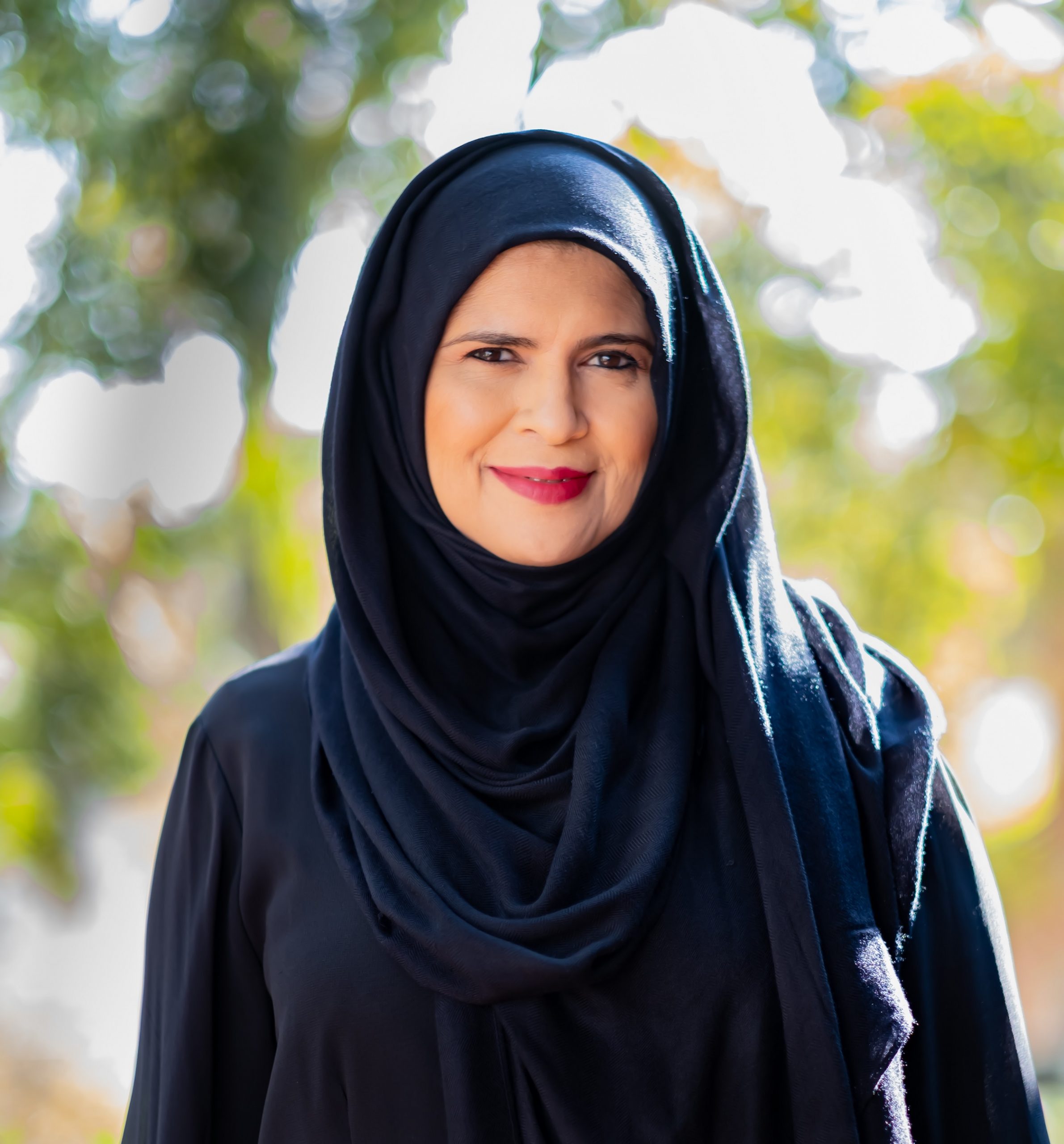
Women do not have to have a career to be fulfilled, says Pretoria-based psychologist Dr Shafeeka Dockrat.
“There is absolutely nothing wrong with being a stay-at-home-mum, as long as that is the path that you have chosen,” she says.
Shafeeka is the deputy chairperson of the Tshwane University of Technology’s Women’s Leadership Forum, the director of student development and support at the university, and the chairperson of the Psychological Society of South Africa’s research and methodology division.
She believes that regardless of whether women work in an office environment, are stay-at-home mums, or try to manage the responsibilities of both salary-earner and home-maker, they need to make sure their lives are balanced enough to ensure their overall well-being.
“I recently watched the movie The Great Indian Kitchen. Far from being similar to MasterChef India, it is a horrendous depiction of how women are trapped by patriarchy.
“The scary realisation is that many women do not expect or aspire to a different type of life. They are oblivious to any possibilities other than those for which they were raised.
“The obstacles and challenges that prevent women from optimising their potential manifest differently across different environments, cultures, regions and the socio-economic continuum,” she explains.
Stay-at-home mums
Shafeeka says that working women and stay-at-home wives and mothers each face their own challenges.
“If you value excellence, innovation or creativity, you can have that in your day-to-day activities in your home and community. However, a sad reality is that many stay-at-home mums do not have any source of income, and the housework is never quantified in monetary terms and remunerated accordingly.”
Working women
Formal employment comes with its own set of challenges for women.
While there are numerous success stories about female leaders in the white-collar environment, their achievements do not reflect the experiences of the majority of women working tirelessly in offices around South Africa.
“When the statistics are unpacked, the proportion of women in senior management positions is still low,” she says, adding that according to an article written by Ntsoaki Gwaelane of the Mapungubwe Institute for Strategic Reflection, only one of the top-40 JSE-listed companies has a female CEO and only 32% of all senior management positions are held by women.
“Transformation is not only about the data; it’s also about an organisational culture that celebrates inclusivity and diversity.”
Another problem within the formal work environment is aggression towards women, says Shafeeka. “The level of aggression lies on a spectrum. Obviously, organisational policies deal very harshly with sexual harassment. In reality, gender-based hostility, microaggression and subtle discrimination are much less tangible and, therefore, much more difficult to address directly.
“There are also notions of gender stereotypes and expectations of particular traits and characteristics associated with the different genders. This is a double-edged sword. When you show your feelings, you’re thought of as a typical, overemotional woman, and when you’re assertive, you may be regarded as forceful, aggressive or victimising.
“My advice to women is to remain authentic – you are who you are.”
The work-life balance
Shafeeka has a strong view on the concept that ‘women can have it all’.
“I strongly believe that those who think they have it all, don’t actually know what they are missing. The time, mental resources, and emotional energy that is expended on one activity is at the cost of another activity or aspect of life.
“Think of your mental energy as a tank of petrol. Every complex task that you execute or decision that you make, draws on some of your energy in the ‘tank’. In a regular week or month, trying to fit in work, family, housework, religious activities, exercise, studying, shopping, entertainment and social commitments, leaves little, if any, time for unadulterated rest.
“I think that the past few decades has taught us that being ‘superwoman’ is exhausting.”
Shafeeka says the debate on mindfulness versus multi-tasking is interesting. “We tend to believe that by multi-tasking, we are achieving more in less time, but research shows that productivity significantly decreases when multi-tasking.”
A final word: Purpose
No matter how old you are, no matter what your context is, when you wake up every morning, wake up with a purpose, advises Shafeeka.
“Your goals for the day may be linked to longer term goals, but there may be times when you do not have any major medium- or long-term goals. It is then even more important to find your purpose in each day, even if it is to only pray, read, binge watch a series, do some gardening or talk to a neighbour.”
Read original story on rekord.co.za

