
Social scientists feel left out in Covid-19 fight
‘We could do much better if government allowed us to do much better,’ said Professor Kate Alexander, director of UJ’s Centre for Social Change.
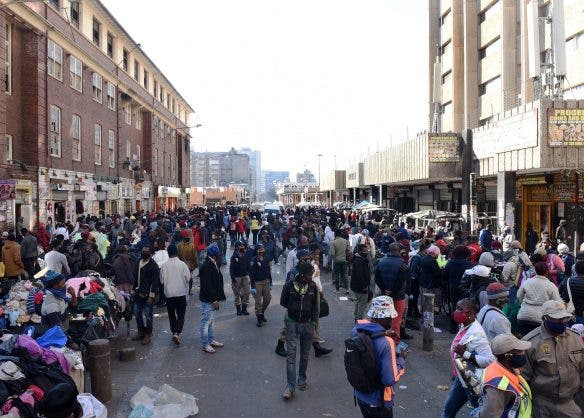
Social scientists have felt excluded in the Covid-19 fight, lamenting that a government information blackout had disabled their research to fully understand the socioeconomic impact of the epidemic on the general population.
Professor Crain Soudien, Human Sciences Research Council chief executive officer, has pointed out that Health Minister Zweli Mkhize’s advisory committee on Covid-19 was dominated by medics.
He said there was a need to engage both the social and natural science, the bimedical dominance, in all kinds of ways and that there was a need to look at human condition as democracy was sociological.
“People are dying but who are these people? Illnesses are always socially determined and that interfaces between biological and social,” Soudien said.
He said that understanding the relationship between biology and sociology was required in understanding how the privileged had it easy while the poor bore the brunt of Covid-19 and subsequent restrictions.
“While the disease might have started by privileged people travelling, it finally rests with the people who cannot socially distance.
“It is a big issue, an issue of personal management, but also an issue of social governance,” Soudien said.
Kate Alexander, professor of sociology and director of the Centre for Social Change, University of Johannesburg, “agreed wholeheartedly” with Soudien’s sentiments.
“One of the difficulties we have faced as social scientists is that we are not given enough information to work with. The government has information about people who are infected, where they live, people who died, where they live,” she said.
Alexander said this vital information would better enable social scientists to cross-calculate it with a range of socioeconomic variables that would help them understand the socioeconomic impact of Covid-19 much better.
“What I’m saying is that we could do much better if government allowed us to do much better,” she said.
Notice: Coronavirus reporting at Caxton Local Media aims to combat fake news
Dear reader,
As your local news provider, we have the duty of keeping you factually informed on Covid-19 developments. As you may have noticed, mis- and disinformation (also known as “fake news”) is circulating online. Caxton Local Media is determined to filter through the masses of information doing the rounds and to separate truth from untruth in order to keep you adequately informed. Local newsrooms follow a strict pre-publication fact-checking protocol. A national task team has been established to assist in bringing you credible news reports on Covid-19.
Readers with any comments or queries may contact National Group Editor Irma Green (irma@caxton.co.za) or Legal Adviser Helene Eloff (helene@caxton.co.za).
Read original story on citizen.co.za

