

Portal to the world’s oldest bed
Hidden clues to humanity’s past in a picturesque rock shelter.
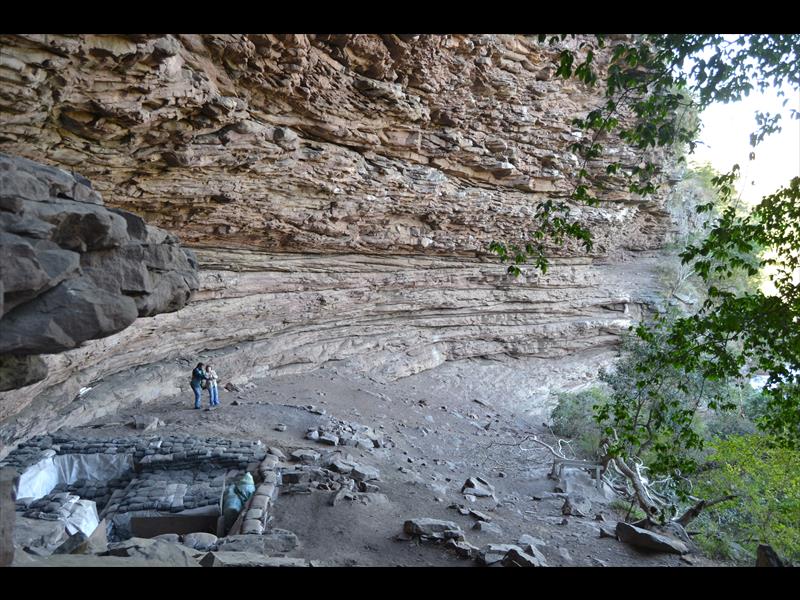
Unknown to many, the North Coast is hiding clues to humanity’s past in a picturesque rock shelter a few kilometers outside of Tongaat.
Among archaeologists, Sibudu Cave is treasure trove that holds secrets up to 70 000 years old.
The Courier was escorted to the site last week by Amafa’s (KZN’s provincial heritage agency) head of archaeology, built environment and research projects, Annie van Deventer, as it is still a research site.
Despite its obvious tourism qualities, the cave is not likely see visitors for years to come because it has plenty to offer in terms of archaeological findings.
The Courier was asked to keep its location confidential but there is little need as Sibudu is difficult to find and harder to get to.
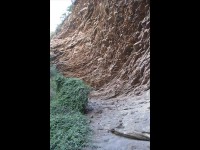
Once you have driven to the site, which needs a 4×4, you need to cross a river then climb up a small cliff face before you are inside the cave.
The site is most famous for producing the earliest known use of bedding which was made of sedge plants. This has been dated back to almost 77 000 years ago.
Among these findings are a number of stone age tools known as lithic flakes, which were made between 70 000 years and the middle stone age, around 38 000 years ago.
There are also tools and other items from early iron age occupation, around 1000 years BC.
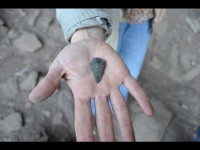
Walking into the shelter, van Deventer quickly picked up a prehistoric tool.
“Look here, this was a cutting tool. You can tell by its shape, this cannot be made in nature,” she said.
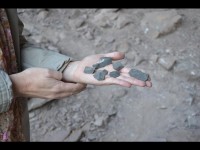
The floor of the shelter is littered with the blades.
“These tools were made by striking the rock on one side and cutting edges can be seen on the other side,” said Van Deventer.
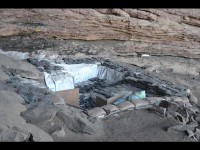
At the furthest end of the shelter is an excavation site which is currently covered.
Going down about four meters, researchers from the Eberhard Karls University Tübingen in Germany are still busy exploring its hidden secrets.
The site is well preserved due to its remote location but just on the other side of the river, a rural community is growing rapidly.
The nearest homeowner acts as the caretaker and locals use the cave for traditional prayer rituals.
Van Deventer believes the site is unlikely to become a bustling tourist destination despite its beautiful aesthetics.
“It would be difficult to put up features like information boards and that sort of thing inside the cave. It is also hard to get to.”
However she hopes that local municipalities will put greater effort into looking after these precious historical sites.
“Amafa looks after all historical sites in the province. That includes buildings or sites that are older than 60 years which means we are very busy.
We need local municipalities to come to the party and help manage sites like these,” she said.
Sibudu Cave is not open to the public.
You can visit www.heritagekzn.co.za for more information.
Stay in the loop with The North Coast Courier on Facebook, X, Instagram & YouTube for the latest news.
Mobile users can join our WhatsApp Broadcast Service here, or if you’re on desktop, scan the QR code below.