

KwaDukuza municipality releases master traffic plan for Ballito
Deputy mayor and chairperson of the Economic Development and Planning Portfolio committee, Lucky Makhathini said the need to monitor existing conditions and forecast the future transportation infrastructure was vital to economic growth.
Do you think it is crowded on the Dolphin Coast roads right now?
In 20 years no realistic road network improvements will be able to accommodate the anticipated traffic flows in KwaDukuza from the substantial growth expected in the region – unless the solution also includes a functional rail and public transport system.
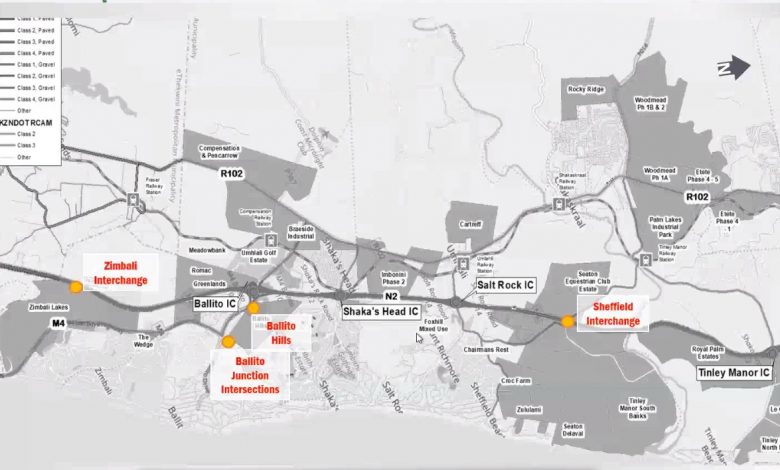
This was revealed at the presentation of the high level strategic transportation master draft plan for the greater Ballito and Sheffield area, presented virtually to the public last Friday.
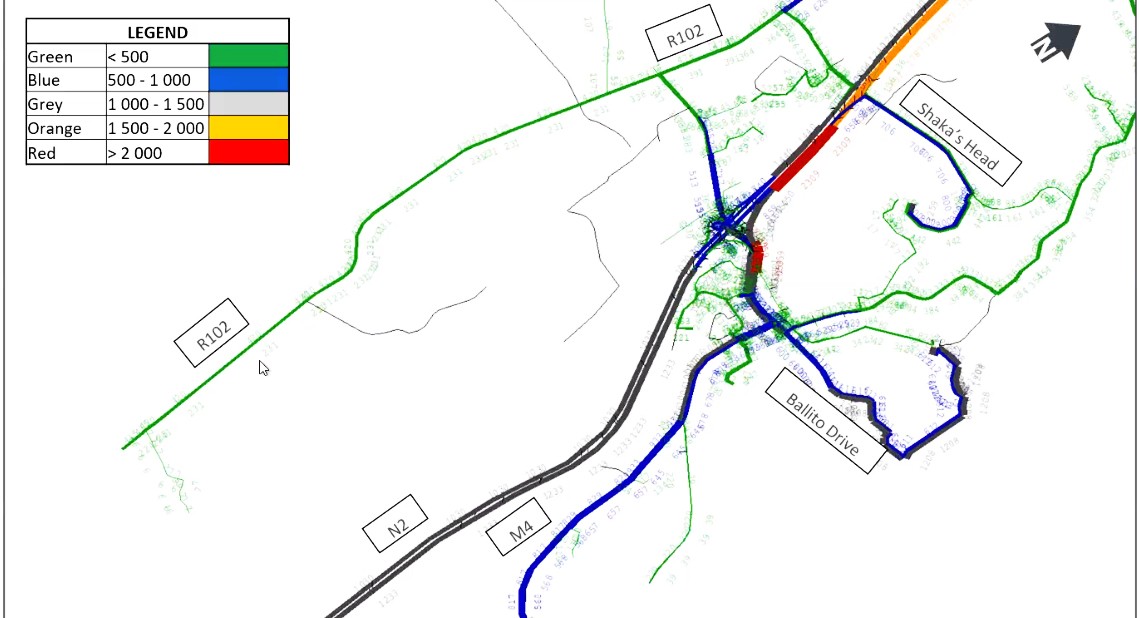
The study of the road network was commissioned by KwaDukuza municipality and completed by engineering and infrastructure consultants, SMEC South Africa.
Deputy mayor and chairperson of the Economic Development and Planning Portfolio committee, Lucky Makhathini said the need to monitor existing conditions and forecast the future transportation infrastructure was vital to economic growth.
Makhathini said the Ballito region was considered a key economic node of the municipality with substantial growth expected.
“KwaDukuza is one of the busiest regions in the country in terms of building activities. According to Statistics South Africa, in the past 10 years the municipality has approved building plans to the value of R20 billion. The areas where the bulk of these building activities are currently manifesting are from Ballito to the Sheffield node.
“In order to ensure that the municipality continues to retain and attract more of such investment, it is important to ensure that such developments are supported by the requisite infrastructure, and importantly, the planning for the future growth of the area,” he said.
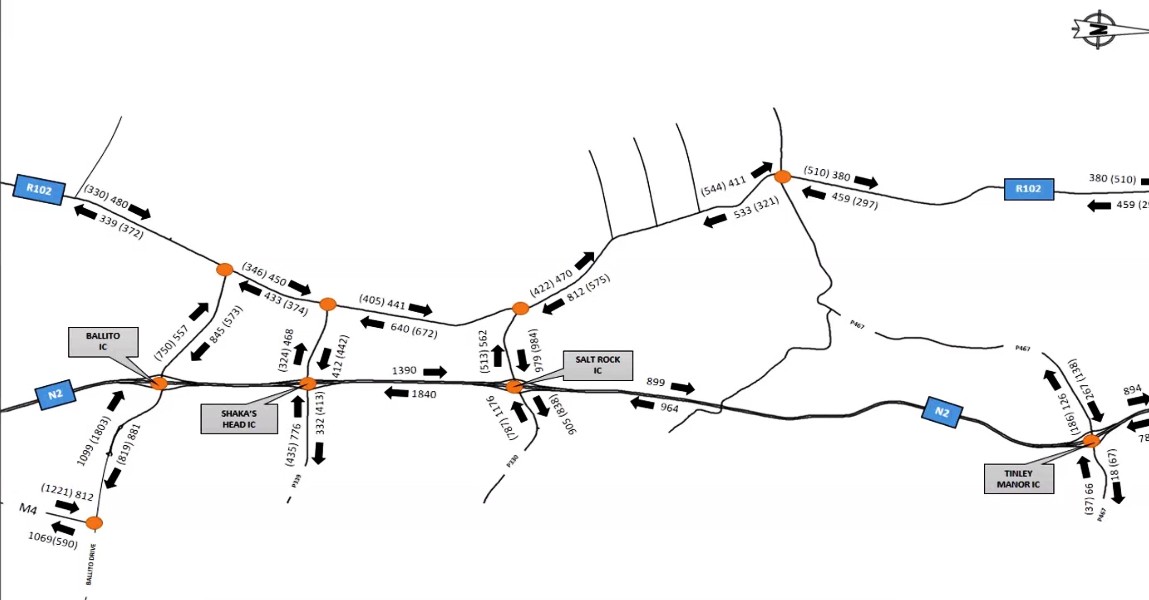
A 20-year traffic modelling study was undertaken to understand how increased growth will affect the existing road network and how people are likely to travel across the region.
Different scenarios within the study area were tested to guide the development of future infrastructure upgrades.
“The Ballito to Sheffield transportation masterplan is important as it will assist us in not only improving access to the area by building roads but will facilitate accessibility that will attract new residents and businesses, ultimately helping economic development,” said Makhathini.
“As a municipality, we are also pleased that the municipality is not spearheading the plan alone, but in partnership with some developers in the private sector who have acknowledged the importance of transportation planning, and as such have provided seed funding to support not only their developments but also the economic development of the area.
This project is a clear indication that public-private partnership is the cornerstone for the local economic development and transformation.”
The study listed the following intersections as the highest priority that require road capacity improvements to accommodate the current traffic flows: M4 and Zimbali West Gate, M4 and Zimbali North Gate, M4 and Albertina Way, Ballito Drive and Douglas Crowe Drive, Ballito Drive and Simbithi Drive, N2 and Salt Rock interchange west terminal, N2 and Salt Rock interchange east terminal and P330 Salt Rock road and P228.
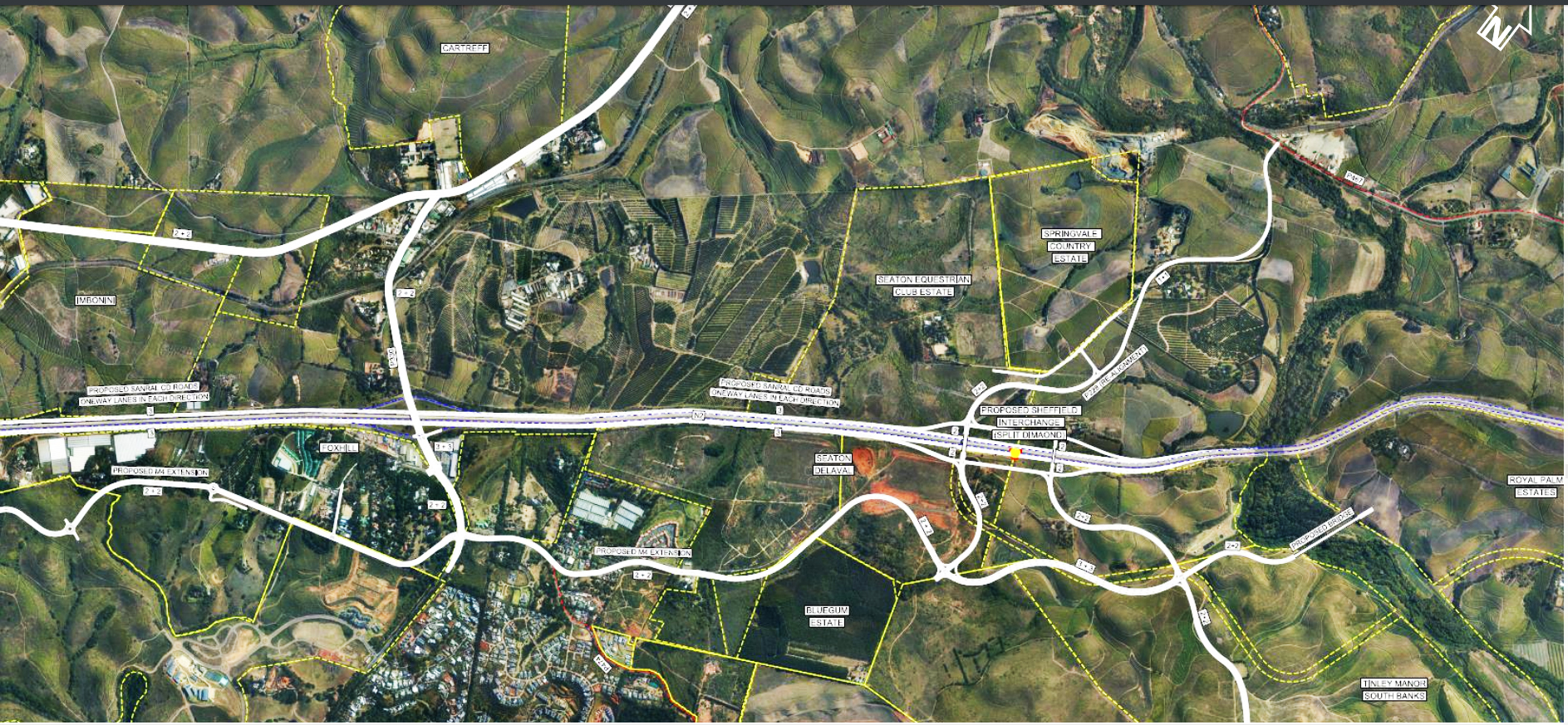
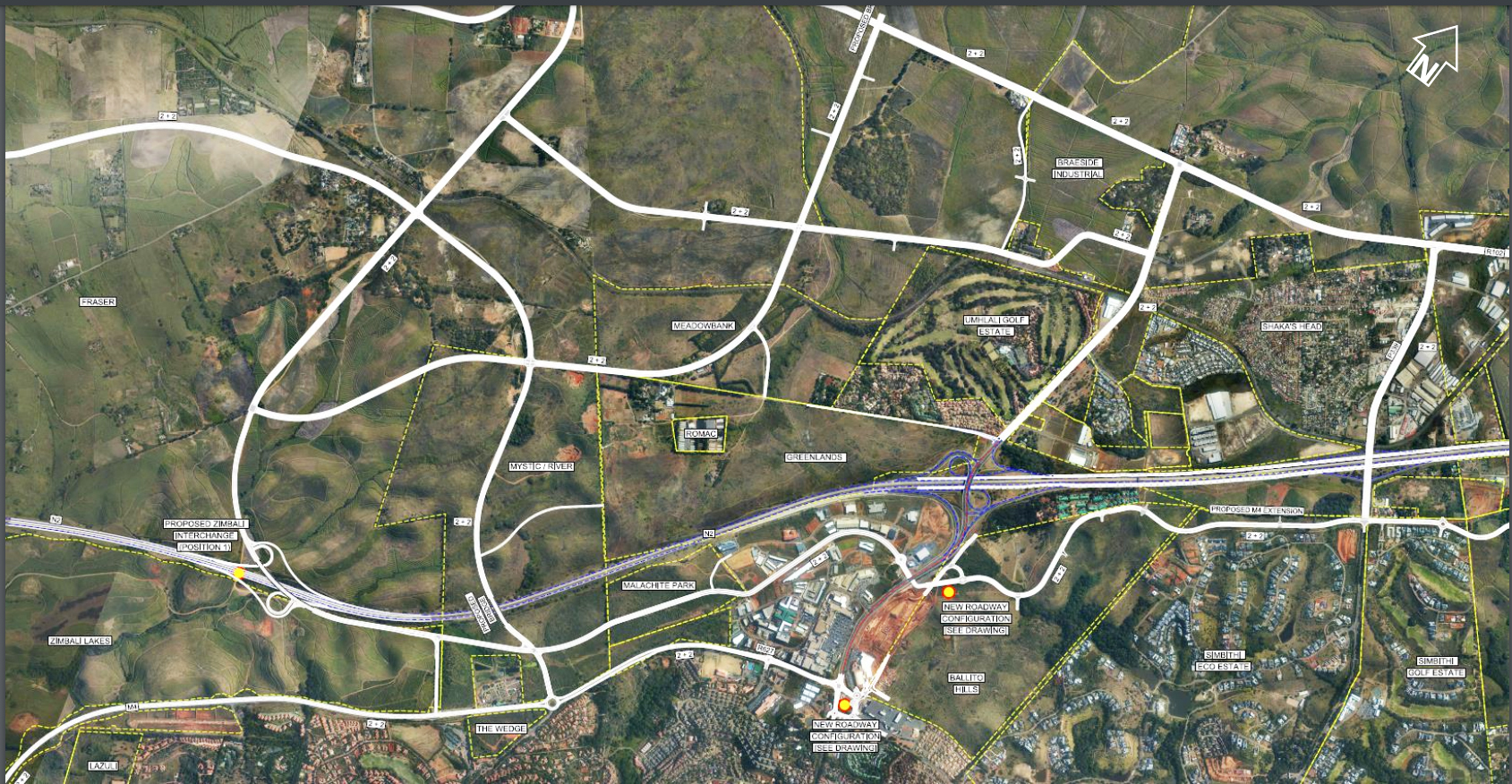
The study recommended the widening of a number of key roads, the upgrading of existing interchanges and the building of new interchanges at Zimbali and Sheffield. It is estimated that the cost of the projects would be R4 billion.
Welcoming the study, iLembe Chamber of Commerce CEO, Cobus Oelofse said while responsible infrastructure spending was a priority, funding still remained one of the main challenges.
“The extent of funding contributions by the private sector has a direct impact on the ongoing investment appeal of our region. It is no coincidence nor a surprise that last week, following the budget speech, National Treasury called on the private sector to increase its infrastructure investment to help government tackle rising unemployment and boost the struggling economy.
“Over the last decade private capital investment on infrastructure spent was 12.8% of GDP, compared to 6.7% of GDP by public sector capital investment. In comparison China has spent roughly 8% of its GDP on infrastructure since 2010. SA levels do however compare favourably with Europe who on average spent +/- 5% of their GDP on infrastructure, and the U.S. 2.4%. Infrastructure funding will require innovative and creative approaches.”
A copy of the study can be downloaded from kwadukuza.gov.za. The document is open for comment until March 12.

Stay in the loop with The North Coast Courier on Facebook, X, Instagram & YouTube for the latest news.
Mobile users can join our WhatsApp Broadcast Service here, or if you’re on desktop, scan the QR code below.