

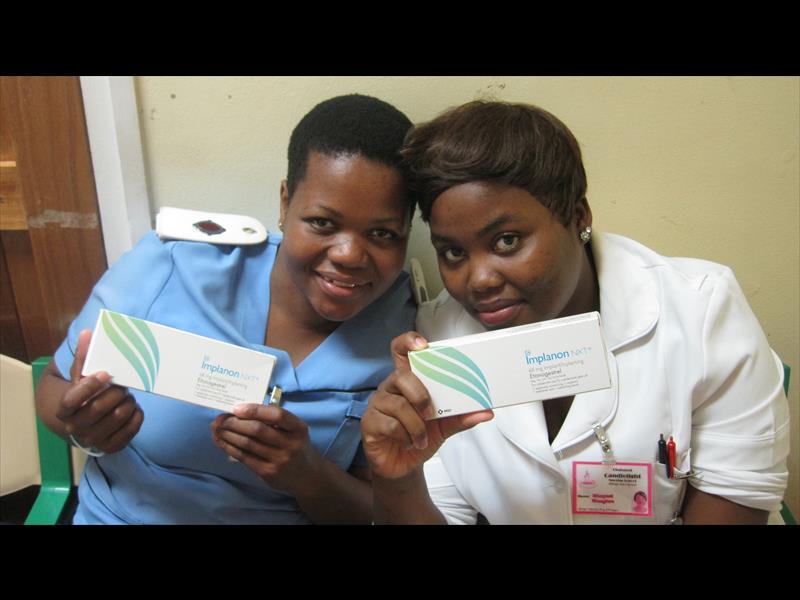
Such was the demand for newly-introduced contraceptive Implanon that stocks were running low in the Ilembe district long before the month’s end.
Stanger Hospital intended to increase their order fivefold for May but due to demand and budget constraints, just 100 implants were received, as in April. Sister Nkosi, who inserted 10 implants per day, said on Friday stock had been exhausted once again long before the end of the month.
Implanon is a silicone device the size of a matchstick that is inserted under the skin of a woman’s upper arm. By releasing hormones it prevents pregnancy for three years and is the most effective contraceptive available. Training co-ordinator Charlene Lue said Implanon has quickly become very popular, largely through word of mouth. She stressed the programme was at its initial stages but was optimistic about its future impact on the number of unwanted children and giving women “a little bit more power to make decisions”.
Dr Herbert Ringanayi from Stanger Hospital said a reason for the “exponential take-up” of Implanon was its empowerment of women. He said often men are expected to be responsible for condoms and “ladies cannot negotiate for safer sex”. He pointed out that the three-year lifespan of the contraceptive meant a woman could complete her education without the burden of an unplanned baby. Under the state-run programme, backed by health minister Aaron Motsoaledi, women receive Implanon for free, each contraceptive costing the government R96.20. Women do not have to return to the clinic until it is removed.
Stanger Hospital paediatrician Alex Armitage said, “planned pregnancies are more likely to be healthy pregnancies, and are more likely to produce parents who are able to provide the best care for their children”. He called the Implanon programme “the most powerful intervention in public healthcare since the ARV rollout”. Insertion takes less than one minute and is conducted under local anaesthetic, meaning no pain. Implanon must be used together with barrier protection like condoms and femidoms as it does not protect against sexually transmitted diseases. Side effects include irregular bleeding or loss of menstruation; however, a woman’s fertility and bleeding pattern return to normal just three weeks after the implant is removed. Asked about the moral implications of Implanon, Dr Ringanayi explained that it stops the woman from producing eggs, so no life is destroyed.
Dr Ringanayi advocated for insertion of Implanon at a young age to prevent teen pregnancies. He sees girls as young as 14 giving birth and risking complications because their bodies are not fully mature. The KZN health website currently promotes “abstinence” and “delaying sex” as the top two most effective ways to avoid teenage pregnancy. Dr Ringanayi found this approach “naive” as teens are not abstaining and said “we should not neglect those who fail to do the ideal”. Teenagers comprise around 10% of mothers receiving ante natal care in KZN.
Senior lecturer in pharmacology at UKZN Andy Gray, stressed the need for a training programme to complement the roll-out of Implanon. As this is a new programme and costs have not yet been budgeted for, healthcare providers are having to finance Implanon by reallocating funds. Gray said this “could be a cost-effective burden” in the long run. He said, “the bottom line is that effective safe contraception is very important in keeping our fertility down.”
Stay in the loop with The North Coast Courier on Facebook, X, Instagram & YouTube for the latest news.
Mobile users can join our WhatsApp Broadcast Service here, or if you’re on desktop, scan the QR code below.